Hezbollah
Hezbollah confident any US-Iran deal will include Lebanon, politician says
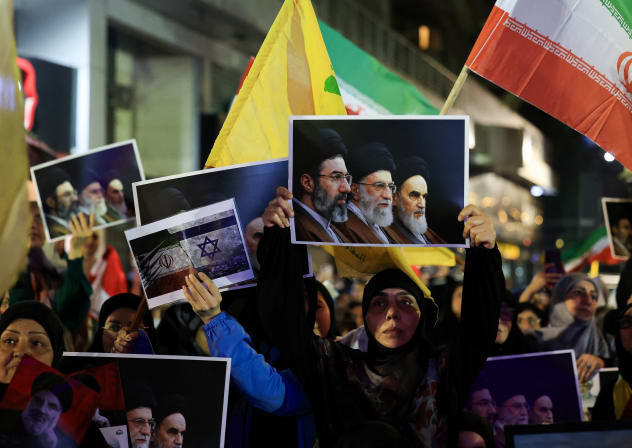
Hezbollah, a terrorist group founded by Iran's Islamic Revolutionary Guard Corps (IRGC) in 1982, entered the regional conflict in support of Tehran on March 2.

My Word: War, goals, and the World Cup - opinion

IDF strikes over 300 Hezbollah sites, kills five Gaza terrorists, captures 50 suspects in West Bank

Iranian media claims deal will include Lebanon, as IDF strikes hundreds of Hezbollah sites
IDF pushes deeper in into Lebanon to neutralize threat of Hezbollah
IDF assessments have determined that they can't fully disarm the terror organization but can push them back far enough into Lebanon to significantly reduce the risk to Israeli citizens.

Netanyahu vows to restore security in northern Israel as gov't approves NIS 4 b. to help North
The decision comes as leaders of northern local authorities have sharply criticized the government for failing to provide adequate support and aid to residents amid the ongoing security threat.

'If order given, we will take over Beirut': IDF Golani cmndr. tells 'Post' about Wadi Saluki op.
Cmdr. M explained that, since they were among the first to invade, his battalion encountered periodic Hezbollah resistance and engaged in close-range fighting.

'Toxic love story' between Trump, Netanyahu runs the Iran war
Can anyone really say the fire has ceased? This week's Deep Dive maps the red string from Beirut to Tehran to Washington, and the human cost beneath it.

WATCH: IDF destroys Hezbollah anti-tank launcher, seizes weapons, kills terrorists
According to the statement, the IDF also located and seized Kalashnikov rifles, shotguns, and other small arms, as well as RPGs and rockets in a raid on a Hezbollah weapons storage facility.

Toronto group calls to release alleged Iran proxy who coordinated waves of attacks on Jewish sites
Al-Ahrar Palestinian Prisoner Support called for the release of Hezbollah's Mohammad Baqer Saad Dawood Al-Saadi, who was extradited and charged by the US Department of Justice for terror offenses.

UN fails to condemn Hezbollah in statement on peacekeeper's death, Israeli ambassador says
"When a UN peacekeeper dies in southern Lebanon and the Security Council still fails to explicitly condemn Hezbollah for violating Resolution 1701, it reflects a profound failure," Danon stated.

Explosions reportedly heard in Strait of Hormuz, Trump says Iran deal 'approved by all sides'
IDF pushes deeper in into Lebanon to neutralize threat of Hezbollah • Iran to reestablish closure of Strait of Hormuz, blaming US tensions • IED explosion wounds two IDF soldiers

WATCH: Israel at war with Hezbollah, not Lebanon, Netanyahu says in message to Lebanese people
Netanyahu urged Lebanese citizens to reject Hezbollah's influence, saying the group is the only obstacle preventing peace, prosperity, and cooperation between Israel and Lebanon.

WATCH: President Herzog calls for Lebanese President Aoun to reject Hezbollah, Iran influence
During a tour of northern Israel, Herzog addressed Aoun and the people of Lebanon in Arabic, saying that he extends a hand of peace towards them.
