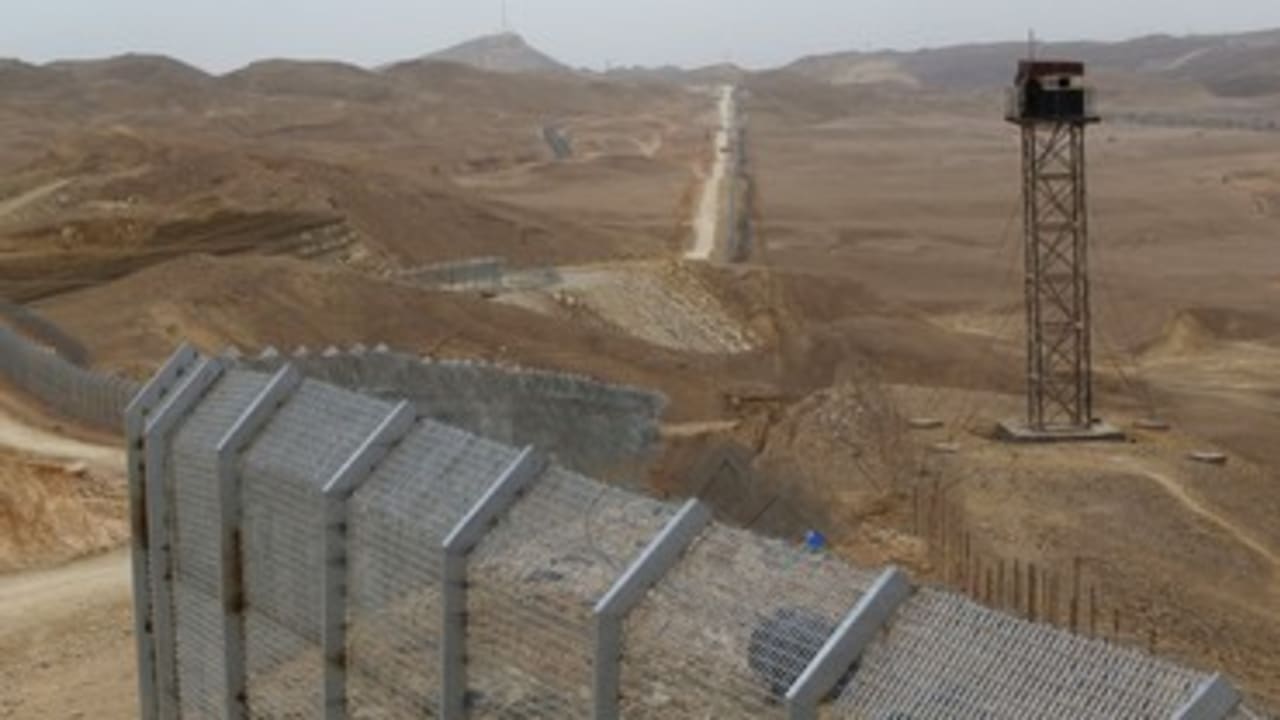
A growing number of countries are flocking to Israel to study border security as
the Defense Ministry works to complete the construction of a physical and
technological barrier along the Egyptian border.
In August, a delegation
from India will arrive to study the various technologies used by the IDF to
secure the borders with the Gaza Strip, the West Bank and Egypt, and which could
be implemented as part of India’s own fence with Pakistan and
Bangladesh.
The interest in Israeli border security has spiked since
Israel began constructing a barrier along its border with Egypt to stem
terrorism and infiltrations by illegal migrants. The Defense Ministry and IDF
have so far completed about 150 km, of the fence; plans are to complete the
remainder by the end of the year.
The fence is 5 meters in height and
layered with barbed wire. It is supported by dozens of radars that are deployed
along the border to issue alerts about possible crossings while the potential
infiltrators are still kilometers away.
Israel’s primary concern is with
the growing number of terror attacks along the border. Last week, shots were
fired at a bus carrying IDF soldiers. While there was damage to the bus, no one
was wounded. On June 18, terrorists crossed into Israel from Sinai and killed an
Israeli contractor working on the border fence, while last August eight Israelis
were killed in a cross-border attack.
India is interested in beefing up
its border security to prevent future incidents like the Mumbai attacks in
2008.
The Indian press reported Sunday on a tunnel that had been
discovered under the border with Pakistan in the contested Kashmir
region.
Another country closely following Israel’s decisions on border
security is the US, which is building a barrier along its border with
Mexico.
The Department of Homeland Security is, for example, testing the
ELM-2112 family of persistent ground surveillance radars, developed by Elta
Systems, a subsidiary of Israel Aerospace Industries, and used by the IDF to
detect intruders before they reach the border.
Five different versions
detect individuals at ranges from 300 m. up to 20 km., and vehicles at up to 40
km.
The radars feature four stationary antennas, each covering a
90-degree sector enabling persistent surveillance and tracking over a wide
area.
Several radars can be integrated into a single network to provide
an integrated picture of a border area. In addition, the command-and- control
interface features icons resembling an animal, vehicle or person based on the
target detected by the radar.