Terrorists hurl rocks at vehicle in West Bank, prompting search for attackers, IDF says
Troops of the 636th Combat Intelligence Collection Unit killed one of the terrorists and injured another.

Troops of the 636th Combat Intelligence Collection Unit killed one of the terrorists and injured another.


The new terminal, built at an investment of more than NIS 16 million, is expected to begin operating with the opening of the cruise season on May 14.

“That attack on Diaspora Jewry does not serve us,” Chikli said. “I would not use the language of threats.”

This year, the holiday fell on May 14, which is also the anniversary of the Israeli Declaration of Independence.

Police noted that the investigation is still ongoing, and additional suspects are expected to be arrested in Israel and other European countries.
"Following a complaint about an incident of a sexual nature by an officer with the rank of lieutenant colonel, a Military Police Investigation was opened," an IDF spokesperson stated.

The Jerusalem Institute for Policy Research, an independent research institute focused on Jerusalem and its diverse communities, published its annual statistical report on the capital city.

Liberman made the remarks during a visit to Kibbutz Be’eri, one of the southern communities bordering Gaza that was brutally attacked by Hamas terrorists during the October 7 massacre.

The notice instructed passengers to board through the rear door and sit at the back of the bus “in order to allow the students to travel separately.”

Investigators found that the older commanders were inflicting "initiation ceremonies" on younger commanders, in which they were beaten and degraded.

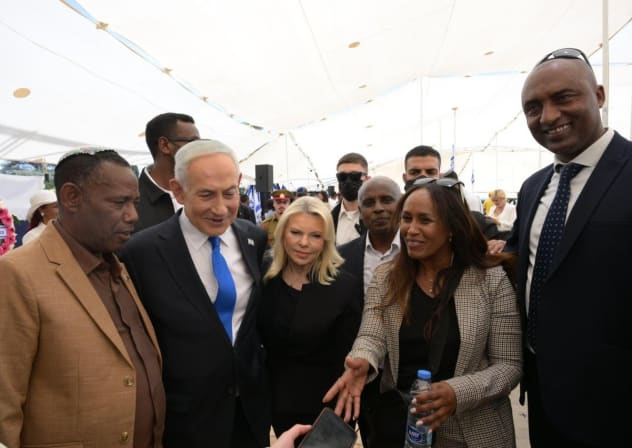
During his speech, Netanyahu said he had called for the "full weight of the law" to be brought against the murderers of Yemanu Zalka, promising to continue to fight against violence.