The Jerusalem Post
Jpost search icon google-icon iphone
  Set as Homepage
Fri, May 24, 2013   15 Sivan, 5773
newspapers magazines
 
    • Breaking News
    • Diplomacy & Politics
    • Defense
    • National
    • Mideast
    • Syria
    • Iran
    • World
    • Business
    • Sports
    • Health & Science
    • Environment
  • Video
  • Opinion
    • Columnists
    • Editorials
    • Op-Eds
    • Letters
  • Jewish World
  • Lifestyle
    • Arts & Culture
    • Food & Wine
    • Travel
  • Features
    • Insights & Features
    • Week in review
    • On the Web
    • Shalva Superheroes
    • Obama in Israel
  • Blogs
    • In the news
    • Judaism
    • From the Middle East
    • Lifestyle
    • Aliya
    • Science and Technology
  • JPost Apps
    • iPhone app
    • iPad app
    • Android app
    • Twitter
    • Facebook
    • RSS feeds
    • JPost Toolbar
    • JPost Newsletter
    • JPost Alert
  • Premium Zone
    • The Jerusalem Report
    • The Experts
    • 20 Questions
    • e-paper
    • Ivrit
    • Christian Edition
    • Dash
    • Magazine
    • Metro
    • In Jerusalem
  • French
    • Politique & Social
    • Affaires Palestiniennes
    • Diplomatie & Monde
    • Art & Culture
    • Israel
  • Green Israel
JPost Learn Hebrew  
Advertise with us  
Nefesh Guided Aliyah  
Eldan  
AFMDA  
Africa Israel Group  
Isram Group  
Kupat Ha  
JPost Twitter  
JPost Facebook  
Classifieds  


Breaking News
 
 
  • JPost.com
  • Elections 2012: Egypt goes to the polls
 

Netanyahu, Lieberman spar as FM says no peace ‘for decades’

By JORDANA HORN, TOVAH LAZAROFF, GIL HOFFMAN
LAST UPDATED: 09/29/2010 00:27
Tweet

The prime minister is the one running negotiations on behalf of the state of Israel, PMO says.

Foreign Minister Avigdor Lieberman (AP).
Foreign Minister Avigdor Lieberman (AP). Photo: AP
Peace with the Palestinians “could take a few decades,” and any final-status agreement would entail “not land for peace, but rather, [an] exchange of populated territory,” Foreign Minister Avigdor Lieberman told the United Nations General Assembly on Tuesday.

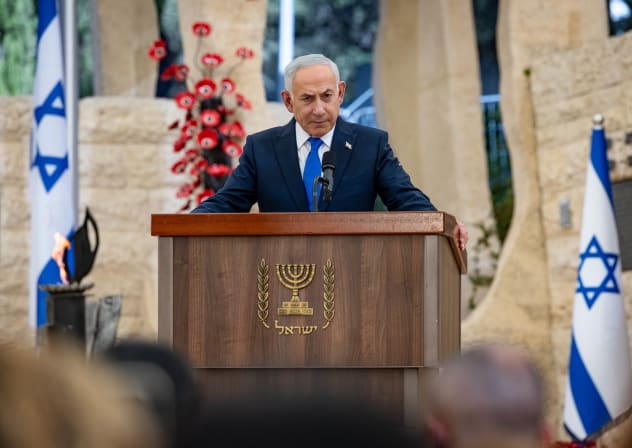
Prime Minister Binymain Netanyahu’s office distanced itself almost immediately from Lieberman’s remarks, informing the media that his speech had not been coordinated with Netanyahu.

RELATED:

PM silent amid world criticism of moratorium’s end
Lieberman backs away from land swap proposal

The prime minister is the one who is conducting the negotiations on behalf of the state of Israel, his office said.

The various subjects related to a peace agreement will be discussed and determined only around the negotiating table and not anywhere else, the Prime Minister’s Office added.

US State Department spokesman Philip Crowley confirmed that its active talks about the peace process had been held with Netanyahu and Barak, not Lieberman.

"We are in direct discussion with the prime minister. We had meetings last week with the defense minister, and we are actively engaged in working to continue direct negotiations. I will let the Israeli government comment on what the foreign minister had to say and whether that actually reflects the views of the Israeli government," Crowley told reporters in Washington.

An Israeli government source, however, noted that in a parliamentary system, ministers and MKs are at liberty to express their opinions in international forums. Such expression is not unusual and is understood by the international community, the source said.

The source added that Lieberman’s position had come up from time to time in internal discussions among Netanyahu, Lieberman and other ministers.


There are those who believe that it could be of assistance in finding a solution to the conflict, said the source. But there has been no formal governmental decision on this matter, the source added.

Still, in spite of the careful response from the prime minister’s office, Netanyahu’s people appeared to be angry about the content, the timing and the location of what Lieberman said.

Asked why they reacted in such a cautious manner, they made clear that they did not want difficulties with their largest coalition partner at a time in which Israel was facing international pressure.

Sources close to Netanyahu said, “We have enough problems without this. This isn’t the time to spark more fires. We have conflicts with the international community, and we do not need internal ones. We said we do not agree with what he said. We do not have to say more than that now.”

Lieberman said a “long-term intermediate agreement” prior to final-status agreements would most likely be necessary as a first component of a “two-staged” solution.

The intermediate agreement, Lieberman said, would be motivated by the “need to raise an entire new generation that will have mutual trust and will not be influenced by incitement and extremist messages.”

Lieberman added that creating such an emotionally conducive climate “could take a few decades.”

Lieberman stressed that he was not advocating population transfer as part of a final-status agreement; rather, that “moving borders to better reflect demographic realities” would be part of an effort to recognize and address the deep-seated friction between the two peoples.

Citing examples in East Timor, as well as the former Yugoslavia and Czechoslovakia, Lieberman said that “where effective separation has been achieved, conflict has either been avoided or has been dramatically reduced or resolved.”

Lieberman said that “precisely this notion – that a mismatch between borders and nationalities is a recipe for conflict – has long been accepted as a virtual truism in the academic community,” referencing the term “right-sizing the state.”

“States and nations must be in balance in order to ensure peace,” Lieberman said. “This is not a controversial political policy. It is an empirical truth. Israel is not only where we are,” Lieberman asserted. “It is who we are.”

In his remarks, Lieberman expressed a desire to dispel flawed explanations of why the Israeli-Palestinian conflict had continued although 17 years had passed since the signing of the Oslo Accords.

Lieberman noted that “more than 90 percent” of wars and war victims in the Middle East since World War II had not stemmed from the Israeli-Palestinian conflict, but “from conflicts involving Muslims or conflicts between Arab states.”

Addressing those who believed the conflict’s intransigence stemmed from “the so-called ‘occupation,’ the settlements in Judea and Samaria and the settlers themselves,” Lieberman noted that “all Judea, Samaria and Gaza were under Arab control for 19 years, between 1948 and 1967. During these 19 years, no one tried to create a Palestinian state.”

Pointing out that peace with Egypt and Jordan had been reached despite the settlements, Lieberman added that 21 flourishing settlements had been removed in Gaza and more than 10,000 Jews had been transferred.

“And in return, we have Hamas in power and thousands of missiles on Sderot and southern Israel,” Lieberman said.

The foreign minister said he also sought to disabuse those claiming that the Palestinian issue “prevents a determined international front against Iran.”

“This argument is not only flawed, it is completely irresponsible,” Lieberman said. “The same argument could be made that the Palestinian issue prevents action on North Korea, piracy in Somalia, the humanitarian crisis in Sudan or the challenge of Afghanistan.”

The connection between Iran and the Israeli-Palestinian conflict, Lieberman said, is “precisely reversed.”

“Iran can exist without Hamas, Islamic Jihad and Hizbullah, but the terrorist organizations cannot exist without Iran,” he said, adding that Iran was currently capable of foiling any peace agreement by means of terrorist proxies.

Therefore, Lieberman said, “in searching for a durable agreement with the Palestinians, one which will deal with the true roots of the conflict, and which will endure for many years, one must understand that first, the Iranian issue must be resolved.”

Additionally, the foreign minister said, the emotional component of the Israeli-Palestinian conflict must be addressed, as well as the practical one.

The “emotional problems,” he said, are “the utter lack of confidence between the sides and issues such as Jerusalem, recognition of Israel as the nation-state of the Jewish people, and refugees.”

Due to these problems, he continued, focus should be on coming up with a “long-term intermediate agreement.”

Lieberman’s address was greeted by applause in the General Assembly. Among those in attendance was Deputy Foreign Minister Danny Ayalon.

“I think this was one of the best speeches I’ve heard,” Ayalon said of Lieberman’s address. “I think it was a speech with great vision, wisdom and courage.

“Maybe some people are afraid of the truth, but Mr. Lieberman was showing to the world a mirror through which realities in the world, and especially the Middle East, could be seen clearly,” Ayalon said.
  • Send
  • Large
  • Small
  • Print
  • Share
This article is by :
Jordana Horn
Recent stories:
  • UNESCO to stop support for Palestinian m...
  • NY senator resigns over corruption charg...
  • Foxman declines Pollard meeting due to m...
  • Reform heads for 2012 with new leader
JPost Community
Tweet
Lieberman Avigdor Lieberman UN UN General Assembly New York Settlement Freeze Peace Talks 2010 Danny Ayalon
Share this article
Tweet
Share
Send
Your comment must be approved by a moderator before being published on JPost.com. Disqus users can post comments automatically.

Comments must adhere to our Talkback policy. If you believe that a comment has breached the Talkback policy, please press the flag icon to bring it to the attention of our moderation team.
JPost Services
conferenceConference
newsletterNewsletter
iphoneMobile Apps
kotelcamKotel Cam
kolboJPost Alert
premiumPremium
JPost TV News  
Mobile Apps  
Bank Hapoalim  
Meir Panim  
Yad Ezra  
Rambam Hospital  
TourLuxe  
Zev Goldstein PLLC  
Penrose Gallery  
JPost Premium Zone  
JPost kotel Camera  
         
 
Israel Focus
JPost TV News
Coming soon to a screen near you!  
Nefesh B'Nefesh Guided Aliyah
Already living in Israel? Enjoy the Benefits of Aliyah!  
Give "Freedom" this Passover
to needy Israeli families. Donate now  
War Threatens
Protect the People of Northern Israel  
China Suppliers
 
Intelligence Squared
The international debate forum, announces it is coming to Israel  
Bank Hapoalim
Israeli's number one bank  
Jerusalem Post Lite
Lite Edition of the Jerusalem Post for English improvement  
Learn Hebrew with us
Get 10 minutes free personal coaching in Hebrew through phone or Skype  
JPost newspapers
Sign up for the JPost newspapers and receive one month free subscription  
Kosher English Magazine
English language weekly magazine - especially for religious people  
JReport Kindle Edition
Now you can get the Jerusalem Report directly to your Kindle  
JPost Premium Edition
The very best articles are available only in our Premium edition  
Lifestyle Magazine
 
 
Real Estate
Don't Look For a House!
In Israel, our website will do it for you!  
 
Travel
Eldan Rent a Car
20% off all Car Rental Reservations in Israel  
Hertz Car Rental
Special Online Discounts!  
The King David Jerusalem Hotel
One of the world's truly iconic hotels, and a Jerusalem landmark  


Sites Of Interest:

Jerusalem Hotels
KKL-JNF
Poalim Online
BreitBart.com
Our Friends
Jerusalem Attractions
Jerusalem Tours
itraveljerusalem.com

JPost sites:

Learn Hebrew
The Jerusalem Report
Our Magazines
JPost Edition Francaise
Green Israel
Christian World
Jerusalem Post Lite

Services:

JPost Mobile Apps
JPost Premium
JPost Newsletter
JPost Toolbar
JPost News Ticker
JPost RSS feeds
JPost Archives
JPost Alert
JPost Kotel Cam

JPost Conferences:

NYC Conference
Diplomatic Conference

Information:

About Us
Feedback
Staff E-mails
Copyright
Sitemap
News Partners
Advertise with Us
Statistics
Ad Specs
Terms Of Service
Jpost.com, the online edition of the Jerusalem Post Newspaper - the most read and best-selling English-language newspaper in Israel. For analysis and opinion from Israel, the Jewish World and the Middle East. Jpost.com offers expert and in-depth reporting from Israel, the Jewish World and the Middle East, including diplomacy and defense, the Palestinian-Israeli conflict, the Arab Spring, the Mideast peace process, politics in Israel, life in Jerusalem, Israel's international affairs, Iran and its nuclear program, Syria and the Syrian civil war, Lebanon, the Palestinian Authority, the West Bank and Gaza Strip, Israel's world of business and finance, and Jewish life in Israel and the Diaspora.
 
About Us | Advertise with Us | Subscribe | Premium | Newsletter | RSS | Contact Us
 
All rights reserved © The Jerusalem Post 1995 - 2012