FIFA plans to organize match between Israel, Palestine during September U-15 tournament - report
The match would be played during a symbolic tournament in the US, with players from all 211 of FIFA’s member associations present, including Russia.

The match would be played during a symbolic tournament in the US, with players from all 211 of FIFA’s member associations present, including Russia.


Fauda star and singer Idan Amedi will headline the Sderot Beer Festival, returning to the Gaza border region after his wartime injury.

Shas and UTJ said they would stop backing coalition bills after the daycare subsidies bill was left off the Knesset plenum agenda.

"Traffic at the junction has reopened and is operating as normal," the police said.

The petitions argue that the secrecy of the vote was not a technical formality, but a central legal protection meant to allow MKs to vote freely.

Eleven lawmakers voted in favor, while three voted against after three days of discussions on the matter that spanned from the early morning into the afternoon.

He argued that Netanyahu is currently in an uncomfortable political position, having been "humiliated" with the announcement of the deal, adding that there is no news about Lebanon.

Asked whether European countries were interested in Arrow or David's Sling, he said there was also interest in the Iron Dome, a system designed to take out short-range threats.

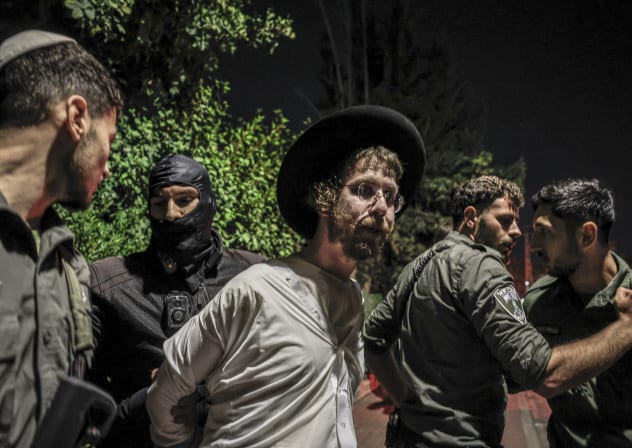
The indictment says protesters carried signs reading, “War on the draft law, in actions and not words,” and shouted slogans including “We will die and not enlist” and “Yuval Yamin is a traitor."
The study revealed that the majority of the public in Israel, 55%, sees internal polarization and disagreement as the most dangerous threat to the country’s continued existence.

"Kiryat Yoval is at a turning point where the old housing supply is being replaced by modern buildings, which create price arbitrage in favor of buyers in the early stages"
