Knesset's election of Rabello as comptroller conducted unlawfully, retired justice tells high court
The petitions argue that the secrecy of the vote was not a technical formality, but a central legal protection meant to allow MKs to vote freely.

The petitions argue that the secrecy of the vote was not a technical formality, but a central legal protection meant to allow MKs to vote freely.


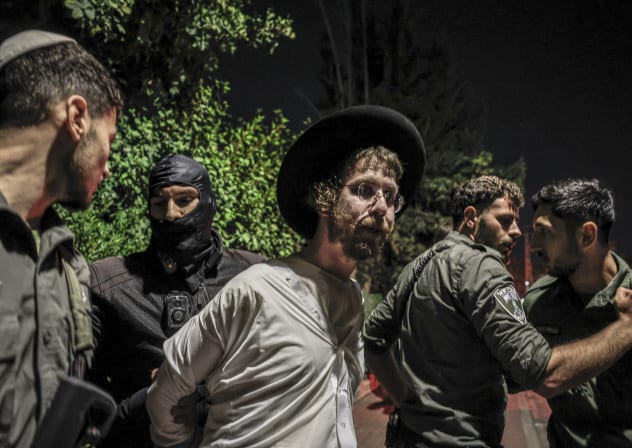
The indictment says protesters carried signs reading, “War on the draft law, in actions and not words,” and shouted slogans including “We will die and not enlist” and “Yuval Yamin is a traitor."
The study revealed that the majority of the public in Israel, 55%, sees internal polarization and disagreement as the most dangerous threat to the country’s continued existence.

"Kiryat Yoval is at a turning point where the old housing supply is being replaced by modern buildings, which create price arbitrage in favor of buyers in the early stages"

"We are not partners to this agreement that does not ensure our security, and it does not bind us in any way," says Ben-Gvir. "We must not compromise on any less than the dismantling of Hezbollah."

Two Israeli strikes over the past year have influenced a rapid American push toward ceasefire agreements.

Prime Minister Benjamin Netanyahu has yet to address the US-Iran deal or the issue of Lebanon, which, according to Sharif, is included in the deal.

According to FACCMA, Milei reaffirmed his support for Israel and democracy in the Middle East while expressing interest in the various sports in which Argentine athletes will compete.

Maccabi Tel Aviv cruised past Hapoel Holon 89-61 to complete a 3-0 series sweep, while Hapoel Tel Aviv completed its own sweep with an 89-81 victory over Hapoel Jerusalem.

The five first-place winners of the My Family Story competition had the opportunity to connect to their ancestors and represent various Jewish communities around the world,

Explaining why she has voted against the legislation, Haskel said in her interview with the Post that, “we are at war, and when we have a pyramid of priorities, security always has to be on the top."
