Because Russian immigrants played such a significant role in pioneering the
renewal of Jewish settlement in the Holy Land, and because so many Russians came
to Israel after the fall of Communism, there is a tendency to forget the Yekkes
– the German and Austrian immigrants as well as the German-speaking Czechs and
Hungarians, who are also regarded as yekkes.
But, suddenly, the meat in
the demographic sandwich is once more rising to the surface.
It might
have something to do with the Viennese background of both Theodor Herzl and
Teddy Kollek. Micha Limor, who once headed the news department at Channel 1 and
is currently the editor of Yakinton, the monthly cultural magazine of the Yekke
community, believes it is a mix of nostalgia, history and culture on the part of
mainly second-generation Israeli Yekkes, who, when they were growing up,
disdained the German language that they heard at home, shed the Yekke image
which was a source of general derision and now, in their 60s and 70s, regret
never having asked their parents and parents about their cultural heritage. Many
of them are gathering the vestiges of what remains of Yekke culture and are
attempting to revive it. One of the outcomes of these efforts is the revival of
the German they heard at home.
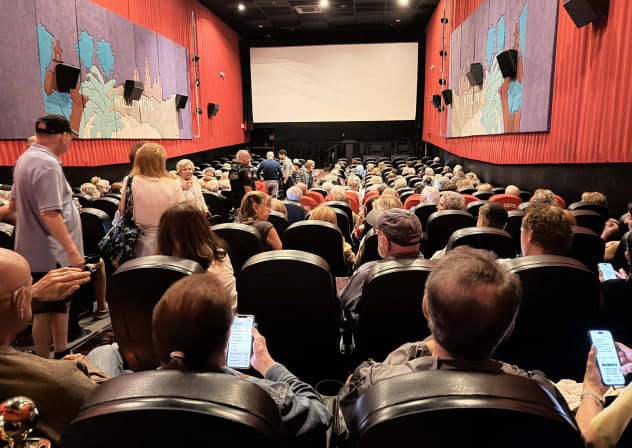
Limor was the last of three speakers this
week at Ticho House in Jerusalem at the “From Vienna to Jerusalem” lecture
evening. Prof. Milly Heyd of the Hebrew University’s Department of Art History
spoke about the impact and heritage of Viennese art and design, particularly
with regard to Gustav Klimt and Josef Hoffman; and veteran broadcaster and
musician David Witzthum discussed composers who, though not necessarily born in
Vienna, came to Vienna to be inspired by the city’s cultural muse. Limor’s focus
was on linguistics and the subtle penetration of German into Hebrew, especially
in words having to do with mechanics. To illustrate the point, Limor said that
he and his wife had recently been at a restaurant in the north of the country in
a city that is largely inhabited by people of North African background. They
stopped at a restaurant whose slogan was “Bis l’kol kis.” (a bite for every
pocket). The proprietor of the restaurant was sure the word “bis” comes from Tel
Aviv, but it is actually German in origin.
Other German words that have
entered the Hebrew lexicon can be found in a delightful dictionary-cum-history
book with light anthropological overtones, Ben Yehuda Strasse, which was
published a few months ago and which Limor said has become a best-seller,
prompting the need for an additional printing. The book was conceived when a
number of second-generation yekkes got together and started remembering
expressions used at home.The group sent out emails to members of the Association
of Israelis of Central European Origin asking for contributions to the
dictionary in the making.
They were surprised by the flood of responses.
Not so long ago, said Limor, the Association, mindful of the fact that in the
1930s, those of its members who were actors had been rejected by Habimah but
embraced by the Cameri Theater, held an evening at Tzavta in Tel Aviv to review
the contribution of Central European entertainers to Israeli culture. In his
opening remarks, association president Reuven Merhav, a former director-general
of the Foreign Ministry, recalled how frequently he had been told during his
childhood in Haifa “Macht nicht so ein theater,” which literally means “don’t be
so dramatic,” but in the vernacular means “stop fooling around.”
To the
great amusement of the audience, whose members were in most cases of Central
European background, Limor presented a short list of German expressions that
have dovetailed into everyday Hebrew.
Among Israel’s best-known yekkes
are industrialist Stef Wertheimer; prize-winning photographer David Rubinger;
leading insurance, investments and financial services figure Yair Hamburger;
Michael Strauss of the Strauss dairy industry; former Tel Aviv mayor Shlomo
Lahat; journalists Uri Avnery and Ronen Bergman; actress Hana Merom; jurist
Gabriel Bach; real estate guru Werner Loval; and artist Naftali Bezem, who has
returned to Tel Aviv after 15 years in Europe and whose exhibition opens
Saturday at the Tel Aviv Museum. It is interesting to note the high ratio of
yekkes among Israel Prize laureates.
■ “IF IT was up to me, you would
remain tourism minister,” former Labor MK and former defense minister Amir
Peretz, who is running on the Tzipi Livni ticket for the Knesset election told
outgoing Tourism Minister Stas Meseznikov at the annual conference of the Israel
Hotels Association at the Tel Aviv Hilton. In early December, Meseznikov
announced his retirement from politics, though Yisrael Beytenu leader Avigdor
Liberman expressed confidence that Meseznikov was merely taking time out just as
Prime Minister Binyamin Netanyahu, Defense Minister Ehud Barak, and he,
Liberman, had done in the past. Peretz did not confine his praise of Meseznikov
to some private remark, but declared it from the podium.
Although he quit
politics under a cloud of rumors about inappropriate behavior for a minister,
Meseznikov was highly appreciated by hoteliers and others in the tourist
industry, and did a great deal to encourage its standards and competitiveness as
well as expanding tourist facilities and services. So many compliments flew at
him from all directions that Meseznikov was blushing in embarrassment. But the
mood changed somewhat when it came to discussing who might succeed him. MK Uri
Ariel hinted in the course of a panel discussion chaired by Nissim Mishal that
Bayit Yehudi would be interested in getting the tourism portfolio if it becomes
part of the government coalition. “Next you’ll be asking for the foreign affairs
portfolio,” Mishal sneered dismissively.
■ ALTHOUGH HE was born on
January 9, the birthday of national poet Haim Nachman Bialik is celebrated in
accordance with the Hebrew calendar date of his birth, which was the 10th of
Tevet. Since this is a day of fasting and mourning in memory of the siege of
Jerusalem that led to the destruction of the Temple, Bialik’s birthday is
celebrated on the 11th. The poet’s 140th birthday was celebrated on Sunday night
in Tel Aviv in the home in which he used to live, on the street that is
appropriately named Bialik Street. Several Israel Prize laureates were each
asked to read one of his poems and to talk about what Bialik means to
them.
Among those who agreed to select and read a poem were Professors
Ruth Ben-Israel, Moshe Bar-Asher, Assa Casher, Zahava Solomon, Dan Schechtman
(who is also a Wolf Prize and Nobel Prize laureate) and Noam Sharif; Tel Aviv
Chief Rabbi Yisrael Meir Lau; political activist Geula Cohen; photographer Alex
Levac; actress Hana Marom; and broadcaster and producer of documentaries Haim
Yavin. The venue provided the ambience for the occasion and served to illustrate
the importance of preserving historic buildings.
■ TO MARK its 70th
anniversary, The Association for the Well-being of Israel’s Soldiers (AWIS) this
week launched an exhibition of rare posters and photographs borrowed from the
archives of the Israel Defense Forces.
Among those attending the opening
at Beit He’hayal in Tel Aviv were Defense Minister Ehud Barak, Chief of General
Staff Lt.-Gen, Benny Gantz and Maj.-Gen. Orna Barbivai, who heads the IDF Human
Resources Division.
“The fingerprints of the AWIS can be found on every
army base,” said Gantz as he congratulated AWIS chairman Brig.-Gen (res.)
Avigdor Kahalani for the wonderful work the association does in boosting morale
and providing for soldiers’ needs.
The exhibition traces the history of
the association from its beginning in 1942, when it called itself the Committee
for Welfare of Jewish Soldiers.
Established by the Jewish Agency and the
Jewish National Council, the committee initially concerned itself with the
well-being of Jewish soldiers fighting the Nazis. After the establishment of the
state, its focus turned to soldiers in the IDF, providing them with warm
blankets and clothing and centers for leisure time pursuits. Today, in addition
to assisting with general welfare needs for soldiers, the AWIS maintains 16
homes for lone soldiers, without close relatives in Israel, plus a vacation home
and hospital services for wounded soldiers. Its funding is largely from donors
in Israel and abroad.
greerfc@gmail.com
|