Iran giving mixed signals on US deal as Israel-Lebanon ceasefire extended by 45 days
IDF Chief Zamir visited UAE during Op. Roaring Lion • President Xi promised China would not give Iran weapons • Hamas military chief targeted in Gaza strike
IDF Chief Zamir visited UAE during Op. Roaring Lion • President Xi promised China would not give Iran weapons • Hamas military chief targeted in Gaza strike


Izz ad-Din al-Haddad is the highest-ranking military commander of Hamas and the last leader of the October 7 massacre remaining in the Gaza Strip.

El-Sisi said Egypt faces severe water scarcity, with annual per capita water availability falling below 500 cubic meters.

To date, the ICC has not charged Hamas with any crimes committed against its own civilians. This filing, therefore, is the first by a Palestinian against the terror group.

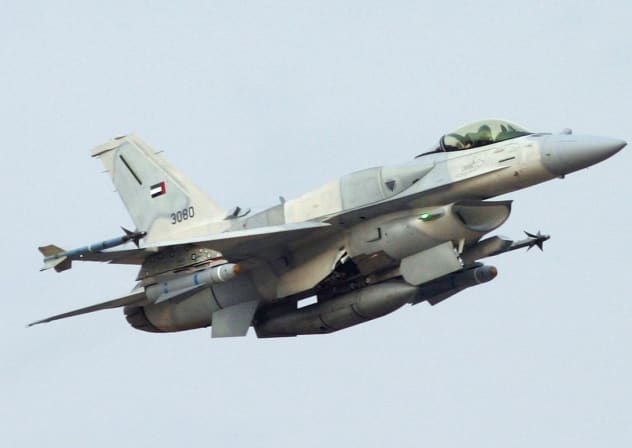
The UAE attempted to convince Saudi Arabia, Qatar, and other Gulf states to coordinate a military response to Iran’s missile and drone attacks, but neighbors refused, sources told Bloomberg.
Iran's Foreign Minister Abbas Araghchi claimed during a BRICS meeting that despite foreign aggression towards Tehran, it is ready to "pursue and defend diplomacy."

IDF Chief Zamir visited UAE during Op. Roaring Lion • Trump 'not going to be much more patient,' says Iran can make deal or 'get annihilated' • President Xi promised China would not give Iran weapons

Iran’s narrative was that some of the Gulf states hosted US forces, or in the case of the UAE and Bahrain, had signed the Abraham Accords with Israel.

To date, the military has issued approximately 158,000 square meters of anti-explosive drone barbed wire, equivalent in size to about 20 football fields.

Amirizadeh's comments to the 'Post' came after Pope Leo bestowed a special honor on the Iranian ambassador to the Holy See, along with several other diplomats, for their years-long service.

This step is important for Iraq because it continues to show that Baghdad can get some justice for victims of the Saddam era.