Despite considerable pressure from both the US and Egypt to continue the
settlement construction moratorium for another three months, Prime
Minister
Binyamin Netanyahu’s senior ministers, a forum known as the septet,
decided this
week not to extend the freeze.
Since a cabinet decision was needed to put
the freeze into effect last November, another cabinet decision would be
needed
to extend it, and the septet decided, before Netanyahu’s meeting in
Jerusalem
with US Secretary of State Hillary Clinton on Wednesday, not to ask for
an
extension.
RELATED:
EU calls for
extension in settlement building moratorium
Opinion:
Candidly Speaking - Peace theater of the absurdDefense Minister Ehud Barak reportedly was in favor of an
American compromise to extend the moratorium for three months in order to come
to an agreement with the Palestinian Authority on final borders, so that it
would then be clear where Israel would, and would not, be able to
build.
Clinton, however, reiterated in a Channel 10 interview that the US
still wanted to see the moratorium extended, although she said she understood
Netanyahu’s argument that the PA did not take advantage of the moratorium in
place for the last 9-1/2 months to enter into talks.
“The United States
believes that we need to establish an environment that is conducive to
negotiations,” Clinton said when asked about the moratorium.
She
reiterated that both she and US President Barack Obama felt that “doing
something about the moratorium” would be “an important decision by Israel,” and
that this would be “in the interest of the negotiations.”
Clinton said
that “if we are going to have an agreement about territory, and we are going to
have a democratic, secure Jewish state in Israel and viable state for the
Palestinians, everyone knows that settlements are going to have to be discussed.
There are differences in their location and their numbers, but it is something
that can’t be put under the rug, it has to be confronted.”
Regarding
whether she supported Netanyahu’s demand that the Palestinians recognize Israel
as the nation-state of the Jewish people, she said that at her meeting on
Wednesday with President Shimon Peres, “he reminded me that Yasser Arafat had
said, ‘Of course it will be a Jewish state.’ These are the kinds of discussion
that have to be done only at the leader level.”
The Prime Minister’s
Office, meanwhile, responded to reports in the Arab press that Netanyahu was
considering a three-month extension by saying “the prime minister’s position in
relation to the time allocated for a moratorium on new construction in Judea and
Samaria is known, and there has been no change.”
Egyptian President Hosni
Mubarak, meanwhile, said in a Channel 1 interview that he had urged Netanyahu to
extend the moratorium by a few months so as to give the peace talks a
chance.
“I told him [Netanyahu] to extend the freeze for at least three
or four months during the talks. I told him that this would help achieve
satisfactory results,” the Egyptian leader said.
Mubarak quoted Netanyahu
as saying that he wasn’t able to extend the freeze because of opposition from
his coalition partners.
“I told Netanyahu to forget about all those who
are hesitant and skeptical and to continue with the settlement freeze for a few
more months at least,” Mubarak said.
Mubarak said that he also made it
clear during his meeting with Netanyahu earlier this week in Sharm e-Sheikh that
extending the freeze was a small price compared with the potentially bloody
repercussions of failing to do so.
The Egyptian president expressed hope
that the extension would allow Israel and the Palestinians to reach agreement
within a few months.
PA President Mahmoud Abbas on Thursday reiterated
his opposition to the resumption of construction in the settlements and
expressed his desire to continue with the peace talks with Israel, a spokesman
for Abbas said.
Abbas, who met with Clinton in Ramallah, said that
failing to extend the moratorium would jeopardize the peace process, the
spokesman, Nabil Abu Rudaineh, said.
“They had a serious and thorough
discussion,” Abu Rudaineh said of the Abbas- Clinton meeting. “They agreed to
increase their efforts during the upcoming phase to boost the peace
process.”
He said that the two also agreed to hold another meeting in the
coming week in New York.
Upon greeting Clinton in Ramallah, Abbas said he
welcomed all efforts to achieve peace in the region, especially those made by
Obama’s administration.
“We all know that there’s no alternative to
reaching peace through negotiations,” Abbas declared. “Therefore, we have no
choice but to continue with these matters.”
Another PA official told
The
Jerusalem Post that he had “no explanation” for why some US government officials
were sounding optimistic about the direct talks.
The Palestinians were
“very worried” because of Netanyahu’s refusal to extend the freeze of settlement
construction, the official said.
“There can be no progress in the peace
process while Israel is building in the settlements and creating new facts on
the ground,” he said. “A partial freeze is also unacceptable.”
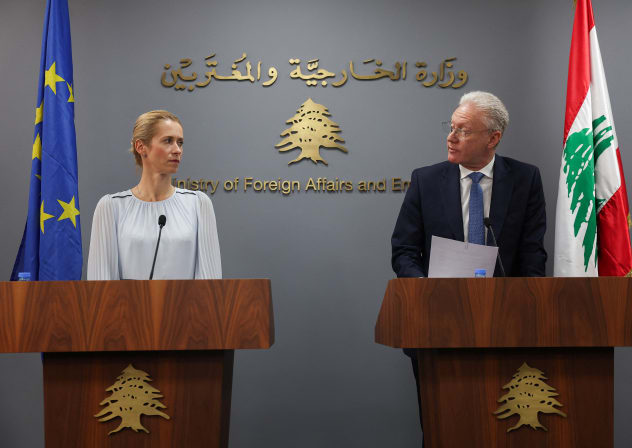
The
European Union also weighed in on the matter on Thursday, with its
foreign
ministers releasing a statement after a meeting saying that the
settlements are
“illegal under international law” and calling for an “extension of the
moratorium decided by Israel.”
An end to rocket and terrorist
attacks
against Israel was also demanded in the declaration.
The EU
“continues to
call for a complete stop to all violence, in particular rocket fire and
terrorist attacks,” the statement read.