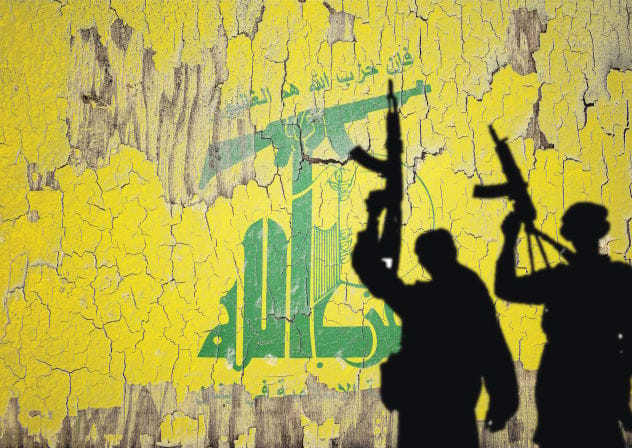
Israeli security experts are casting an uneasy eye at the civil unrest spreading through the region.
On Thursday, Yemen joined the list of Arab states experiencing unprecedented demonstrations calling for authoritarian leaders to step down, and Egypt braced for more civil unrest.
RELATED:The Region: Revolutions, walk-outs and fatwasAnalysis: A warning to Arab dictatorsWhile no analysts here predict any immediate ramifications for Israel’s national security, some said mass protest movements that begin as pro-democracy uprisings could easily be hijacked by Islamists.
“We need to understand that we are living on a volcano,” said Maj.- Gen. (res.) Ya’acov Amidror, former head of the IDF’s Research and Assessment Directorate.
“Conditions can change from today until tomorrow. We must ask ourselves, what is the worst case scenario,” he said. “We are on thick ice, but even that melts eventually."
“Advice we have heard from certain countries in Western Europe
[suggesting that the uprisings could lead to a wave of democratic
revolutions] should not be followed,” he said. “There’s no immediate
fear of any security escalation. The main question is: In the long term,
will we be ready for all scenarios?” Maj.-Gen. (res.) Giora Eiland, a
former national security adviser, and a senior research fellow at Tel
Aviv University’s Institute for National Security Studies (INSS), said,
“There’s a reasonable chance that if a revolution takes place in Egypt,
the Muslim Brotherhood would rise to power. That would be bad not just
for Israel but for all democracies.”
The true struggle in Egypt
was not between “Mubarak and pro-democracy elements, but between Mubarak
and the Muslim Brotherhood,” Eiland said.
Casting his eye on
Lebanon, Giora said the recent confrontation between the pro-Western
March 8 alliance and the Hizbullah-led March 14 bloc was not as severe
as met the eye.
“It’s true that the two camps have been in a
political confrontation that became sharper. But there is a clear
interest for both sides to continue to cooperate – not only to prevent a
civil war, but to enjoy the best of both worlds,” he said.
“So
long as there is a unity government, then pro-Western camp can ask the
West for economic and military aid, while pointing to democracy in
Lebanon, a free economy, and a functioning parliament. The role of
Hizbullah is to continue to be the most powerful military force in
Lebanon, and to have strategic control,” Eiland said.
He believes
that Israel is better off with a Lebanon formally controlled by
Hizbullah, “because as soon as fire is opened at Israel, it’s not
Hizbullah but the whole of the state of Lebanon that is responsible.
That is a real deterrent, and it has plenty of advantages.
“The same is true of Hamas rule in Gaza,” Eiland said.
Shlomo
Brom, director of the program on Israel-Palestinian relations at the
INSS, said it was impossible to know what would happen next.
“It’s
true that pro-democracy voices are being expressed – and that is
positive – but we don’t know how it will end,” Brom said. Even in
Tunisia, where the Islamists are weak, we don’t know how it will end. We
can’t forget that in Iran, at the end of the 1970s, the uprising
against the shah was led by [pro-democracy] youths who took the streets –
but this was taken over by Islamists in the end.”