‘There will be no Tel Aviv’: Egyptians threaten Israel following Smotrich Sinai comments
“There will be no Tel Aviv, there will be no Ben-Gurion Airport, and there will be no Netanyahu,” said Amr Adib on MBC Egypt.

“There will be no Tel Aviv, there will be no Ben-Gurion Airport, and there will be no Netanyahu,” said Amr Adib on MBC Egypt.


Satellite imagery from VANTOR Technologies showed increased traffic to the site and ongoing earthmoving efforts after Israel struck the facility back in March.

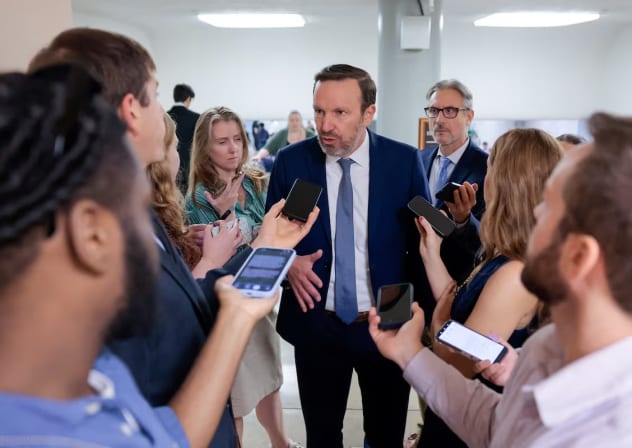
"I've never encountered anything like this in my time in the Senate," US Democratic Senator Chris Murphy said regarding what he alleges to be the US attempting to conceal details of the Iran war.
At one point, a vehicle hits a man, running and unarmed, and another crouching on the ground. It then loops back to drive over two men, both with their hands up and unarmed.

Israelis in Dubai have faced difficulty returning home since flydubai suspended all flights to Israel on Wednesday following the attempted hijacking of flight FZ1073 earlier that same day.

Iran has denied any involvement in any alleged plot at RAF Fairford, the preferred European base for US bombers.

Hamas has continued to deny targeting civilians, carrying out sexual assaults, and mistreating hostages in captivity, claiming that investigations have disproved the allegations.
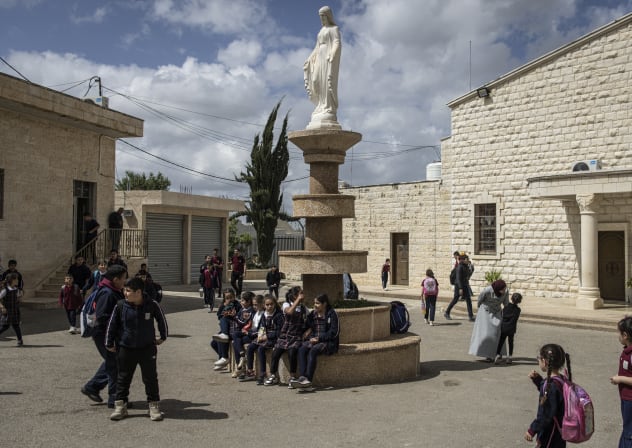
The Popular Movement to Overturn CEDAW claimed that the Ephpheta Paul VI Institute prevented a student from attending classes while wearing an Islamic head covering.
"Eliminating hostile or critical voices... has effectively become a staple policy of the Islamic Republic of Iran," prosecutor Bill Emlyn Jones told jurors.

Iranian state media published images of women training in missile use, urban warfare, firearms, and drone operations as part of a new military training campaign.

Ahmed al-Sharaa arrived in the Saudi capital for an official visit, where he is expected to meet Crown Prince Mohammed bin Salman.
