Inside Syria, night raids, farm permits mark Israel's expanding reach - feature
A local security source quoted by the Syrian news organization Enab Baladi said Hamada was conducting private business rather than carrying out a military mission.

A local security source quoted by the Syrian news organization Enab Baladi said Hamada was conducting private business rather than carrying out a military mission.


Syrian Foreign Minister Asaad al-Shaibani rejected claims that Turkey intended to establish a military base at Abu al-Duhur, saying the site was being restored for use by the Syrian Air Force.

Netanyahu accused of creating tensions with Syria, Turkey for electoral purposes • Syria has mostly curbed Iranian smuggling under Ahmed al-Sharaa, as IDF sources say no recent spike detected

The call, which has not been previously reported, came as the US threatened to roll out major economic sanctions targeting Iran and its trade partners.

Under Articles 38 and 44 of UNCLOS, Iran cannot suspend, impede, or charge tolls for vessels passing through the Strait of Hormuz.

"The organization interferes with humanitarian operations, exploits civilian infrastructure, influences distribution mechanisms, and continues its repeated attempts to smuggle prohibited items."

The video, linked on X/Twitter by anti-regime London-based journalist Niyak Ghorbani, showed various locations Barron had been at specific points in the past, including Trump Tower.

On Sunday, Baghaei said the army chief of Pakistan, which has mediated between the United States and Iran, will visit Tehran on Monday.

Now Iraq appears to be backtracking on the deadline for placing militia weapons under state control.

Now, the warnings of a crisis in Syria between Israel and Turkey, two key US allies, may help lead to some kind of positive outcome.
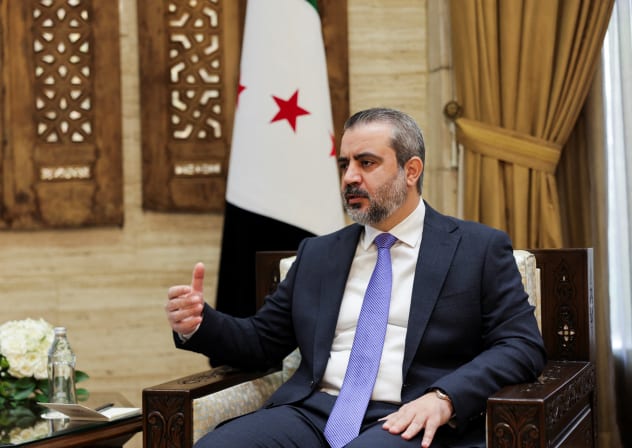
According to SANA, Syrian Foreign Minister Asaad Hassan al-Shaibani announced that Syria is beginning “a new phase” in dealing with the country’s chemical weapons legacy.
