Former Yisrael Beytenu MK Esterina Tartman dies at 68
After retiring from political life, Tartman turned to private business and public activity outside of government.

After retiring from political life, Tartman turned to private business and public activity outside of government.


The incident occurred when an 80-year-old driver lost control of her vehicle and crashed into the residence; it was not part of an attempted car ramming attack, Walla learned.

A new survey finds one-third of Israelis describe Jewish rioters involved in recent West Bank violence as “Israeli terrorists,” while another 18% call them “nationalist criminals.”

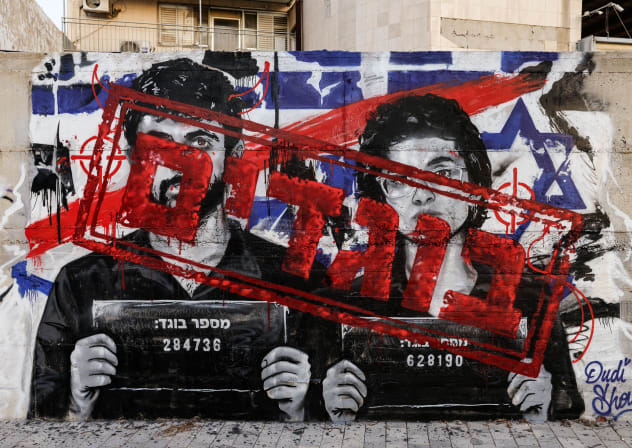
IDF Chief of Staff, Lt.-Gen. Eyal Zamir announced his intention to order a review of the film on Monday, suggesting that legal action could be taken against the directors of NAZA.

Over 40 Israeli human rights groups issued a joint statement in support of 'NAZA' producers and condemning calls to revoke their citizenship.
The package will reportedly consist of 40,000 of the 2,000-pound bombs, including 20,000 MK-84s and 20,000 BLU-117s.

The target of the strike was Nael Abu Obeid, the commander of Hamas’s Rafah Brigade, who replaced his predecessor, Mohammad Shabanah, who was killed by the IDF in May 2025.

Amir Ganah pulled a goal back to cut the lead to 2-1 at halftime. Sokler found the back of the net again off a Varela cross, while Peretz added a marker as well to take the 4-1 win.

The Red management decided: "To the extent that warning letters or other proceedings exist, they are canceled. The goal is to meet Hapoel fans in the stands, not in court."

“You have ended your career,” he allegedly wrote in one message. “I am going to be cruel at a level you never imagined.”

Winter went on to note that it is “unpleasant” to have to “endure attacks from within the [right-wing] camp,” including Prime Minister Benjamin Netanyahu and the Likud.
