Rivlin, haredi moderates, protest leaders meet
07/19/2012 04:08
Knesset speaker looks for common ground on enlistment of ultra-Orthodox into national service.
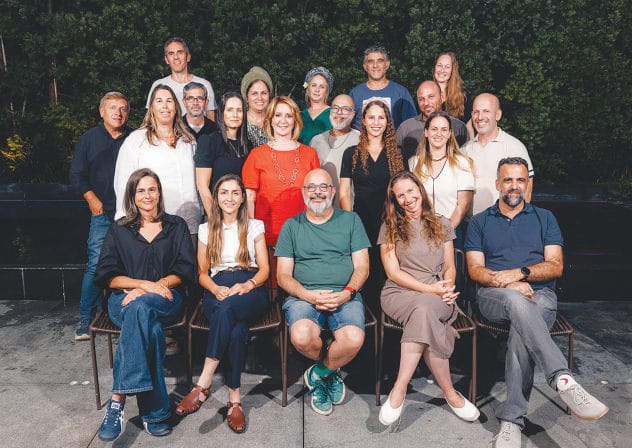
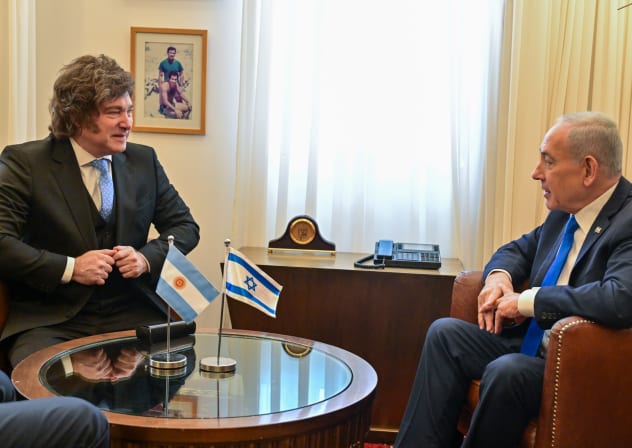
Rivlin meets moderate haredim, Camp Sucker leaders Photo: Marc Israel Sellem/The Jerusalem Post
Knesset Speaker Reuven Rivlin met near the Knesset on Wednesday with
representatives of the moderate haredi Tov political movement and of the
campaign to enlist haredim into national service.
“Politics has failed,”
Rivlin said in reference to the failure of Kadima and the Likud to reach an
agreement on new legislation for drafting the ultra-Orthodox into military or
civilian service.
“So we are here today to bring everyone together under
one tent instead of sitting in separate camps,” Rivlin continued, speaking at
the round table conference held in the Tov tent in the Wohl Rose
Garden.
“Not everyone can be a leading Torah scholar of the generation,”
argued Rivlin in reference to the demand for a ceiling to be placed on the
number of yeshiva students who are able to receive exemptions from national
service through full-time study.
“But coercion is not desirable either,”
the Knesset chairman emphasized. “All sides need to understand that there must
be compromise, and for this we need to sit down together.”
Hanoch
Verdiger, chairman of Tov, briefly outlined his movement’s proposals for
drafting haredim into national service, according to which yeshiva students
would be able to defer service until age 23, but would only be able to enter the
workforce following the completion of national service.
If a yeshiva
student decides not to serve, then he could return to yeshiva but would only be
able to join the workforce after he performed national service.
“It’s not
possible to change the perspective of a deeply embedded culture through a ruling
of the High Court of Justice or a coercive law passed through the Knesset,”
Vrediger said. “However, we also understand the frustration of the secular
community with those who don’t serve.”
Ariel Deri, director of the Tov
movement, said the proposals presented up until now by the various political
factions would only worsen the lack of haredim in national service, because the
coercive elements of such legislation would alienate the ultra-Orthodox
community.
“We wanted to make a new voice heard within Israeli society
from the sector of the haredi community that has served in the army and has
integrated itself into public life,” Deri said.
Yoav Kish, one of the
leaders of the IDF draft reform movement – Camp Sucker – who was in attendance,
welcomed the proposals of the Tov movement.
“We are not against haredim,
they are our brothers and we need them with us,” Kish said. “We value Torah and
Torah study, but these values do not contradict the idea of national service and
we need the haredi community to put its shoulder under the stretcher,” a
reference to arduous stretcher marches during IDF training.
Kish added
that it is not always possible to progress with the full agreement of all
parties, and called on the prime minister to continue with efforts “to change
the reality so that in another 20 years everyone will be sitting under the same
tent together.”
Although the meeting was generally good-natured, members
of the reform campaign nevertheless reiterated their stance that the principle
of service for all must be applied.
Shahar Ilan of Hiddush – Freedom of
Religion for Israel said that “Israeli society is not willing to put up with a
sector of society that doesn’t serve and doesn’t work.”
He pointed out
that the leaders of the haredi community, in particular the rabbinical
leadership, have opposed any reform to the status of yeshiva
students.
Ilan said the Tov organization was an exception within the
ultra-Orthodox world.
Deri said, however, that the movement is far more
representative than is immediately apparent since, he claimed, there are many
people within the community who agree with its stance but do not like to express
such sentiment publicly.
Boaz Nul, another draftreform leader, said that
despite the good intentions of the Tov representatives, a noncoercive approach
had been attempted with the Tal Law that he claimed had failed.
Deri
strongly rejected Nul’s assertion, pointing to haredi enlistment figures for the
IDF and civilian service in 2007, when implementation of the Tal Law began, of
just over 300 individuals, as opposed to the almost 2,400 haredim who served in
military and civilian service in 2011.