‘S.D.’ contradictions may crush Holyland case
11/05/2012 04:08
Analysis: State’s witness admits paying bribes from own pocket, in own interest.
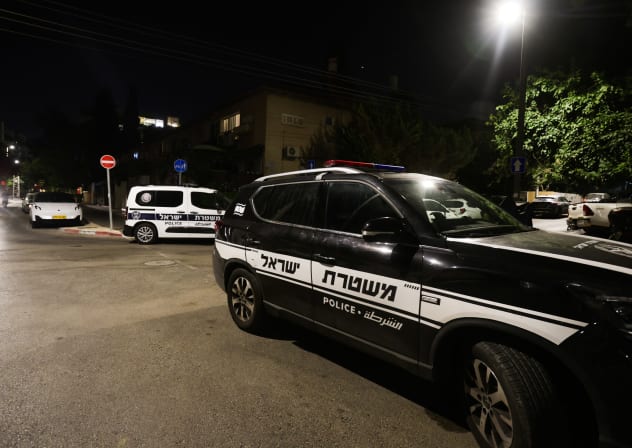
Holyland Photo: Ronen Zvulun/Reuters
The story of the state’s key witness in the Holyland case – referred to only as
“S.D.” under a gag order – continued to crumble with some dramatic
contradictions on Sunday, only days after the witness returned from the
hospital.
The most important part of the witness’s story regarding former
prime minister Ehud Olmert was an alleged NIS 1.5 million in bribes that S.D.
gave to Olmert – or at Olmert’s behest – through 1999, as well as more than an
additional NIS 500,000 after 1999, to move the Holyland project
forward.
Part of what has so far made the case so compelling is the sheer
amount of evidence and number of defendants, making the issue appear to be a
widespread, controlled fraud network.
It made sense that a man as
powerful and influential as Holyland project owner Hillel Cherny would have a
middleman to pay off public officials – in order to distance himself from the
transactions and maintain some plausible deniability.
Until now, S.D.’s
narrative, not just in one instance, but in explaining how the entire bribery
scheme worked, was that Cherny would funnel him funds, which he would pass on to
public officials such as Olmert.
With cracks appearing here and there
regarding particular events, that story held, at least until
Sunday.
Then, the cracks became a chasm, as S.D. admitted that a
substantial amount of the funds he gave to Olmert’s brother Yossi, at Olmert’s
behest (as much as NIS 500,000), had come out of his own pocket, and not via
Cherny.
This revelation was significant, because it could break open the
entire idea that there was a network of fraud and deals between S.D., Cherny,
Olmert and the other 14 defendants.
It appears that S.D. was acting on
his own, without the others’ knowledge.
This is good for Cherny, but it
also reaps huge dividends for Olmert.
If the story of the fraud network
falls apart and S.D. was acting on his own, then maybe even if S.D. gave Olmert
money, it was not a bribe in the criminal sense – but a financial
donation.
Such a donation to someone in a position to influence a
building project does not look good – and might have the appearance of
impropriety – but it makes it much harder to call Olmert’s behavior,
criminal.
In other words, S.D. was trying to bribe people whether they
asked for the bribe, or not, and whether they knew they were being bribed, or
not.
Except that to actually be bribed, you have to know it’s a
bribe.
What made matters worse was that S.D. admitted that part of the
reason he was paying the bribes was that he himself had a financial interest in
moving the Holyland project forward, past legal obstacles.
S.D.’s
testimony even implied that he enjoyed the challenge of getting the project
through the system and overcoming the legal obstacles, as proof of his
resourcefulness.
Other key aspects of S.D.’s accusations against Olmert
also crumbled from the concrete to vague ambiguities, with S.D. appearing to
take action on his own.
Regarding the funds that S.D.
testified he
had given Yossi Olmert, he had specifically said that he had used checks from
his own account and had made them payable to Yossi Olmert.
On Sunday,
S.D. said he did not know which account he had drawn the checks on, and that he
had not filled in the name of the payee.
This suggests more ambiguity,
both regarding payments S.D. said he made at Olmert’s behest, and their purpose
and motivation.
If this is unclear, then it is hard to convict anyone
involved of a crime besides S.D. – who has immunity as state’s
witness.
The case is not over and Olmert is not yet off the hook after
these, or last week’s – not insignificant – contradictions.
Even Sunday’s
contradictions technically were only regarding bribes from 2002 and later, not
earlier alleged bribes.
But trials are also about the credibility of
witnesses, and it is becoming harder to see what part of the state’s case
against Olmert is provable beyond a reasonable doubt.