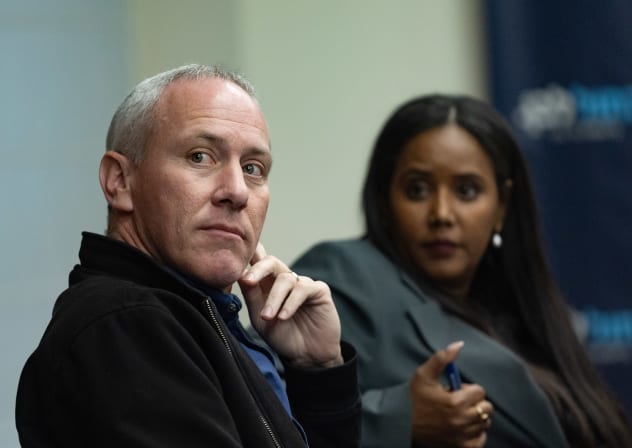
Ahmed Zubiedat and his wife, Fatina, are already on their way to building their
dream home – in the Galilee community of Rakefet.
The couple have been
engaged in a long legal battle to be allowed to build a home and settle down in
the Galilee town of about 800, where the acceptance committee twice rejected
their application to join on the basis of their not being “compatible” with the
character of the community.
On Tuesday, the law that has allowed
communities like Rakefet to be selective of new residents was reviewed by a rare
full panel of nine judges on the High Court of Justice, which agreed to discuss
whether the law amounts to blatant discrimination against Arabs, homosexuals,
the disabled, single-parent families and a whole host of other people, as is
argued by several human rights groups.
The petitioners include Adalah:
The Legal Center for Arab Minority Rights in Israel, the Association for Civil
Rights in Israel, and the Abraham Fund Initiatives among others. They are asking
the court to strike down the Acceptance Committee Law, which allows
approximately 434 communities in the Negev and the Galilee to have unlimited
discretion as to whom they allow to move in next door.
In September 2011,
after a six-year battle, the High Court ruled that Rakefet and the Israel Lands
Authority must provide the Zubiedats, who live in nearby Sakhnin, with a plot of
land within 90 days.
But the Arab couple says the case is not just about
them, and they don’t want to be the exception to the rule.
On Tuesday,
they waited eagerly, with high hopes that a potential landmark decision will
make it possible for other couples to do the same.
“We already got our
High Court decision, more than a year ago, which allowed us to buy the plot of
land,” they told The Jerusalem Post. “It’s been bought, we have our building
plans, and we’re going to start building our home soon.”
The Zubiedats
would know what a dream home looks like.
They are architects who, after
graduating with honors from the Department of Architecture at the Bezalel
Academy of Arts and Design in Jerusalem, set up a successful practice in
Sakhnin, which they commute to from Karmiel.
Their decision to put down
roots in a community where the overwhelming majority will be Jewish was not an
ideological one, explained Ahmad Zubiedat, but one based on the fact that
Rakefet offered the quality of life they were looking for. And on principle,
they see no reason not to be able to live somewhere that suits them.
“I
don’t believe in the legitimacy of this process of weeding out people,” he
said.
“There is no need for this and it’s not logical that young people
who want to live somewhere should be prevented, once they find a place they’d
like to buy.
“We’re a part of the public in this country, and we deserve
to choose where to live and we should be able to live where we want,” he said.
“A decision on this issue means that we won’t be the only ones who broke through
the barrier, and that it ends there, with our case in Rakefet.”
Edan
Ring, a spokesman for Adalah, said that the law, approved in the Knesset in
March 2011, has already had a “chilling effect” and has deterred many Arabs who
would like to live in Jewish-majority communities from even trying – to say
nothing of other minorities who don’t fit into cookie-cutter definitions of a
typical Israeli family.
“Since we started all the legal procedures, it’s
very hard to find Arab residents who are asking to get into Jewish communities,”
Ring said. “The state is always saying it’s early, that it’s premature to say if
it’s possible to rule on this or not. But as we see it, this law is
already having an impact in the field.”
Even if the law is struck down,
the impact would be a gradual one – and hardly a seismic shift in how things
look on the ground.
“This decision won’t so much change the map in
Israel, because the government can, of course, find other ways of shaping the
map as they want it,” Zubiedat said.
“But removing these committees can
change the situation in the North and in other parts of the country so that it’s
more open, and that we don’t have so many barriers between us and our
neighbors.
“If we win, it strengthens our sense of citizenship in this
state – it shows how much in democracy, you can change things,” he added. “We
came to this process in a very positive way. We came to buy this plot because we
found a place we’d like to live. The court’s decision can certainly influence
the atmosphere in the country. It’s not just that we need to accept ‘the Other,’
but to not even define us as the Other anymore.
“We have to get to know
each other close up, not far away. We are people like everyone else. If the
majority of Israelis will realize this, it will open many positive horizons.”