The battle lines were drawn in stone, almost like a wall.
On one side of
the court room before the High Court of Justice on Wednesday was the state
attorney and a colonel from the IDF’s Civil Administration of Judea and
Samaria.
On the other side were the villagers of Battir, the Friends of
the Earth Middle East (FOEME) and, surprisingly, the Israel Nature and Parks
Authority.
That’s right – the state was arguing with itself, with an
unprecedented defection by the Authority joining the fight against a new
extension of the West Bank barrier through the well-known Battir cultural
site.
An all-out battle for Battir, a West Bank village and well-known
cultural landscape in the Judean Hills, was on full display with no fewer than
five parties weighing in.
Litigants interrupting each other in Israeli
courts is par for the course, but dozens of interruptions, punctuated with
attacks saying that what the other side was presenting to the court as fact was
blatantly false is not.
Clearly, the litigants were adversaries more than
just with respect to the case before the court.
At one point, one of the
petitioners’ attorneys, top human rights lawyer Michael Sfard, interrupted the
IDF colonel saying that he was neither an attorney nor an archeologist and
should keep his comments focused on security issues only instead of straying
into giving an opinion that the harm to the landscape would be
negligible.
The colonel responded that he spent almost every day
surveying West Bank areas and that the petitioners’ attorneys were stating many
inaccuracies about security issues.
In one back and forth, the colonel
and the attorneys even appeared to stray into debating where last month’s Tel
Aviv bus bomber came from, with Sfard suggesting that it was an internal
security problem and the colonel saying it was external and that Sfard was
interpreting the facts in his own interest.
Both sides appeared to
chuckle and laugh at the other side’s claims as they were presented, in a sign
of psychological warfare.
The judges, unusually, also got in several
laughs and had more conferences than usual during the proceedings, although it
was unclear who they were laughing at since they whisper to one another when
conferring and are seated several meters away from everyone else.
The
only exception to the wall between the sides inside the courtroom was when the
villagers’ attorney and the IDF colonel had to awkwardly sit next to each other
for 10 minutes while the attorney was running his slideshow.
There was no
other place for him to operate the projector if the judges would be able to view
the screen.
The screen was also a big hit, with no fewer than three
slideshow presentations of the same landscape, but each one drawing completely
different conclusions about what would happen to the flow of water throughout
the landscape and other issues.
And who was the face of the Parks
Authority’s for attacking the state and the IDF’s position? One might have
expected someone who looked leftward leaning, or maybe an
Israeli-Arab.
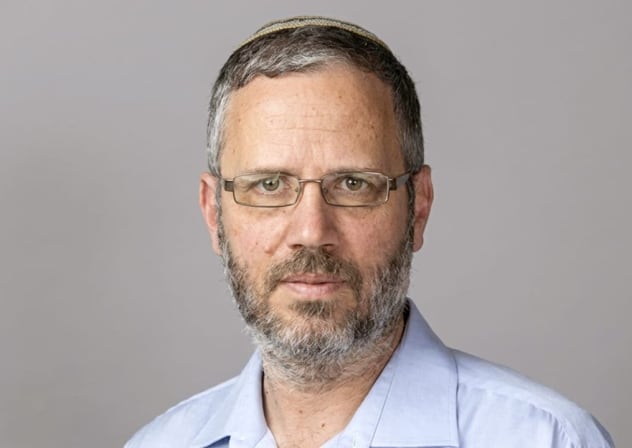
Instead it was a large, kippa-wearing, extremely
long-bearded religious Jew, who looked a lot more like the settlers who are
usually sitting next to the state and the IDF in hearings on the wall’s
route.
Why was he protesting the new wall construction? Aside from any of
the issues raised by the petitioners, he was highlighting that the construction
would harm a second- century outpost from the Bar-Kochba revolt that the
Authority claimed is equivalent in value to the much more famous site of
Masada.
Outside the courtroom the tension dissipated.
The colonel
clearly knew and was making conversation with the Palestinian
villagers.
He also knew and seemed to be trying to charm the religious
Jew representing the Parks Authority to possibly tamp down his opposition, and
promised to try to protect “every rock” he came across.
The couple dozen
or so Palestinian villagers and numerous media representatives were also trying
to make sense of what had just happened and how the court may
rule.
Whether the wall gets extended or not in this case, while a major
battle, it appears that overall this will be just one more round between two
sides who continue to be walled off from each others’ perspectives on resolving
security, human rights and cultural issues in the West Bank.