The unexpected election results have created daunting challenges for Prime
Minister Binyamin Netanyahu. Many Israelis dislike Netanyahu. He has personality
deficiencies and, like every Israeli leader since David Ben-Gurion, has made
major mistakes.
But to his credit, over the past four years he has moved
Likud to the center and achieved a national consensus. He succeeded in resisting
concerted global pressures which would have undermined our security and has
created an international awareness of the dangers of a nuclear Iran. He also
made crucial strategic decisions that proved to be highly beneficial and
undoubtedly provided greater security to the nation than his
predecessors.
Nevertheless, his electoral strategies proved
disastrous.
Had he gone to the polls as initially planned and not entered
into the stillborn alliance with Kadima and subsequently consummated the joint
list with Yisrael Beytenu, he would today be in an infinitely better
position.
HOWEVER, THE extraordinary success of Yair Lapid’s Yesh Atid
may in the long term prove a blessing for both Israel and Netanyahu. It may
enable him to introduce highly overdue domestic reforms and to chart a balanced
approach toward the Palestinians on behalf of a broad national
government.
In viewing this, one must dismiss the media nonsense that the
elections created an evenly balanced Right–Left division. Setting aside the fact
that such terms are meaningless in this context, a government dependent on the
support of 12 overtly anti- Zionist Arab MKs is inconceivable.
Nor has
the nation moved to the Right. The elimination of liberals and the success of
hard-liners in the Likud primaries reflected internal party machinations rather
than a genuine national shift to the Right. However this cost Likud votes and
Netanyahu’s subsequent efforts to compete for hard-right voters may have been
counterproductive.
This election was not a vote of no-confidence in
Netanyahu’s handling of the peace process, relations with the United States or
foreign affairs. The only parties directing the campaign against Netanyahu’s
external policies were Meretz and Tzipi Livni’s Hatnua, both of which combined
only obtained 12 seats.
Despite some lip service criticizing the
government handling of negotiations, the major opposition parties concentrated
primarily on domestic social issues. In particular, Yair Lapid’s challenge
against ultra-Orthodox extremism – his call to engage them in the draft or take
up gainful employment, attracted many voters.
In terms of foreign
affairs, despite the massive decline of support for Likud Beytenu, the vast
majority of the electorate still prefer Netanyahu over all other candidates to
retain the leadership.
A CONSENSUS prevails among Israelis supporting
Netanyahu’s view that it is impossible to achieve peace with the Palestinians
under their current leadership. Palestinian Authority President Mahmoud Abbas is
now perceived as a charlatan, speaking with a forked tongue and committed to
ending Jewish sovereignty no less than is Hamas. His comments this week
regarding Zionist collaboration with the Nazis should not be surprising given
his doctorate was premised on Holocaust denial.
However, most Israelis
have no wish to absorb and rule over millions of Palestinians and oppose
annexing the territories or creating a binational state. They favor the status
quo, but only until such time as a genuine peace partner emerges and a
Palestinian state no longer threatens Israel’s security.
Thus, in the
present climate, most Israelis back Netanyahu’s unwillingness to make further
concessions and endorse his efforts to achieve interim solutions.
There
is awareness that we face unprecedented global pressures and that this is a
critical moment in our history. We are surrounded by adversaries dedicated to
our destruction. Aside from Hamas and Hezbollah, we have chaotic Islamist
regimes in Syria, Egypt and possibly Jordan. We face an existential threat from
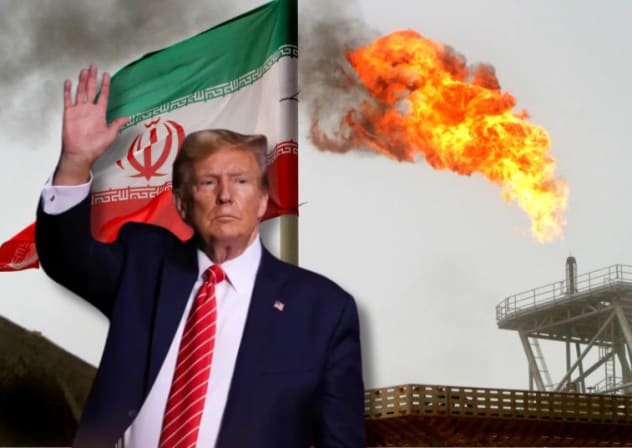
Iran, which must be prevented from becoming a nuclear power.
IN THIS
environment, with the Europeans ready to impose more unrealistic demands upon
us, our ties with the US are more crucial than ever. Yet recent signals from the
US administration are troubling.
Obama has nominated as defense secretary
a man with a consistent record of hostility toward Israel and opposition to any
form of military action against Iran.
Obama’s offensive remarks on the
eve of the election that he has a better understanding of Israel’s needs than
Netanyahu represented blatant interference in a sovereign country’s domestic
affairs and a display of contempt for an ally.
Should Congress provide
Obama with a free hand, over the next four years he could make our life
extraordinarily difficult.
The US could suspend employing its veto
against one-sided UN votes sanctioning Israel; there may be calls to accept the
indefensible ’49 armistice lines as borders (with swaps which the Palestinians
will never agree to); requests for additional territorial concessions to the
Palestinians without reciprocity; demands for a settlement freeze including
within the major settlement blocs and Jewish Jerusalem; pressure to divide
Jerusalem, despite the fact that even most Israeli Arabs prefer to remain under
Israeli sovereignty.
However, despite Obama no longer requiring votes or
support for reelection and despite his obvious dislike of Netanyahu, he cannot
simply ignore or overrule the wishes of Congress. Fortunately, as of now, the
US-Israel relationship remains solid and Congress is committed to retaining the
alliance.
To retain our strong ties with Congress and the American
people, Netanyahu must create a broad government and demonstrate that he is
acting on behalf of the entire nation. He would then have the ability to make
concessions on secondary issues while remaining firm on those matters that can
impact on Israel’s basic security requirements. He would also be able to
demonstrate to the world that his policies are supported by the vast majority of
Israelis and expose the falsehood of liberals seeking to depict Israel’s
policies as being based on hardright influences rather than a national
consensus.
THE PRINCIPAL obstacle which could thwart this would be his
inability to retain support of both Shas and Yesh Atid and also respond to
popular demands that haredim participate in the draft or national service and
become encouraged to work for a livelihood rather than being lifelong recipients
of welfare.
This will undoubtedly represent a key condition for Lapid
joining the government and Shas (many of whose supporters, unlike United Torah
Judaism, serve in the IDF) will be under pressure to compromise on this
issue.
If Shas, Yesh Atid, Kadima and Bayit Yehudi join Likud-Beiteinu to
form a coalition, Netanyahu would then preside over a stable government based on
74 MKs not subject to intimidation by any single faction.
The
effervescent Naftali Bennett of Bayit Yehudi, whose dramatic surge was also a
highlight of the election, will be obliged overcome his previous confrontations
with Netanyahu and control the extremists in his party.
Failure to create
a broad coalition would confront Netanyahu with a nightmare situation of heading
a narrow government whose policies would be subject to the veto of haredim or
ideological hardliners promoting annexation and convinced that we can stand
alone without the support of a superpower.
Under such circumstances no
stable government could be formed. The chaos arising from this would undermine
our ability to confront our adversaries and withstand global
pressures.
To avert this situation, we are entitled to demand that our
political representatives behave as patriotic Israelis, suspend their
differences and collaborate to promote the national interest.
The
writer’s website can be viewed at www.wordfromjerusalem.com.
He
may be contacted at ileibler@leibler.com