The Jerusalem Post
Jpost search icon google-icon iphone
  Set as Homepage
Mon, May 20, 2013   11 Sivan, 5773
newspapers magazines
 
    • Breaking News
    • Diplomacy & Politics
    • Defense
    • National
    • Mideast
    • Syria
    • Iran
    • World
    • Business
    • Sports
    • Health & Science
    • Environment
  • Video
  • Opinion
    • Columnists
    • Editorials
    • Op-Eds
    • Letters
  • Jewish World
  • Lifestyle
    • Arts & Culture
    • Food & Wine
    • Travel
  • Features
    • Insights & Features
    • Week in review
    • On the Web
    • Shalva Superheroes
    • Obama in Israel
  • Blogs
    • In the news
    • Judaism
    • From the Middle East
    • Lifestyle
    • Aliya
    • Science and Technology
  • JPost Apps
    • iPhone app
    • iPad app
    • Android app
    • Twitter
    • Facebook
    • RSS feeds
    • JPost Toolbar
    • JPost Newsletter
    • JPost Alert
  • Premium Zone
    • The Jerusalem Report
    • The Experts
    • 20 Questions
    • e-paper
    • Ivrit
    • Christian Edition
    • Dash
    • Magazine
    • Metro
    • In Jerusalem
  • French
    • Politique & Social
    • Affaires Palestiniennes
    • Diplomatie & Monde
    • Art & Culture
    • Israel
  • Green Israel
JPost Learn Hebrew  
Advertise with us  
Nefesh Guided Aliyah  
Eldan  
AFMDA  
Africa Israel Group  
Isram Group  
Kupat Ha  
JPost Twitter  
JPost Facebook  
Classifieds  


Breaking News
 
 
  • JPost.com
  • Opinion
  • Op-Ed Contributors
 

Why US engagement in Israeli-Palestinian peace is needed

By EDWARD DJEREJIAN
03/20/2013 23:47
Tweet

Strong and sustained US engagement with the president’s full backing would be essential to advance a comprehensive Israeli-Palestinian peace.

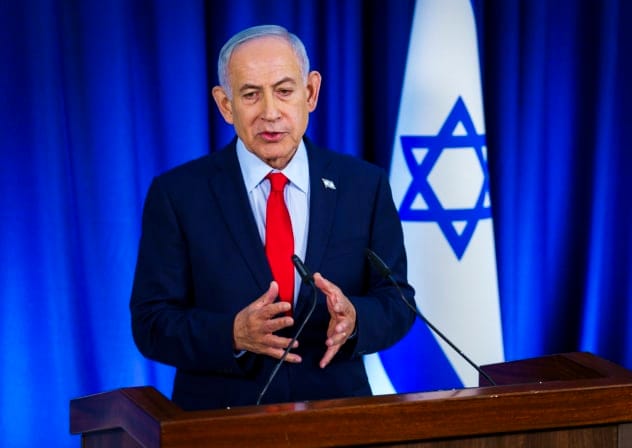
US President Obama with Prime Minister Netanyahu and PA President Abbas, September 1, 2010.
US President Obama with Prime Minister Netanyahu and PA President Abbas, September 1, 2010. Photo: REUTERS/Jason Reed
President Barack Obama’s trip to Israel, Palestine and Jordan provides an opportunity for the administration to reassess the role of the United States on the Israeli-Palestinian issue. The question for US policy-makers is whether the US should develop a more proactive approach on this issue at a time of historic change in the Middle East.

Prevailing wisdom offers bleak prospects for renewed negotiations between the Israelis and the Palestinians.

Political uncertainty, unilateral actions and a general lack of trust have immobilized policy-makers in both Israel and Palestine. A key factor is whether or not there is the requisite political will, beyond mere rhetoric, to move forward on peace negotiations in Jerusalem, Ramallah and Washington. Although both Israelis and Palestinians recognize that the status quo is untenable, the power imbalance between the parties remains too large for negotiation and agreement without substantial third-party intervention.

In this respect, strong and sustained US engagement with the president’s full backing would be essential to advance a comprehensive Israeli-Palestinian peace, but only through diplomacy that also reshapes the environment on the ground. The goal would be the twostate solution – considered by most observers as the preferred resolution to the Israeli-Palestinian conflict – with a democratic Jewish state and an independent and sovereign Palestinian state living in peace and security next to one another. The alternatives are continuing stalemate, occupation and conflict, or a onestate solution where the Jewish population becomes the minority as a result of current demographic trends.

What diplomatic framework to initiate and sustain effective negotiations would need to be put in place if the president and his national security team decide to get engaged? The main components of a proposed negotiating framework could include the following: 1) Announce a US political horizon for the negotiations and general terms of reference on key issues such as territory, borders, Israeli settlements, Jerusalem, refugees, security arrangements and water.

2) Negotiate and sign proposed Memoranda of Understandings with the government of Israel and the Palestinian Authority to address their respective considerations and concerns.

3) Call upon the parties to start direct negotiations in fast and graduated tracks with the obligation to implement and build on areas of agreement and continue until a final settlement is reached. A supportive international framework and backstopping initiatives would be essential components of the strategy.

The terms of reference for negotiations should be broad enough to allow buy-in from both parties and regional stakeholders, while at the same time sufficiently defined to ensure breakthroughs and avoid a deadlock, especially in the graduated negotiating track. They should also be linked to the Arab Peace Initiative of 2002. The purpose of the fast-track negotiations would be to rebuild trust between the parties, which is integral to reviving Israeli-Palestinian talks.

Strengthening the Palestinian state-building effort by expanding the political, administrative, security and economic control of the Palestinian Authority over most of the West Bank territory is an achievable step in this direction, permitting substantial headway in the short term and paving the way for solving the outstanding core issues of the conflict.

An important mechanism to keep negotiations moving forward would be to adopt the principle that “what has been agreed upon shall be implemented.”

This approach would be based on understandings between the parties, and with guarantees from the international community, that all measures implemented shall be without prejudice to remaining issues and subject to the terms of reference and rules of engagement of the negotiating process. The essence of this principle is to transform the economic, social and security environment on the ground while working concurrently to achieve breakthroughs on permanentstatus issues.

Another important component complementing the US role and buttressing negotiations is to maximize regional and international support by building on the Arab Peace Initiative of 2002 with a new international framework expanded from the Quartet (the United Nations, United States, European Union and Russia). Bilateral negotiations on permanent status could be supplemented by specific issues of common interest and concern through multilateral negotiations. In tandem with the fast and graduated negotiation tracks, the parties could form a US-facilitated international group to address the linkages between the various aspects of the Arab-Israeli conflict and Palestinian-Israeli conflict. In particular, these negotiations could cover, inter alia, the status and mechanisms for resolution of the refugee issue; security cooperation and a multinational force presence; and regional economic and infrastructure cooperation. The 1991 Madrid Conference should serve as a model.

President Obama and Secretary of State John Kerry will have the opportunity to assess the situation firsthand on their Middle East trip. Hopefully, they will come back to Washington with the impression and the determination that the parties can be brought to the negotiating table with strong US and international support leading to a two-state solution.

The writer is the founding director of Rice University’s Baker Institute and the former United States ambassador to Israel and Syria.
  • Send
  • Large
  • Small
  • Print
  • Share
Most Viewed in
1
Israel, Turkey and gas
2
Syrian civil war: A military-strategic assessment
3
Column One: Obama and the ‘official truth’
4
The Region: Where does Israel’s greatest threat lie?
JPost Community
Tweet
President Barack Obama Israel Palestine Jerusalem Israel news Obama
Share this article
Tweet
Share
Send
Your comment must be approved by a moderator before being published on JPost.com. Disqus users can post comments automatically.

Comments must adhere to our Talkback policy. If you believe that a comment has breached the Talkback policy, please press the flag icon to bring it to the attention of our moderation team.
JPost Services
conferenceConference
newsletterNewsletter
iphoneMobile Apps
kotelcamKotel Cam
kolboJPost Alert
premiumPremium
JPost TV News  
Mobile Apps  
Bank Hapoalim  
Meir Panim  
Yad Ezra  
Rambam Hospital  
TourLuxe  
Zev Goldstein PLLC  
Penrose Gallery  
JPost Premium Zone  
JPost kotel Camera  
         
 
Israel Focus
JPost TV News
Coming soon to a screen near you!  
Nefesh B'Nefesh Guided Aliyah
Already living in Israel? Enjoy the Benefits of Aliyah!  
Give "Freedom" this Passover
to needy Israeli families. Donate now  
Intelligence Squared
The international debate forum, announces it is coming to Israel  
Bank Hapoalim
Israeli's number one bank  
Jerusalem Post Lite
Lite Edition of the Jerusalem Post for English improvement  
Learn Hebrew with us
Get 10 minutes free personal coaching in Hebrew through phone or Skype  
JPost newspapers
Sign up for the JPost newspapers and receive one month free subscription  
Kosher English Magazine
English language weekly magazine - especially for religious people  
JReport Kindle Edition
Now you can get the Jerusalem Report directly to your Kindle  
JPost Premium Edition
The very best articles are available only in our Premium edition  
Lifestyle Magazine
 
 
Real Estate
Don't Look For a House!
In Israel, our website will do it for you!  
 
Travel
Eldan Rent a Car
20% off all Car Rental Reservations in Israel  
Hertz Car Rental
Special Online Discounts!  
The King David Jerusalem Hotel
One of the world's truly iconic hotels, and a Jerusalem landmark  


Sites Of Interest:

Jerusalem Hotels
KKL-JNF
Poalim Online
BreitBart.com
Our Friends
Jerusalem Attractions
Jerusalem Tours
itraveljerusalem.com

JPost sites:

Learn Hebrew
The Jerusalem Report
Our Magazines
JPost Edition Francaise
Green Israel
Christian World
Jerusalem Post Lite

Services:

JPost Mobile Apps
JPost Premium
JPost Newsletter
JPost Toolbar
JPost News Ticker
JPost RSS feeds
JPost Archives
JPost Alert
JPost Kotel Cam

JPost Conferences:

NYC Conference
Diplomatic Conference

Information:

About Us
Feedback
Staff E-mails
Copyright
Sitemap
News Partners
Advertise with Us
Price List
Statistics
Ad Specs
Terms Of Service
Jpost.com, the online edition of the Jerusalem Post Newspaper - the most read and best-selling English-language newspaper in Israel. For analysis and opinion from Israel, the Jewish World and the Middle East. Jpost.com offers expert and in-depth reporting from Israel, the Jewish World and the Middle East, including diplomacy and defense, the Palestinian-Israeli conflict, the Arab Spring, the Mideast peace process, politics in Israel, life in Jerusalem, Israel's international affairs, Iran and its nuclear program, Syria and the Syrian civil war, Lebanon, the Palestinian Authority, the West Bank and Gaza Strip, Israel's world of business and finance, and Jewish life in Israel and the Diaspora.
 
About Us | Advertise with Us | Subscribe | Premium | Newsletter | RSS | Contact Us
 
All rights reserved © The Jerusalem Post 1995 - 2012