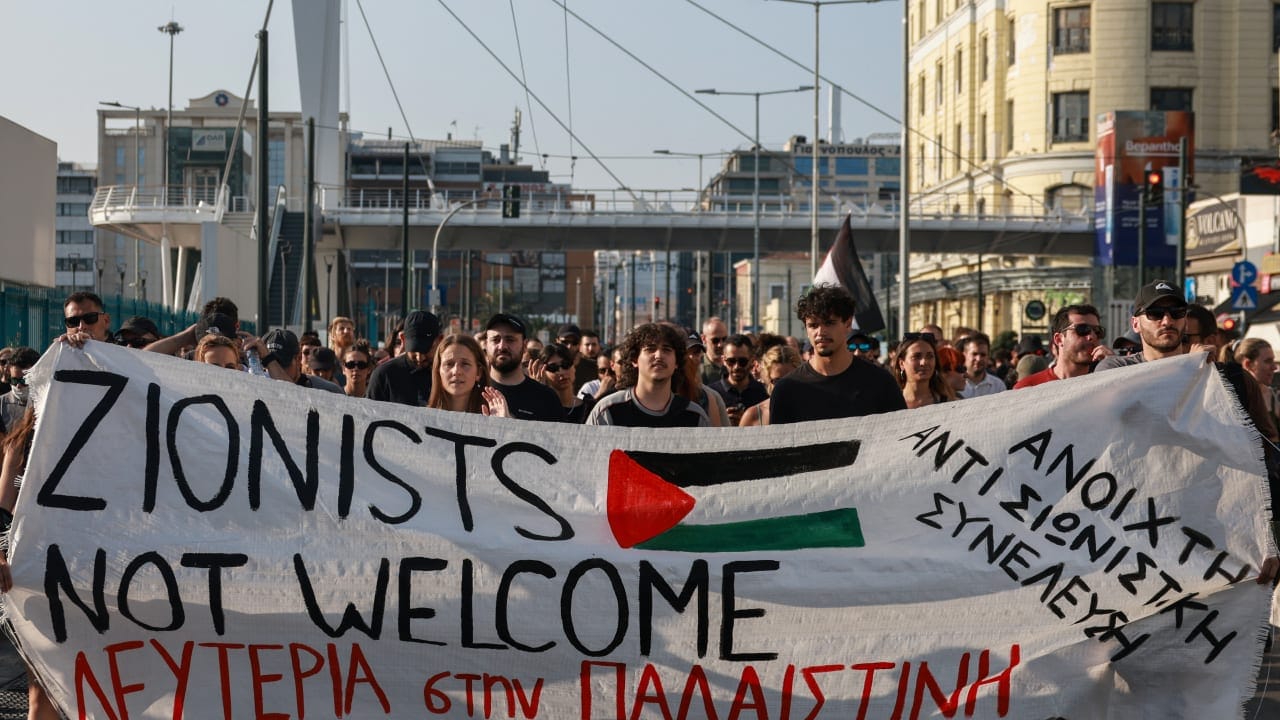
For many Jews around the world, the decision to make aliyah is shaped by both personal convictions and the realities of life abroad. Particularly since October 7, rising antisemitism in the Diaspora has prompted many Jews to reconsider their futures, with Israel offering both safety and a stronger sense of community. For these four olim, each journey was unique, yet all share a common thread: the pull of security, connection, and belonging.
Mirele: seeking community and safety
Mirele, aged 25, had planned to move to Israel after finishing school in the US, but life had other plans, and she ended up staying for college. Finally, in 2020, she began the aliyah process, but then the COVID pandemic broke out, making the move too complicated at the time. In the meantime, she started teaching and built a life in the US. She enjoyed her job and found it very rewarding, but life still felt incomplete, and she continued to feel a pull toward Israel.
As she approached her mid-twenties, Mirele felt drawn to her heritage and longed for a Jewish community. Although it was not her main reason for making aliyah, the rise of antisemitism in America, especially since October 7, also concerned her.
“I’d rather be in Israel, where all the people are my people, where everyone’s just there for one another. It took a leap of faith, but thank God I moved here.”
Making aliyah wasn’t without its challenges and Mirele recalls bureaucratic hurdles that many olim experience - but her persistence paid off. Since arriving, she has built a supportive friend group, integrated into a vibrant community, and met her husband.

Even amid the war in Gaza, the volatility of the conflict, and the constant fear of missile attacks, Mirele says she feels safer in Israel than she ever did in the United States, where she regularly faced antisemitism during her college years. Some people even threw slurs at her and performed Nazi salutes.
“I fully believe that there's nowhere safer.”
Mirele also noted a wider trend of aliyah within her community in the US, as more Jews reconsider their futures in response to rising antisemitism. Although her community has received support, fear is now driving many to seriously consider leaving.
While she finds it sad that antisemitism has become a primary motivation for aliyah, Mirele says she is grateful that Jews have a country to turn to - and that is positive if it ultimately brings more Jews to Israel.
“At the end of the day, it brings them to Israel, amazing, but it's not a good reason to. But no, thank God we have this country, we have this land.”
Eliana: family, faith, and belonging
Eliana, an Orthodox convert originally from Ireland, made aliyah seven months ago from London, drawn by family considerations and concerns about safety. Her husband, born and raised in Israel, comes from a large family with deep roots in the country.
While Ireland was generally safe and antisemitism was less pronounced, in London, the couple faced aggressive antisemitism, including verbal harassment and physical intimidation on public transportation. These experiences reinforced their decision that raising a child abroad in such an environment would be unsafe.
“I would never raise a child in an environment like that. I couldn’t. That week, I started the aliyah application. I feel safer here.”
Eliana wants to raise her family surrounded by relatives, culture, and community - a reality she has found in Israel. Despite bureaucratic hurdles and the challenges of adjusting to a new country, she feels the transition was worthwhile.
“Realistically, why would we bother staying abroad? Now we’re here surrounded by family. It’s amazing.”
For Eliana, aliyah represents more than escape from hostility; it is about connection, family, and roots.
“Beyond just the safety factor, it’s a huge mitzvah to live in Eretz Israel. It’s something really important for us.”
Living in Israel has also given Eliana a sense of safety and belonging that extends beyond family. She appreciates being part of a society where Jewish identity is central and feels confident her child will grow up in a secure environment, surrounded by both family and a community that shares her values.
“I feel incredibly safe right now. Just knowing my son is growing up with family and in a society that loves him. It’s amazing.”
Cecilia: opportunity and emerging threats
Cecilia made aliyah from Argentina in 2024, drawn primarily by academic and professional opportunities. She had been accepted to pursue a PhD at the Hebrew University of Jerusalem, aligning with her personal ambitions and with the benefits of making aliyah as a student. At the time of her move, antisemitism in Argentina was not a major factor.
“Honestly, I made aliyah because I was accepted to do a PhD in the Hebrew University of Jerusalem. It had nothing to do with the situation of antisemitism in Argentina, which was not that bad when I came here.”
Since her arrival, however, Cecilia has observed a concerning rise in antisemitism at home, fueled by conspiracy theories and political narratives. While the economic situation historically drives much of the aliyah from Argentina, growing antisemitism may increasingly influence future decisions.
“For example, we're having fires in the south. They're trying to say that the Israelis who are there are burning the south of Argentina because they want to buy the land cheaper and that Iran is pushing this, so this is something that is concerning.
“These people are playing into these conspiracy theories, and this has been very worrisome in the last couple of weeks. It’s something that is concerning.”
For Cecilia, aliyah offered more than an escape from a deteriorating environment; it provided a chance to live in a society where Jewish identity is central and cultural and educational resources are abundant. Even as she navigated the challenges of adjusting to life in Israel, and struggled with bureaucracy, she is happy with her decision.
“I wasn’t afraid of being a Jew in Argentina, and of course, I’m not afraid of being a Jew here. I feel safer, but not because of antisemitism, but from crime. Here, I feel a lot safer as a woman to walk at night alone, 100% more.”
Rivka: leaving a shrinking community in London
Rivka made aliyah from London earlier this year, driven by rising antisemitism and a desire for a supportive Jewish community. Over time, she had watched her local community shrink and stagnate. As her siblings and later her parents considered leaving the UK, Rivka feared being left behind.
A specific incident in Hendon crystallized those fears. On a Shabbat afternoon, she noticed red paint splashed across a former NatWest bank building, now owned by an Israeli charity, vandalized by a Palestinian activist group. The deliberate targeting of an Israeli-owned property in a Jewish neighborhood reinforced her sense of invasive antisemitism.
With her family preparing to leave, Rivka questioned why she should stay in a country that no longer felt safe. She ultimately made aliyah, and although she is happy living here, the journey has not been without difficulty. Since arriving, Rivka has moved between Tel Aviv, Netanya, and Jerusalem while searching for work and navigating bureaucracy, relying heavily on her peers for support.
“It's the right place to come to, and it's, you know, it's our future place, but it's not an easy place.”
Despite the challenges, she feels safer in Israel.
“Whatever your political stance is on this government here in Israel, ultimately, you know, they want to protect and look after the Jews… They will fight for you. And I don't feel the same in England."
Recent international developments, including the UAE reducing funding for students at British universities, reinforced her sense that the UK situation is deteriorating.
“If the UAE is saying that, come on, where is everybody? What's everybody thinking?”
While she regrets that fear and antisemitism are driving Jews from the Diaspora, Rivka remains grateful that Israel exists as a place to turn to and believes it offers a future no longer possible in Britain.
The pull of Israel
For these new olim, the decision to move to Israel was shaped by safety, family, community, faith, and opportunity. While each journey is unique, all share the experience of finding a home in a place where Jewish identity is valued and supported. In the face of rising antisemitism abroad, aliyah represents both a practical choice and a profound statement of identity - a move toward safety, belonging, and a future rooted in Jewish life.