1,650 kilometers separate the Noema restaurant in Moldova from the Noema restaurant on Nahalat Binyamin Street in Tel Aviv, but it seems there is a culinary abyss between them – in memories, textures, and identity. If in Eastern Europe this is basic neighborhood food, in Tel Aviv it is an aesthetic statement: Polished urban chic, precise lighting, and a young crowd enjoying life, sharing small plates and cold white wine, happily paying – quite a lot – for the experience.
Behind the kitchen stands Moshiko Avraham, 29, born in Ramla, who grew up on Bukharian cuisine and a grandmother who folded dushpareh dumplings. He says he dreamed of becoming a farmer, of combining science with the land, and he indeed travels a few times a month to suppliers’ fields in order to “feel the earth.” On his phone there are two types of notes: In one, ideas for future dishes he thinks about at night, in the shower, while traveling. In the other, ideas for entire restaurants that already have a concept, a menu, and a name – only an investor is missing. There is something almost innocent, and deeply total, in the way he lives and breathes culinary creation.
Raw sea fish (NIS 78) is a bold, red dish that embodies Abraham’s out-of-the-box thinking. Red tuna is washed in a precise sweet-sour reduction including blood orange vinaigrette and assorted greens, tied together with a chive stem. When eating, one must shed all formalities: You hold the bouquet – there is no more accurate word for it – in your hand, wipe another drop of sauce from the plate, and the dish explodes in the mouth with intensity. This is a dish that moves on the border between Asia and the Mediterranean without announcing it aloud.
Beef tartlet tartare (NIS 58) is based on dough inspired by Bukharian bread, but served in a minimalist and delicate version. The beef tartare is hand-chopped, topped with a beautiful garnish of chives and parmesan. There is a play here between humble dough and premium meat, between Bukharian generosity and French restraint.
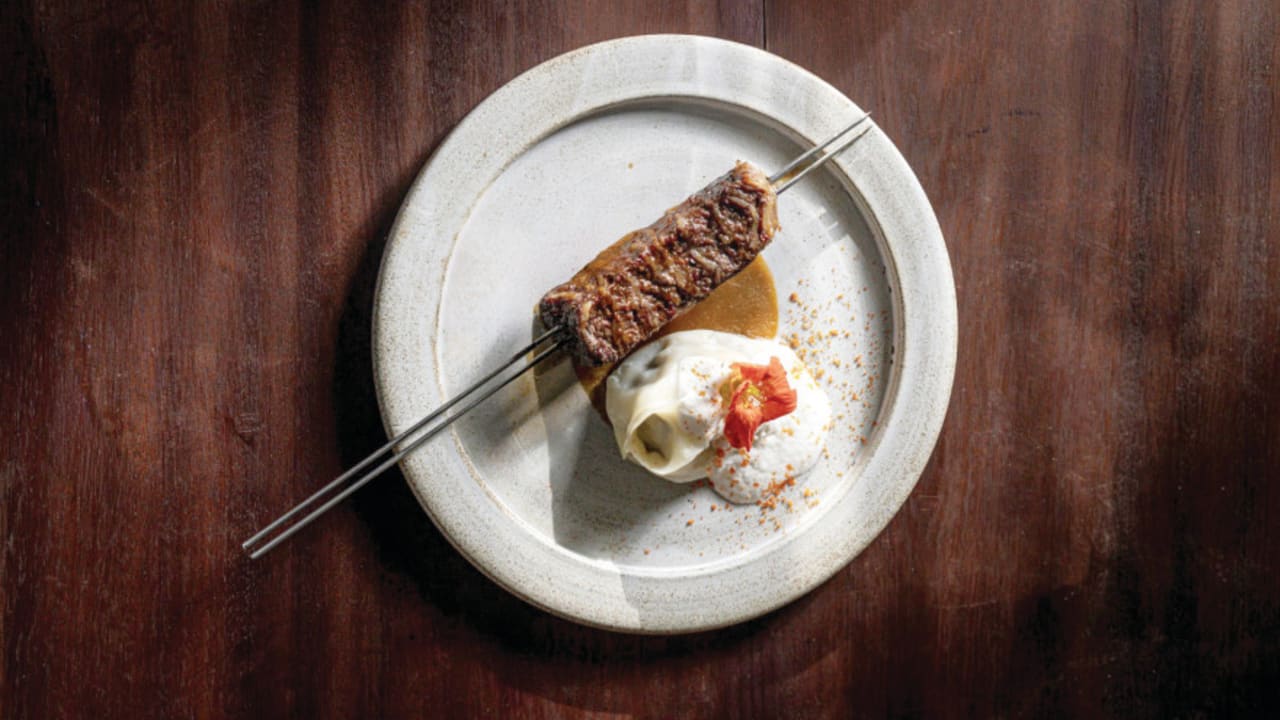
Doner skewer (NIS 102) is made of layered lamb and beef kebab, alongside a manty dumpling filled with minced meat and topped with yogurt foam. Among traditional Bukharian communities, men handled the meat and women the dough. Here they meet on one plate, in precise harmony. This is food that respects its roots but insists on speaking a contemporary language. Cheese noodles (NIS 92) are originally served here with blue crabs, but were adapted at our request into a “kosher” version: Delicate dough balls filled with caviar, in a brown butter sauce with fenugreek. At first glance, fenugreek is a rustic spice, but here it is an aromatic whisper, almost floral, deepening the sauce and elevating the dish beyond its original seafood version.
Noema is a reminder that ethnic cuisine does not have to be heavy or nostalgic. It can be chic, precise, and still connected to the soil from which it grew.
Noema, 59 Nahalat Binyamin Street, Tel Aviv, 077-9386186 (not kosher)

Precision is preserved even inside a cardboard box
When a restaurant critic orders sandwich delivery, they usually prepare for a compromise in texture. But the charcuterie delivery from Charcuterie, a new sandwich shop in Tel Aviv, proves that when ingredients are treated with reverence, precision is preserved even inside a cardboard box.
Behind the concept stands chef Dor Bernstein, who at only 24 brings the experience of veteran chefs. Bernstein, who grew up in the Golan Heights and began his journey at age 12 at Moshbutz restaurant, absorbed the art of butchery there. After refining his skills in demanding kitchens such as Taizu by Yuval Ben Neriah and Asaf Granit’s restaurants (including a long period in the Caribbean), he brings to Tel Aviv a mature and impressively cohesive vision.
The beating heart here is the art of charcuterie. The meats undergo curing, smoking, or long sous-vide cooking on site, resulting in phenomenal quality: Tender meat with deep flavors, having received all the time it deserves. But what truly elevates the place is the creative mind behind the flavor combinations. Bernstein creates a rich experience without dairy products, using smart techniques such as cured egg yolks and high-quality oils that create a satisfying richness.
We loved “Make Me Tartare” – Roman bread filled with pastrami tartare, roast beef and goose, aioli, lettuce and vegetables, garlic salsa and onion jam (NIS 66); “Asado Mado” – pulled asado, apple coleslaw, red onion, spicy pepper jam, lettuce and pickled mango (NIS 74); and “End of the Orange Season” – turkey pastrami, garlic aioli, Dijon mustard with orange zest, onion jam, pickled lemon and roasted orange (NIS 67). Each sandwich is a work of balance: The saltiness of the meat meets the bright acidity of homemade fermented vegetables and the gentle sweetness of reductions. The absence of aggressive griddle pressing allows the delicate flavors to shine. This is a high-end culinary experience in an accessible street format.
Charcuterie, 122 Allenby Street, Tel Aviv (kosher)
Ladies and gentlemen, kubaneh
At the perfect timing, you can now find in the heart of Givatayim POP UP 108, where kubaneh with a twist is sold: Alongside classic kubaneh with cheese and vegetable drizzles, you will find “Dubai” kubaneh with chocolate, kataifi strands and crushed pistachios; “Kinder” kubaneh with chocolate and Klik balls, and more. NIS 48 per unit – not bad at all.