
This is my absolute favorite time of year. The weather is warm, the sky is clear, and a sea of blue-and-white flags dances from streetlights, cars, and porches.
Jerusalem Day, which we mark today, is a day that fills our souls with gratitude and hope. Whether or not we were alive in 1967, we all know the sound of our Six Day War heroes crying, “Har Habayit b’yadeinu! Har Habayit b’yadeinu!” (“The Temple Mount is in our hands! The Temple Mount is in our hands!”). We all sing Naomi Shemer’s classic, “Jerusalem of Gold.” We all understand what an incredible miracle that day was; truthfully, every day since then has been a miracle, too.
In 1967, for the first time in 19 years since the War of Independence, people were once again able to reach the Western Wall. Just days after the Old City was liberated, they made their way there on Shavuot morning to receive the Torah, in the holiest place in Judaism.
I will never forget my first year here in Israel, walking to the Western Wall from Har Nof at 2 a.m. We started out as a small group of women walking toward the Old City. With each step, the group grew larger, until we became a sea of people walking through the night to learn Torah, reach the Old City walls, and greet the morning of Shavuot with joy and excitement.
So while this article is being published on Jerusalem Day, my heart is already moving toward Shavuot – toward Torah, toward Jerusalem, and, of course, toward the delectable dairy dishes that have become part of our Shavuot tables.
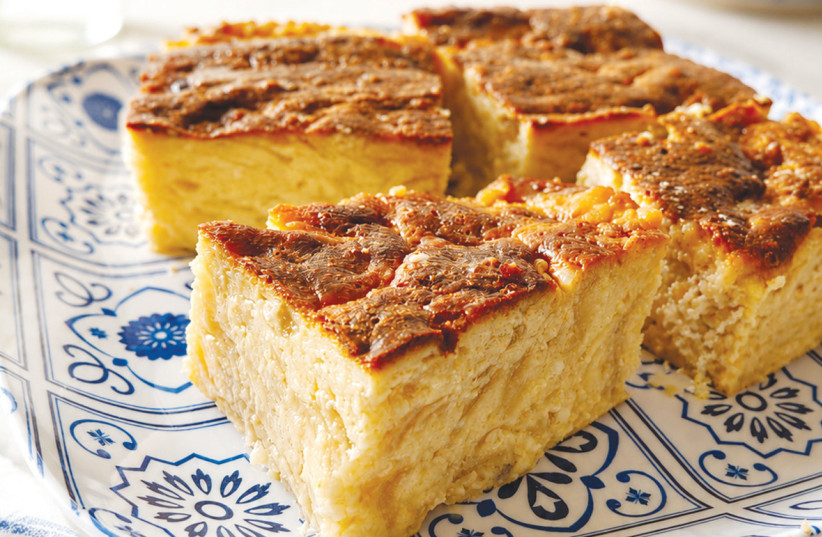
This year’s recipes are fresh, cheesy, a little nostalgic, and perfect for this special time of year.
Cheese and fruit board
One year, Shavuot began right after Shabbat, and we were hosting a crowd. I had prepared soup and other dairy delights, but since I couldn’t warm the food until Shabbat was over, everything was still heating up when my husband came home from the synagogue with some of our guests.
I was about to panic when my husband handed a bunch of different cheeses from the fridge to our friend Yonah, and said, “Here, can you please make a cheese platter so we can start with something.”
Yonah asked if we also had any fruit that he could cut up and add to the platter. Within minutes, he had created a stunning cheese and fruit board, which we passed around to the guests with some nice white wine while the rest of the food heated up.
That’s the beauty of a cheese and fruit board. No matter what kinds of cheeses or fruits you have, you can turn them into something beautiful, festive, and delicious. Add a few crackers, breadsticks, or pretzels for crunch, and you have an easy Shavuot starter that looks like you worked much harder than you actually did.
How to build a cheese and fruit board:
Choose three or four cheeses. Use a mix of textures and flavors. This can be cream cheese mixed with dill, labneh, Tzfatit, Bulgarian cheese, feta, kashkaval, Gouda, cheddar, yellow cheese slices, Brie, Camembert, goat cheese, or fresh mozzarella balls.
Choose two to four fruits. Use what is fresh and colorful. Grapes, sliced nectarines, peaches, apples, pears, dates, or dried apricots all work beautifully.
Add something crunchy, such as round crackers, breadsticks, pretzels, or sliced baguette.
Add a few extras, such as olives, nuts, honey, jam, fresh herbs, or even a few pieces of chocolate.
How to assemble the board:
Start with a large board, tray, or platter. A round board looks beautiful, but any shape works.
Place the cheeses on the board first, spreading them out so there is cheese in a few different areas. Put any soft cheese or dip, like cream cheese with dill or labneh, in a small bowl.
Next, add the fruit. Keep grapes in small bunches, and fan out sliced nectarines, apples, or pears. Spread the colors around the board so it looks balanced.
Add crackers, breadsticks, or pretzels close to serving time so they stay crisp.
Fill in the empty spaces with olives, nuts, dried fruit, fresh herbs, honey, or jam.
Make the board look full and inviting, but it doesn’t need to be perfect. Fold or roll slices of cheese, cut some cheeses into cubes or wedges, and leave some whole for a more natural look.Keep the board refrigerated until close to serving, but take it out about 20 minutes before serving so that the cheeses can soften slightly.
Hotel celery salad
I call this “Hotel Celery Salad” because I’ve only had it at some of Jerusalem’s beautiful hotels.
Over the years, whenever we were invited to join family or friends for a meal at their hotel, this salad was always the first thing I put on my plate. And it wasn’t just me; this salad disappeared from the buffet before the meal was even over.
I finally decided to challenge myself and recreate a similar version for our own table. It feels festive enough for a holiday, yet it comes together in just minutes. It tastes fresh, crunchy, and summery, with a zesty-sweet dressing that brings it all together.
Yields 6 servings.
- 6 to 8 celery stalks, chopped
- 6 cucumbers, sliced
- 2 or 3 large shallots, diced
- 1 bunch fresh parsley, chopped
- 1 bunch fresh cilantro, chopped
- ¼ cup toasted sunflower seeds or pumpkin seeds
- ¼ cup chopped pistachios
- ¼ cup toasted sliced almonds
- ½ cup Craisins
Dressing:
- ½ cup fresh lemon juice, about 2 lemons
- 1 Tbsp. lemon zest
- 1/3 cup avocado oil or olive oil
- 1 tsp. salt
- ½ tsp. pepper
- 2 cloves garlic, crushed
- 1/3 cup honey
Toast the seeds and nuts in the oven for 6-8 minutes at 190°C/375°F, until lightly browned. Remove from the oven and let cool.
Prepare the dressing in a jar. Cover tightly and shake well.
Chop the vegetables and herbs, and place them in a large bowl. Add the Craisins and toasted nut and seed mixture.
Before serving, shake the dressing again, pour it over the salad, toss well, and serve.
Onion pashtida
Years ago, we spent Shabbat with my husband’s cousin in Modi’in. His wife, Silvana, an incredible cook, served onion pashtida for seudat shlishit. I wasn’t even hungry after her beautiful lunch, but it smelled so good that I had to taste it. Before I finished the first bite, I asked her how she made it.
A year later, I tried to recreate it from memory and made one big mistake: I didn’t cook the onions first. Let’s just say, a raw onion pashtida is not something I recommend serving to anyone, let alone a table full of guests.
After finally recovering from that kitchen trauma, I tracked down the recipe, and yes, the onions absolutely get cooked first.
The result is soft, savory, comforting, and perfect for a dairy Shavuot table.
Note: This recipe traditionally calls for sweet cream. I wasn’t able to find it, so I used 15% cooking cream and added 1/3 cup sugar when I added the cream to the onions. If you are using sweet cream, omit the sugar.
Yields a large loaf pan or 8” square dish.
- 6 large onions, chopped
- ½ cup butter (100 gr.)
- 250 ml. sweet cream, 1 container
- 1/3 cup sugar; omit if using sweet cream
- 2 tsp. kosher salt
- ½ tsp. pepper
- 4 eggs
- ¼ cup flour
- 1 Tbsp. cornstarch
- 50 gr. grated yellow cheese (optional)
Preheat the oven to 180°C/350°F. Grease a 20-cm. square baking dish or a long loaf pan.
Sauté the chopped onions in butter until soft and translucent, about 15 minutes. Add the cream and sugar, if you’re using unsweetened cream, and continue cooking over medium heat for another 2 or 3 minutes.
In a separate bowl, mix the eggs, sugar, flour, cornstarch, grated cheese (if using), salt, and pepper until smooth. Add the onion and cream mixture and mix until evenly combined.
Pour the mixture into the prepared pan and bake for about 50 minutes, until the pashtida is set and lightly golden.
Let cool completely. Cover with baking paper and then foil, and keep refrigerated. Reheat uncovered before serving.
Chocolate cottage cheesecake
This dessert doesn’t need much introduction. Cheesecake is as synonymous with Shavuot as matzah is with Passover. It’s a must-have. And for me, so is chocolate.
So here you have a deliciously rich and easy chocolate cheesecake, made with cottage cheese and topped with a thin layer of chocolate ganache for a smooth finish and extra-rich taste.
Although there are a few steps, it really is simple, and you can even spread it out by making one part each day: the crust, the filling, and then the ganache.
Yields 9” (22 cm.) round pan.
For the crust:
- 12 chocolate sandwich cookies
- 3 Tbsp. melted butter
For cheesecake:
- 100 gr. high-quality chocolate
- 1 tsp. vegetable oil
- 250 gr. cottage cheese
- 1/3 cup Greek yogurt
- 2 eggs
- ½ cup sugar
- ¼ cup cocoa powder
- 2 Tbsp. cornstarch
- 1 tsp. vanilla extract
For the ganache:
- ½ cup of sweet whipping cream
- 100 gr. chocolate chips or chunks
The crust:
In a food processor or blender, pulse the cookies until they become a sand-like consistency. Add the melted butter and pulse again for about 10 seconds, until combined.
Press the crumb mixture firmly into the bottom and slightly up the sides of the prepared pan. You can use the bottom of a glass to help press it down evenly.
Bake for 10 minutes, then remove from the oven and let cool while you prepare the filling.
The cheesecake filling:
Melt the chocolate with the vegetable oil in the microwave or over a double boiler. Set aside to cool slightly.
In a high-powered blender or food processor, combine the cottage cheese, Greek yogurt, egg, sugar, cocoa powder, cornstarch, and vanilla. Blend until smooth. Add the melted chocolate and blend again until fully combined.
Pour the cheesecake mixture over the cooled crust and bake for 35-40 minutes, until the cheesecake is set around the edges and still slightly jiggly in the center. A few cracks on top are normal.
Let cool in the pan for 30-60 minutes, then refrigerate for a few hours or overnight. Remove the cheesecake from the refrigerator. You can remove it from the pan and transfer it to a serving dish, if desired.
The ganache:
Heat the cream and chocolate pieces in the microwave or in a small pot over very low heat, stirring until smooth. Do not let it boil or overheat.
Pour the ganache over the top and smooth it with a knife. Refrigerate until the ganache is set before slicing and serving.
As we look around us, we see a flourishing land and a nation that continues to rise beyond nature and expectation. We are approaching Shavuot, the holiday of receiving the Torah, but it is also a holiday that celebrates the land and its produce.
We decorate our tables with flowers and greenery to remind us of Mount Sinai, a barren mountain that blossomed with flowers in the desert heat. Living in Israel, we can attest to what a miracle that truly is.
It is also a reminder that no Jew is barren of goodness. No Jew is without connection to God, to our land, or to our people. Sometimes we need more nurturing than others. Sometimes our tears, prayers, and hope can bring forth holiness from someone who may seem lost or lacking.
The Torah is ours forever. It is the treasure that keeps us alive and thriving. The more we treasure it, the more treasured we are.
May we see the miracles all around us and celebrate the privilege of being part of the strongest and most eternal nation in the world.
Chag sameach!■
The writer is a kitchen coach who teaches women how to meal plan and cook, so they get dinner on the table and prepare for Shabbat and chag on time. Regarding coaching or food workshops: www.inthekitchenwithhenny.com