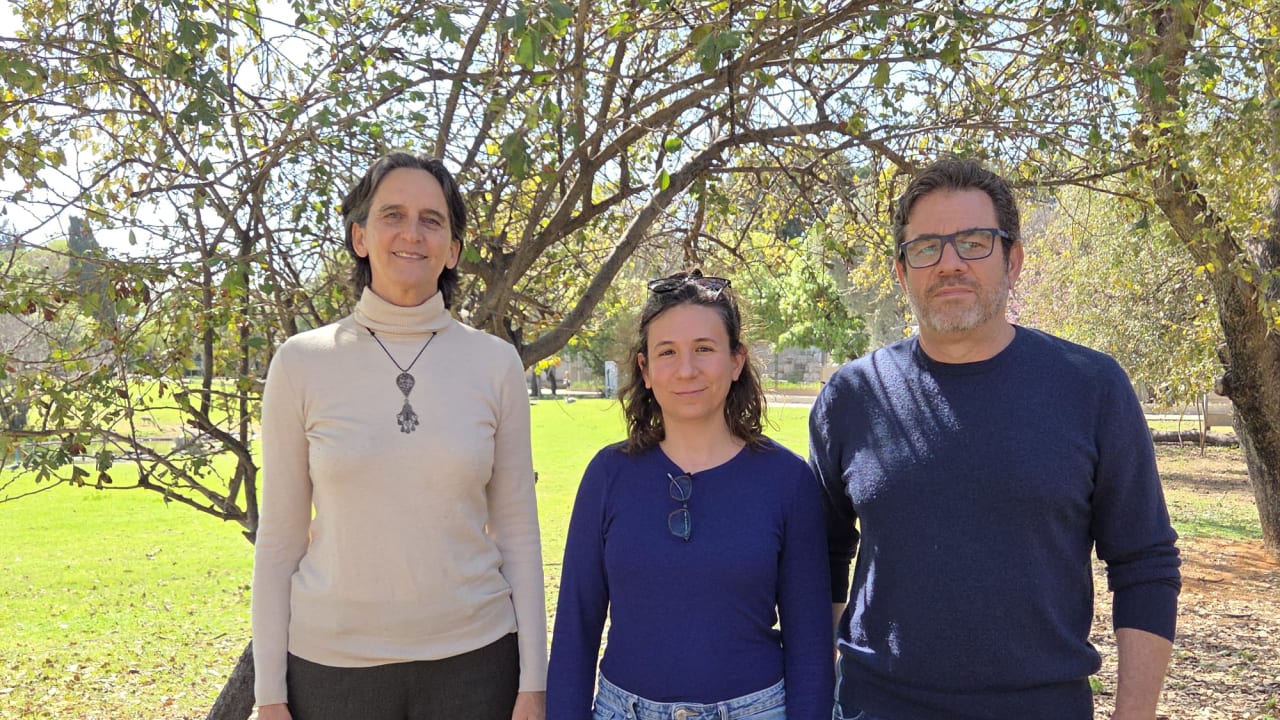
Artificial light at night, including that from streetlights, could disrupt the immune system and increase mortality risk in mammals, a study by Tel Aviv University researchers published earlier this year found.
We believe that light pollution should be regarded as an environmental health risk with broad implications, not only for wildlife but also for human health and the ecosystem as a whole,” the research lead said.
The study, carried out by the New Environmental Studies School and the Faculty of Life Sciences, is peer-reviewed and was published in Environmental Pollution in April.
The researchers, led by doctoral student Hagar Vardi-Naim, conducted experiments on two mammals, the golden spiny mouse and the common spiny mouse. The rodents were kept in enclosures that simulated natural conditions. One group of enclosures was illuminated at night with white LED lamps, at an intensity similar to street lighting. The control group was exposed to natural light, such as the sun, moon, and stars.
Then, the research team measured the percentage of white blood cells in the mice and found that the levels vary depending on the time, just like in humans. Finding a 24-hour rhythm, the team also found that the amount of antibodies produced in response to an antigen (something that triggers the immune system) also varied depending on time.

“We saw that animals exposed to an antigen during their rest hours produced far more antibodies than those exposed during their active hours,” Vardi-Naim said.
“Exposure to light pollution, however, completely muddled these rhythms. Instead of a daily cycle of peaks and lows in lymphocyte levels and immune response, we observed a complete flattening of these patterns. This means that the immune system loses its natural timing, and consequently, its response to infections, environmental stress, or vaccination might be less than optimal, possibly increasing the animals' vulnerability over time.”
Additionally, the risk of death was higher among the test group, as the mice that were subject to LED-light died at a rate 2.35 times higher than the control group. The researchers note that though there is no way to determine the exact cause of the deaths, the fact that it happened alongside the disruption of natural rhythms suggests a “connection between damage to biological timing and reduced survival.”
Study's findings have implications for humans, researcher says
Vardi-Naim emphasized that the mice in the study only serve as an example and that the study’s findings have implications for humans as well.
“Our results show that [artificial light at night] is not merely an aesthetic environmental change, but an active biological factor capable of disrupting critical physiological mechanisms,” she said.
“Chronic exposure to [artificial light at night] disrupted the timing of the mice's immune and endocrine systems and impaired their survival under conditions that otherwise simulated the natural environment. We believe that light pollution should be regarded as an environmental health risk with broad implications, not only for wildlife but also for human health and the ecosystem as a whole,” she warned.
“Studies show that animals with weakened immune systems can transmit diseases to humans, and it is possible that the human immune system responds in a similar way. The study underlines the need to include biological considerations in lighting policies and to reexamine [artificial light at night] scope and intensity in both urban and open spaces.”