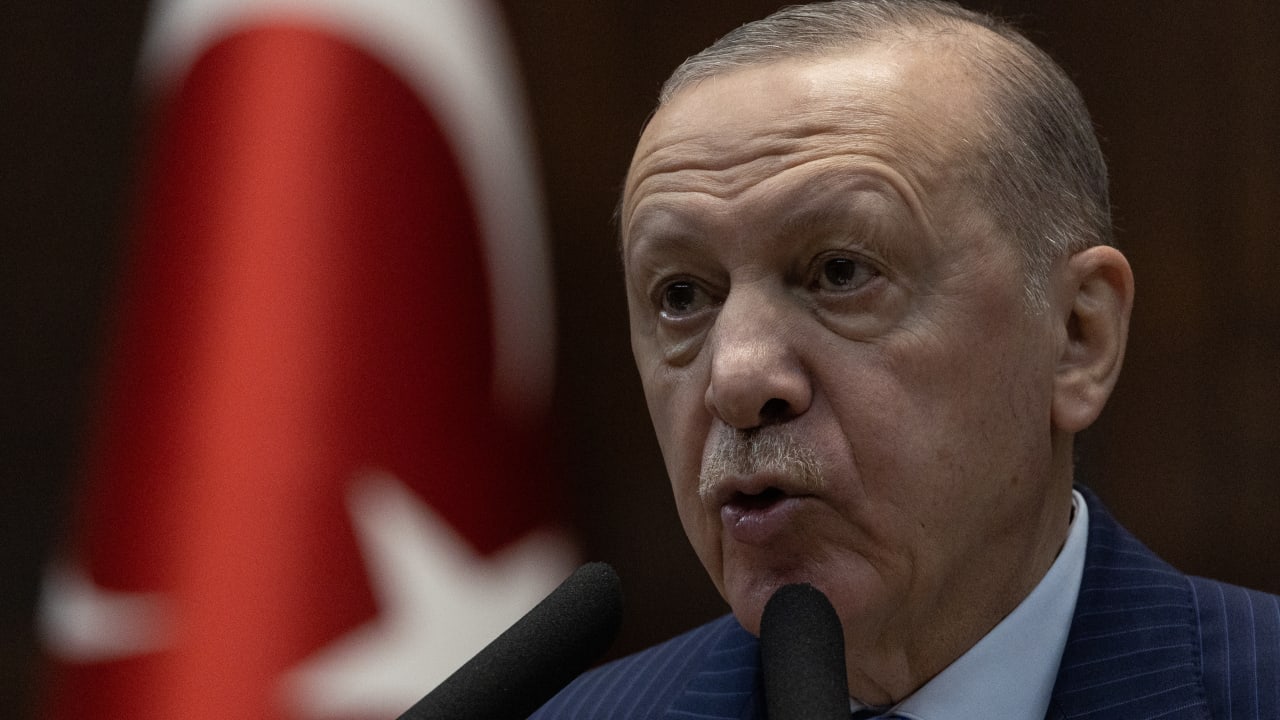
Turkish President Recep Tayyip Erdogan arrived in Riyadh on Tuesday for an official visit to Saudi Arabia. The visit highlights the growing ties between Ankara and Riyadh as Saudi Arabia has become more assertive in regional politics. Riyadh, once at odds with Turkey and Qatar, is now becoming closer to them.
Saudi Arabia’s shift in policies is linked partly to tensions with the United Arab Emirates due to rivaling positions regarding Yemen and Sudan.
Saudi Arabia has also become less certain about the trajectory of Israel in the region. Previously hopeful about ties with Israel, today it thinks that it could one day be a rival for power in the region.
This change in view has come about because of the Israel-Hamas War, Jerusalem’s policies on Syria, and the airstrike in Doha last year. Saudi Arabia thinks Israel may be a source of instability in the region, and it would prefer Jerusalem change its tone and tack.
Reports over the weekend made it seem that Riyadh was concerned about Iran retaining its power in the region.
The overall policy of Saudi Arabia is less clear. There are both pros and cons of the US-Iran conflict. If that conflict impacts the UAE, Bahrain, or Qatar, what would Saudi Arabia do? Is Riyadh encouraging the US to reduce tensions?
Erdogan was scheduled to meet with Saudi Crown Prince Mohammed bin Salman, according to Arab News. “He was received at King Khalid International Airport by Prince Mohammed bin Abdulrahman bin Abdulaziz, deputy governor of the Riyadh Region, along with senior Saudi officials, including Riyadh Mayor Prince Faisal bin Abdulaziz bin Ayyaf and Commerce Minister Majid Al-Qasabi,” the report said.
Tehran open to talks
Meanwhile, Iran’s president has hinted at Tehran’s opening to talks. US envoy Steve Witkoff is in the Middle East in the lead-up to talks that may happen in Turkey. This means Erdogan would be returning from Riyadh and his trip ahead of the talks.
“Ali Shamkhani, a senior political adviser to Iran’s Supreme Leader Ali Khamenei, said Tuesday that there is ‘no reason’ to transfer enriched uranium outside the country, as Tehran prepares to resume nuclear negotiations with Washington in Istanbul on Friday,” Turkish media reported.

Axios reported that “White House envoy Steve Witkoff and Iranian Foreign Minister Abbas Araghchi are expected to meet on Friday in Istanbul together with representatives of several Arab and Muslim countries to discuss a possible nuclear deal, according to two sources with knowledge and a US official.” The report noted, “On Monday, the foreign ministers of Turkey, Saudi Arabia, and Egypt spoke again to Araghchi to discuss the possible meeting.” Iranian state media also reported that President Masoud Pezeshkian had ordered renewed negotiations with the Trump administration.
Multiple threats
Meanwhile, Turkey’s Daily Sabah paper noted that the trip is “Erdogan’s first visit abroad this year and comes at a time when the immediate region of both countries faces multiple threats, namely, Israel’s expansionist policies and the risk of an all-out Iran-US conflict. Erdogan was welcomed by Riyadh Emir Faisal bin Bandar Al Saud at the airport before heading to the palace.”
Turkey is a NATO ally of the US. Qatar is also a major non-NATO ally. “Speaking after a Cabinet meeting on Monday, Erdogan said he would discuss bilateral ties and regional issues in his trips to Saudi Arabia and Egypt,” Daily Sabah added. Many issues are now at stake, and wheels are in motion. As Saudi-Turkish ties intensify, it will have ramifications for Israel and also for the US tensions with Iran.