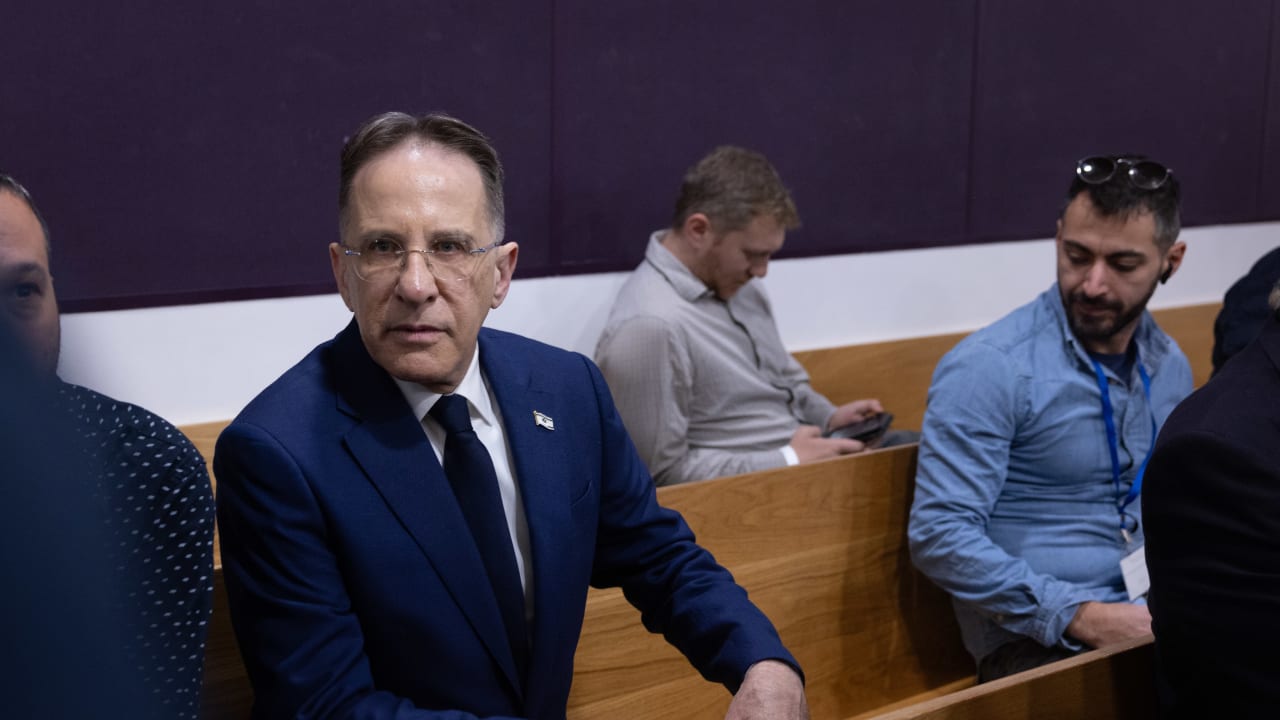
The Rishon Lezion Magistrate’s Court on Wednesday lifted the travel ban imposed on Prime Minister’s Office chief of staff Tzachi Braverman, ruling that police had failed to justify extending the sweeping restrictions placed on him in connection with the so-called “midnight meeting” affair.
In a sharply reasoned decision, Judge Menahem Mizrahi rejected the police request to extend all of Braverman’s release conditions through February 24, canceling the prohibition on leaving the country and narrowing the scope of the no-contact order.
Braverman, who was approved several months ago for appointment as Israel’s ambassador to the United Kingdom, may now travel abroad, provided that if summoned for questioning while overseas he presents himself for investigation within 12 hours, as he undertook before the court. The ruling removes a significant immediate obstacle to his diplomatic posting in London.
Police had argued that if Braverman were abroad, it would pose a serious risk of obstruction to the investigation and make it more difficult to summon him for further questioning. But the court found that investigators had not demonstrated a concrete basis for fearing flight or interference.
Police, Mizrahi wrote, “did not present any evidentiary foundation that the respondent had disrupted investigative steps.”

He further characterized the concern as largely theoretical and noted that if Braverman had wished to evade the probe, he could have done so in the period between the December broadcast of Eli Feldstein’s interview and the formal opening of the investigation in January, but he did not.
The judge criticized what he described as the open-ended and insufficiently concrete investigative plan submitted by police, questioning why February 24 had been designated as the requested end date for the restrictions when no structured timeline had been presented.
However, the court partially granted the state’s request. The prohibition on contact remains in place until February 24 with a defined list of individuals: PMO spokesman Omer Mantzur, Feldstein, Yonatan Urich, an aide to Prime Minister Benjamin Netanyahu, and a fellow suspect, individuals identified as “Hagai,” “Anna,” and “Shimon,” as well as the military secretary.
The judge declined to extend broader bans on contact with undefined groups such as “spokespersons,” “aides,” or staff within the Prime Minister’s Office, warning against vague and sweeping formulations.
The self-bail guarantee was also extended through February 24.
The suspicions against Braverman stem from a televised interview given in December to KAN by Feldstein, a former media adviser and spokesman to Netanyahu who previously worked at the PMO.
In the interview, Feldstein alleged that Braverman had summoned him to a “midnight meeting” at the Kirya military headquarters in Tel Aviv in late September 2024.
According to Feldstein, Braverman asked whether he knew anything about a sensitive security leak and told Feldstein that if he did, Braverman could “shut it down.”
Braverman has denied the allegations.
Eli Feldstein's link to 'Bild leak' case
Feldstein later said he understood the focus of Braverman’s questions to be the leak of a Military Intelligence document to the German tabloid Bild, in what became known as the “Bild leak” case.
Just weeks earlier, in August 2024, six Israeli hostages – Hersh Goldberg-Polin, Almog Sarusi, Alex Lobanov, Ori Danino, Eden Yerushalmi, and Carmel Gat – were murdered by Hamas terrorists in a tunnel in Rafah in southern Gaza, after being held captive since October 7, 2023. Their killings intensified public calls for an immediate hostage deal, even at the expense of continued military pressure.
The document published by Bild purported to outline Hamas’s internal stance and its assessment of Israeli public opinion regarding a potential deal, and suggested that the terrorist organization was not flexible in negotiations.
According to investigators, the document reached Feldstein via IDF reservist Ari Rosenfeld. Feldstein allegedly then turned to Urich – a close adviser to Netanyahu whom Feldstein described as his “direct boss” – as well as to Israel Einhorn, an independent political and media consultant. Both Urich and Einhorn are suspects in the case.
Investigators allege that this chain of contact ultimately led to the document’s publication in Bild, after it reportedly did not receive approval for publication from the IDF Censor.
Rosenfeld and Feldstein have since been indicted in connection with the leak. The broader investigation – which later expanded into what has been referred to as the “Qatargate” affair, alleging Qatari influence over figures surrounding the prime minister – has concluded its investigative phase, and materials have been transferred to the prosecution for review ahead of a decision on whether to file indictments.
For now, however, the immediate legal question surrounding Braverman has shifted.
While investigators retain the ability to summon him for further questioning, the court has made clear that continued restrictions must be grounded in concrete and proportionate investigative needs – not open-ended precaution.
Police may appeal the decision.