Attorney-General Gali Baharav-Miara told the High Court of Justice on Tuesday that the government has yet to formulate a plan to revoke personal economic benefits from ultra-Orthodox (haredi) draft dodgers, despite evidence that such sanctions are effective. She warned that the omission ran contrary to previous court rulings and harmed both the IDF’s manpower needs and the principle of equality in military service.
The update, submitted ahead of a compliance hearing scheduled for Sunday, stated that the government “has not formulated a plan for revoking individual economic benefits from draft evaders,” even though targeted financial sanctions against members of the haredi community who failed to report for service have been shown to increase compliance.
The filing comes in response to a January 25 order in a series of petitions challenging what advocacy groups say is the government’s ongoing failure to implement last year’s High Court ruling requiring it to enforce the draft law equally – following the expiration of the statutory framework that had enabled years-long deferments for yeshiva students.
In that decision, an expanded panel held that there is no longer any legal basis to refrain from drafting eligible haredi men and ordered the state to adopt meaningful enforcement measures within 45 days – including criminal proceedings where appropriate and the development of complementary civilian sanctions tied to draft evasion.

Some 20,000 haredi ordered to report for service
Petitioners have since asked the court to consider contempt proceedings, arguing that the deadline passed in early January without an approved policy framework.
In its latest update, the state detailed the scale of its summons effort, noting that 24,015 initial registration and screening summonses were issued during the 2024 draft year across three waves, followed by an additional 53,741 summonses in 2025 to candidates whose service had previously been deferred under now-lapsed arrangements.
As of February 15, the number of haredi candidates declared draft evaders had jumped from 2,257 in July 2025 to 16,880 – while the number ordered to report for service rose from 3,732 to 22,196 in the same seven-month period.
The filing added that 76,013 draft candidates across all sectors had either been declared evaders or issued a Section 12 order, with military officials estimating that roughly 80 percent belonged to the haredi population.
Enforcement has also intensified on Israel’s borders. Between January 1, 2025, and January 15, 2026, authorities detained 716 individuals with enlistment orders and an additional 460 already declared draft evaders attempting to leave the country; 298 of those were subsequently arrested, and in 609 cases, exit was denied.
Military police have carried out 1,240 proactive arrest operations targeting draft evaders since the High Court’s enlistment ruling in November 2025, according to the update.
In parallel, military prosecutors are preparing revised guidelines that would lower the period of non-reporting required before a draft evader can be referred for criminal indictment from 540 days to 365 days, potentially expanding the pool of individuals subject to prosecution.
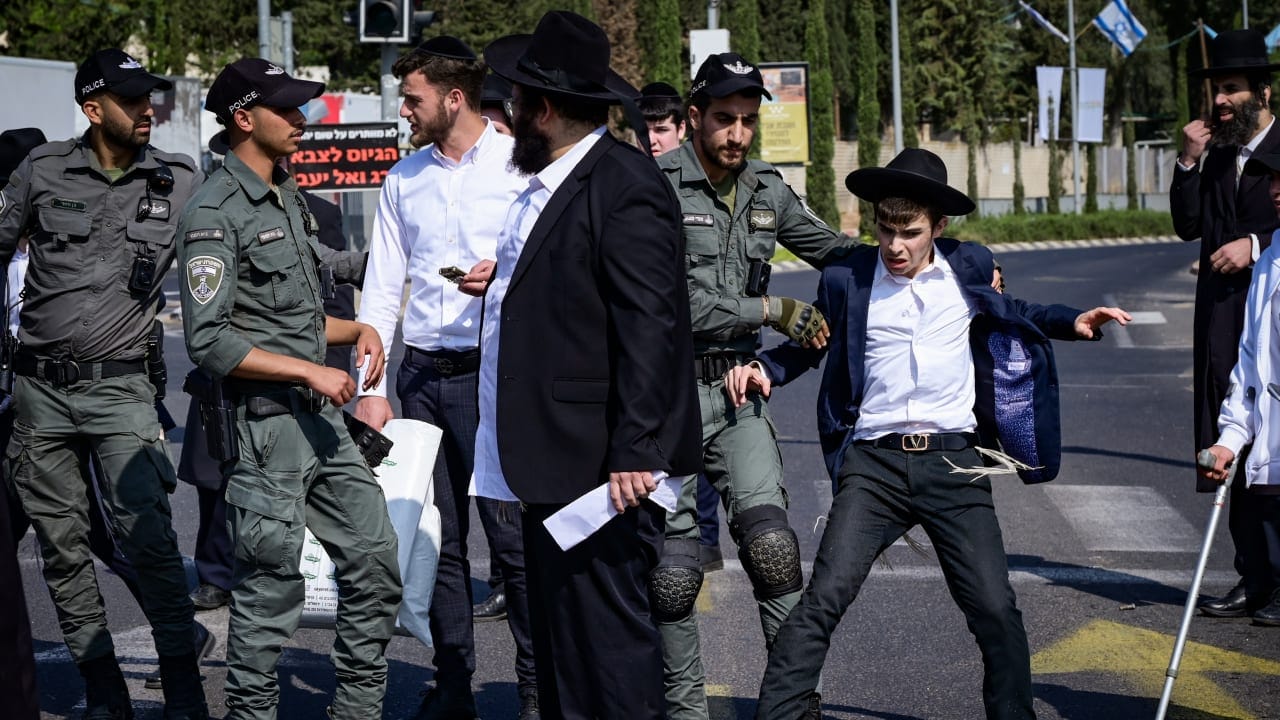
Police representatives have warned that ongoing protests linked to enforcement actions in haredi neighborhoods – including road blockades and clashes with security forces – alongside broader wartime policing demands, have complicated efforts to carry out arrests in civilian areas.
In response to the attorney-general’s submission, the petitioner – the Movement for Quality Government – accused the government of continuing to defy the court’s ruling and called for immediate enforcement of the draft law.
“It is time for the government to stop disrespecting the Supreme Court and act immediately to enforce the enlistment law: to cease all benefits to draft evaders and enlist the 110,000 yeshiva students obligated to serve,” the group said.
“Governance requires enforcing the law – even if coalition partners dislike it. It is time to enforce equality in bearing the burden.”
The High Court is expected to consider on Sunday whether the state’s enforcement efforts comply with its earlier rulings requiring equal application of the draft law.