


The air raid sirens have always terrified me. Their sound is one of a world falling apart, an unmistakable signal that danger is near.
I heard my first siren in 2012, on a quiet Friday night while my family was saying Kiddush. As an immigrant from England, the idea of bombs falling over me seemed unimaginable.
At that time, I was a teenager, confused and scared. There I was, clutching my dog in my pajamas, trembling as panic began to take over. I had no idea how to process what was happening.
For many Israelis, though, the sirens were just part of life, a background hum they had learned to live with. But for me, it was anything but normal. People told me I would get used to it. But I never did. It was always a panic attack waiting to emerge.
Fear and safety
Over the years, I found myself in so many different situations where the sirens caught me off guard. Yet, even as I became more accustomed to the sound, a part of me was always on edge. That part of me never truly adapted.
October 7, 2023 was the day that changed everything. After that day, I became familiar with fear and safety coexisting. The sirens that day were relentless. The shelter was our refuge, but it was a place of anxiety, too.
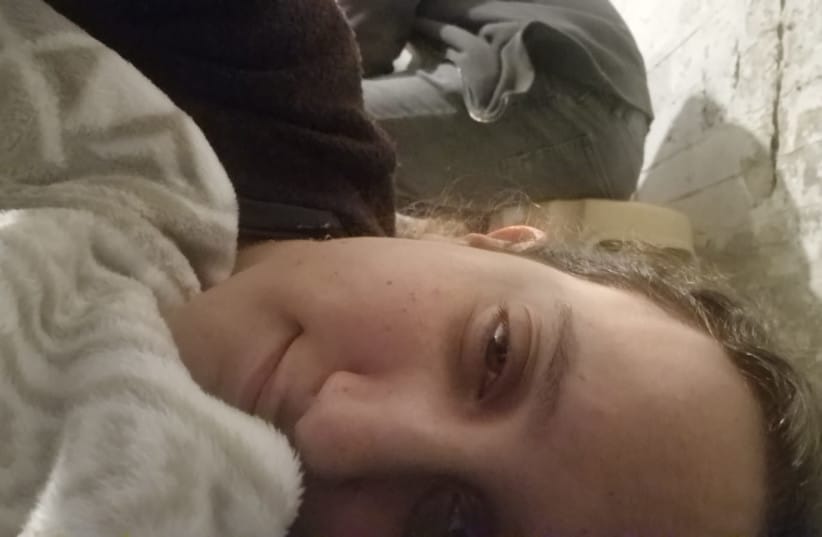
That dark Saturday, we huddled inside the shelter, unsure of what was happening outside. Would terrorists breach the building? Would we be safe? The place was dark and damp, with no electricity for weeks, but it became something more as the hours stretched on.
As the days wore on, something shifted. We began to make light of our situation. We sang songs. We laughed with our neighbors, who, like us, were trying to carry on with normal life amidst the chaos. As we ran down the stairs, neighbors’ babies in tow, there was a strange comfort in the shared experience.
But safety, like everything else, is fleeting. The Iran wars were another kind of nightmare altogether. The first time the sirens blared, our apartment shook even before the warning.
The booms of missiles shook the walls, so loud and close that we feared they had fallen right next to us. Despite knowing the missiles were landing outside the city, that sound – the sound of an explosion – was enough to send a chill of dread through anyone.
Frayed nerves
Each Iran war was different, and each brought a different kind of shelter. In the first war, I was at my mother’s apartment building. The neighbors were already familiar, and we had formed a routine from the previous year’s war. We all knew where to go and what to do. It felt manageable.
The second war, though, brought more fear. I had moved into a new apartment. My bedroom was a “safe” room. It was quieter, perhaps, but also lonelier. One roommate slept on the floor next to me, and we kept each other company, though our nerves were frayed. The missiles fell more frequently, and the casualty count kept rising. It didn’t matter how many times it happened – the fear still gripped us.
By the time the third Iran war came in June 2025, the sirens were almost a sickening countdown. I had forgotten what it felt like before. The waiting, the uncertainty between the sirens, felt worse than the sound itself.
But, now, February 28, 2026, it all came rushing back. Just like October 7, the sirens tore through the silence of a Shabbat morning. This time, I was living in a new apartment in Ramat Gan. My building had no shelter, so I had practiced running to the communal one several times. Three flights of stairs, another building over, a dusty, dark bunker. Safe, yet scary.
The shelter was crowded, noisy with Israelis from all walks of life – elderly people, Russian and French speakers, neighbors with children – everyone brought together by the siren. But, there was something strangely human about it all.
Despite the fear, despite the cold and dust, we shared stories, laughed, and made light of our circumstances. We were all in it together, a patchwork of strangers who found solace in each other’s company.
For the next 24 hours, I ran to the shelter every time the sirens blared. Each time, I carried the weight of uncertainty, but I also carried the warmth of my new community.
As I lay on the floor of the shelter with my boyfriend at 1 a.m., we were covered in dust, but we knew we were safe. It wasn’t that I was scared of the sirens anymore, but that they haunted me, each sound a reminder of what we had endured and what still lay ahead.
Finding comfort
The next day, we decided we couldn’t continue the running. We left, heading toward his parents’ house near Netanya. What should have been a simple hour-long drive took nearly four hours, with sirens catching us at every turn.

We sought shelter in train stations, in tunnels, in any place that might offer protection. When we finally arrived at his parents’ house, we found some calm, but it didn’t last. The booms in the distance told us that the threat was never far away.
It was all beginning to feel like a war movie from World War II, something distant, something that didn’t seem real. But here we were, living it. Even as we made light of it, laughed, and tried to carry on, there was no escaping the reality of what we were facing.
We had become experts at finding comfort in the most unlikely places, whether in a shared laugh or in the safety of a room filled with strangers who had quickly become family. Yet, even with all the laughter and jokes, the weight of it all still lingers.
I feel the trauma creeping in, sometimes when I least expect it. It’s in the quiet moments when the world is still, and it’s in the middle of a conversation that suddenly falters. The memories of sirens, of waiting, of uncertainty, they haunt me. And as I look to the future, I wonder how I will one day explain these moments to my children. Will they ever truly understand what it means to live with both safety and fear coiled together in the shelter of the darkest times?
We are scared, yes. But we are also brave. We survive because we have no other choice. And in a way, that makes us stronger than we ever imagined. ■