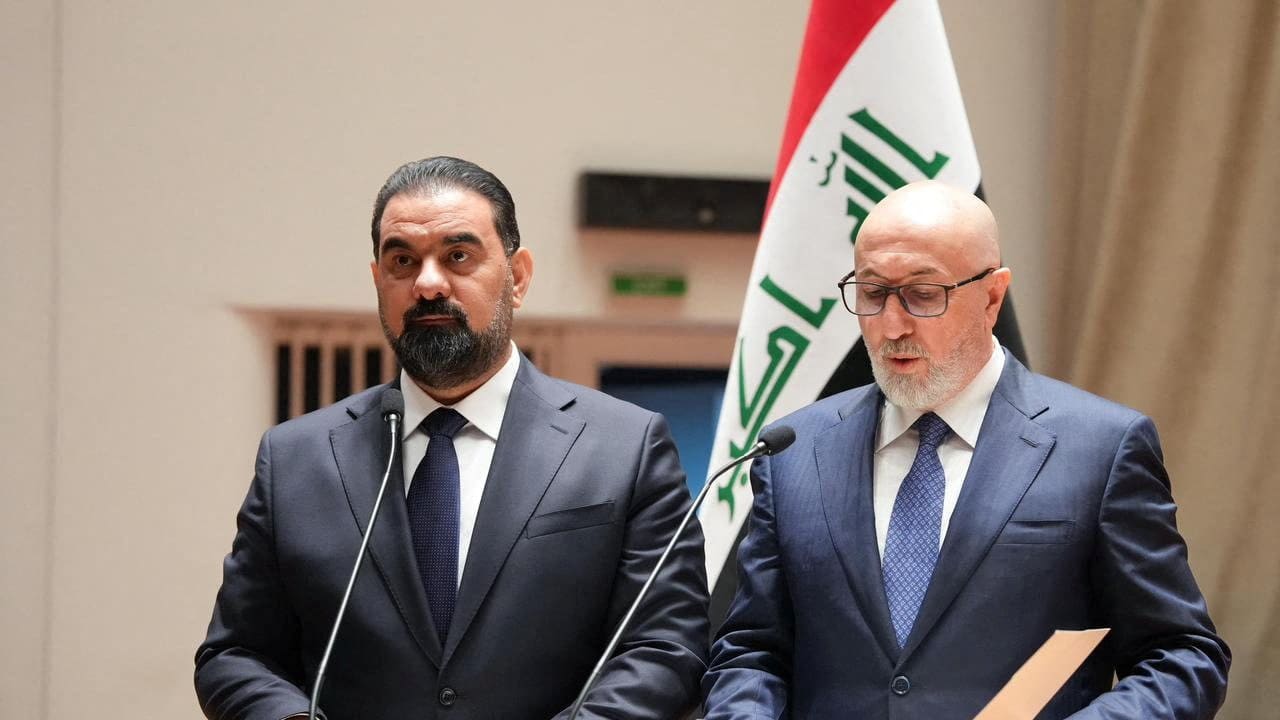
Iraq chose a new president on Saturday despite elections having been held in November 2025. It has taken months for Iraq's parliament to choose a new president, a largely ceremonial role.
However, the decision to elect Nizar Amedi could have ramifications. Amedi is Kurdish and was supported by the Kurdish PUK party. The PUK is the second-largest Kurdish party in Iraq and is considered more friendly to Iran.
The larger Kurdish KDP party opposed the vote, and it appears that this means the KDP has lost out. The KDP is considered closer to the United States and the West. As such, this could be seen as a loss for Kurdish groups that oppose Iran and could mean that one outcome of the recent Iran conflict is already being felt.
Iran using proxy militias to target Kurds in Iraq
Iran attacked Kurds during the recent conflict, instructing its proxy militias in Iraq to launch around 700 drones and missiles at the Kurdistan Region. Although some drones and missiles targeted PUK voting areas, most targeted Erbil, a KDP stronghold. As such, it shows that there have not been any real repercussions for Iran.

According to a post on X/Twitter and at The New Region, Wladimir Van Wilgenburg notes that “Nizar Mohammed Saeed Mohammed [Amedi] was born in 1968 in the Kurdistan Region’s Duhok province and holds a degree in mechanical engineering from the University of Mosul.”
This illustrates that Iraq has chosen a candidate who is neither particularly well-known nor likely to have a major impact on the country. This will suit Iran, whose goal is a weaker and divided Iraq.