
Fears over a broader regional war and attacks on Gulf infrastructure led the leaders of Saudi Arabia, the United Arab Emirates, and Qatar to intensify efforts to persuade US President Donald Trump to delay any potential strike on Iran.
Trump wrote in a post on Truth Social on Monday that he originally planned to strike Iran on Tuesday.
“I have been asked by the Emir of Qatar, Tamim bin Hamad Al Thani, the Crown Prince of Saudi Arabia, Mohammed bin Salman Al Saud, and the President of the United Arab Emirates, Mohamed bin Zayed Al Nahyan, to hold off on our planned Military attack of the Islamic Republic of Iran, which was scheduled for tomorrow, in that serious negotiations are now taking place,” the president tweeted.
He added that “in their opinion, as Great Leaders and Allies, a Deal will be made, which will be very acceptable to the United States.”
According to regional analysts, Gulf leaders fear that even a limited American strike on Iranian energy or military infrastructure could provoke retaliatory attacks targeting desalination facilities, electrical grids, oil infrastructure, and shipping lanes throughout the Gulf.
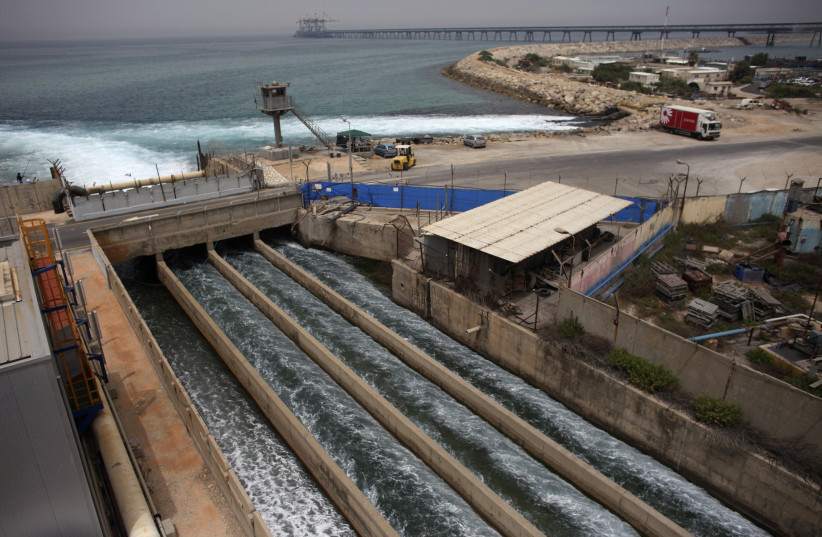
Saudi Arabia concerned over infrastructure strikes, Iranian civil war
“Saudi Arabia is worried that if Trump strikes the energy and electricity infrastructure in Iran, the Iranians still have the capability of striking back and destroying desalination plants, electricity generation plants - the infrastructure of Saudi Arabia - which cannot be fully defended,” Bernard Haykel, professor of Near Eastern Studies, Princeton University and Senior Fellow at the Foundation for the Defense of Democracies, told The Jerusalem Post.
“In the summer, if you lose water desalination, you’re in deep trouble. It could cause a humanitarian crisis,” Haykel said.
He also added that Saudi leaders’ concerns go beyond immediate retaliation and include fears that military escalation could destabilize Iran itself.
“They don’t want a failed state in Iran because a failed state in Iran could lead to a Libya-like situation with civil war. That’s also something that could very seriously destabilize the region,” he said.
According to Haykel, Riyadh and other Gulf capitals have consistently favored de-escalation and negotiated arrangements with Tehran over military confrontation.
“They would like to come to some sort of detente, a de-escalation agreement with the Iranians,” he said. “This has been their position from the very beginning. They were against the war to start with, and they’ve been trying to reach an accommodation with the Iranians and a negotiated settlement.”
Haykel argued that Gulf governments believe Iran’s regime faces greater long-term danger from internal pressures than from external military action.
“The Saudis believe, like I do, that the real threat to the regime is domestic, not external,” he said. “If you leave the regime in place, the people in Iran will eventually take care of it.”
At the same time, Haykel said Gulf states remain deeply skeptical that Washington would sustain a prolonged campaign against Iran if retaliation intensified.
“I don’t think they really think that Trump cares about them,” he said. “They are worried that he would just leave, declare victory, and leave, and then they’re stuck with Iran and control of Hormuz and extorting them.”
The Strait of Hormuz remains one of the Gulf states’ central concerns. Roughly a fifth of the world’s oil passes through the strategic waterway, and Gulf officials fear that any Iranian effort to disrupt shipping there could have catastrophic global economic consequences.
“There are different priorities for each actor,” said William F. Wechsler, senior director of Middle East Programs at the Atlantic Council and senior director of the N7 initiative. “For Trump, it is the nuclear file; for Israel, it is proxies and rockets; for the Gulf, it is Hormuz and shorter-range weapons like drones.”
Gulf governments united over opposition to escalation
Wechsler said Gulf governments remain united in opposing any “great escalation” of the conflict despite divisions on other regional issues.
“The governments of the Gulf are divided on many issues but united in their opposition to a great escalation in the war,” he said. “They are understandably concerned about the potential for Iranian strikes on their energy production facilities, electrical grids, and water systems being successful.”
Such attacks, he warned, “would bring great immediate hardship and raise unwelcome questions about the long-term sustainability of their national economic models.”
While many Gulf leaders privately favor weakening or even replacing the Iranian regime, Wechsler said they doubt Washington has either the strategy or the willingness to achieve that outcome militarily.
“Most Gulf governments would prefer an outcome that removes the Iranian regime,” he said, “but are skeptical that the US has a plan, much less the capacity, to achieve that objective in the near term.”