Even as reports on Wednesday claimed that a US attack on Iran was imminent, Tehran appears to believe it has a free hand to continue a crackdown on the protests.
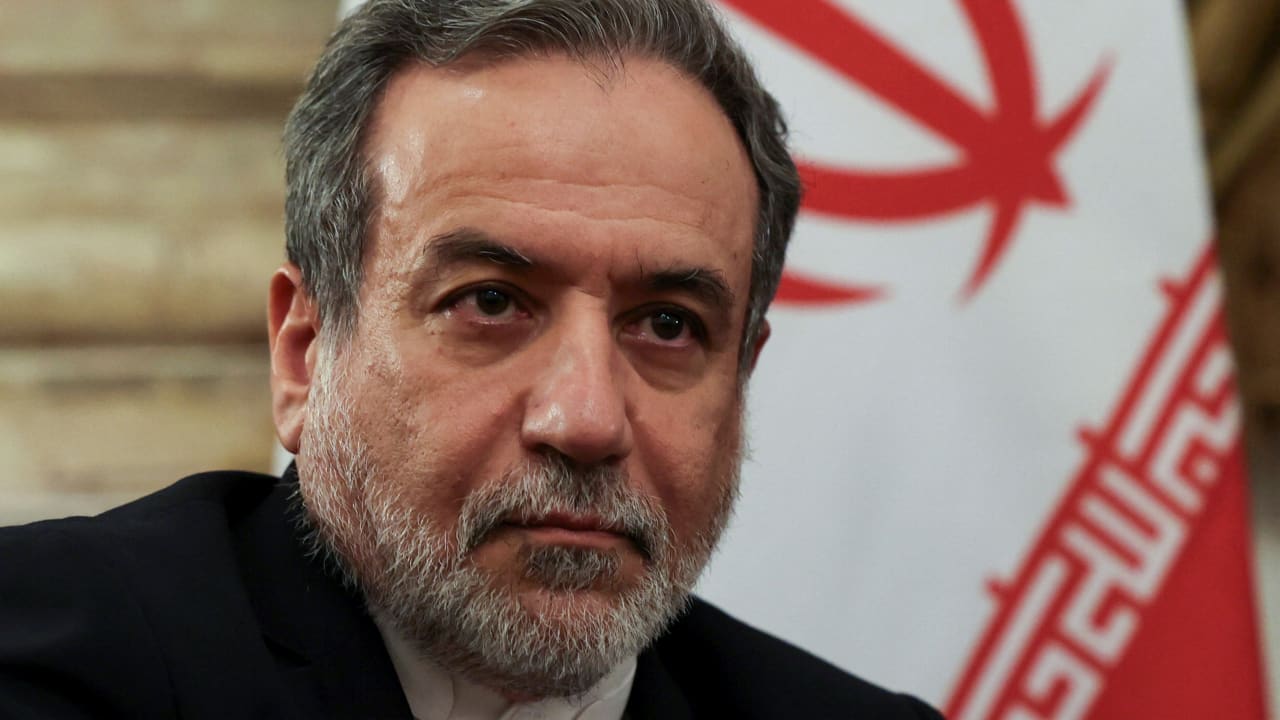
After ramping up killing over the last week, Iran has now attempted to signal to the US and other countries that it is actually the victim of a foreign plot. Iranian Foreign Minister Abbas Araghchi has taken the lead on this messaging.
“Terrorist elements from the outside” were seeking to drag the US into a conflict, he told Fox News.
Iran knows that US President Donald Trump doesn’t want to get sucked into a quagmire.
Araghchi has also reached out to other countries in the region. He was in Lebanon recently and has met with Omani officials. He also reached out to India and spoke on the phone with Indian External Affairs Minister S. Jaishankar on Wednesday.

Iranian Foreign Minister tries to seek for international support
Araghchi expressed to his Indian counterpart “his country’s rejection of American incitement, and stressed that the peaceful protests had been hijacked by a foreign-trained element,” the pro-Iran media Al-Mayadeen said.
The foreign minister condemned the “interventionist and provocative stances taken by American officials regarding Iran’s internal affairs.”
He also said that initially peaceful protests witnessed in Iran “were diverted from their course by terrorist elements trained by foreign entities,” emphasizing that “these attempts aim to destabilize the country internally.”
Araghchi also sent a letter to the UN explaining the background of the unrest in Iran and claimed there have been terrorist attacks.
“Iran has been witnessing riots and sabotage for days, infiltrating peaceful protests over economic conditions. Iran reveals that these elements are linked to terrorist entities or separatist groups serving the interests of the Mossad and the United States of America,” Al-Mayadeen said.
This sentence likely refers to Iran’s plan to crack down even more on minority groups. “Separatists” is usually used to refer to Kurds, Arabs, Baloch, and other groups.
Meanwhile, Iran is also counting on the fact that the US and its partners in the region will be wary of a drawn-out conflict. Friends of the US, such as Qatar, Turkey, and others, are against escalation.
“Regardless of the size of Iran’s military force, the nature of its regime, or the level of its popular support, the most perplexing factor for Iran’s adversaries remains its unique geopolitical location.
“The Islamic Republic of Iran’s presence at the heart of a highly sensitive geographical nexus makes any clash with Tehran impossible to contain in terms of cost or control in terms of consequences,” Al-Mayadeen noted.
Iran is also counting on reports that Israel does not want escalation. According to The Washington Post, Western media have reported that Iran and Israel maintain contacts via Moscow.
Al-Ain in the UAE noted that “secret messages of reassurance were exchanged between Israel and Iran through a third party, in which both sides pledged not to carry out preemptive attacks, in an attempt to contain the escalation.”
Iran’s game plan to get out from under a cloud of possible US strikes involves a multi-pronged effort. First, Iran is pretending that it is not executing protesters, so that it appears to abide by the US president’s demands.
It is also claiming that terrorists and foreign plots are behind the violence. Lastly, Iran wants to mobilize regional support. It does not appear to have much support from Russia or China. Both countries also did not help Venezuela.
While reports indicated the US had pulled some personnel from bases in the region, Iran is also waiting for a UN Security Council meeting that the US has pushed for.
Meanwhile, UN human rights chief Volker Türk had urged the authorities in Iran, “to immediately halt all forms of violence and repression against peaceful protesters and to restore full access to the internet and telecommunications,” according to UN News.
Iran assumes that a mix of obfuscation, media blackout, and trying to deter US strikes may work in Tehran’s favor.
The longer the time goes by without strikes, the more confident Tehran also feels. It has weathered protest storms before. It expects to get through this.