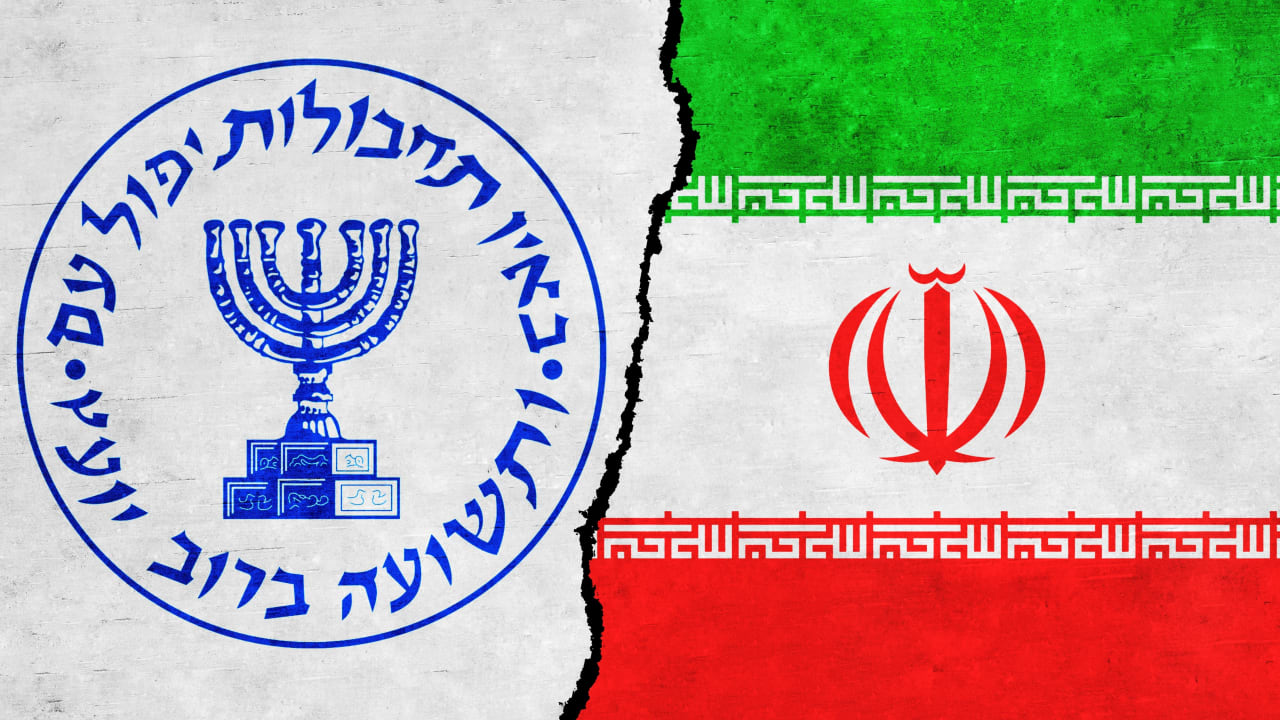
Between the 1950s and the 1979 Islamic Revolution, Iran represented one of the most permissive and valuable intelligence environments for Israel’s Mossad.
While rumors that the Mossad helped the CIA establish Iran’s SAVAK (secret police) security apparatus appear to be exaggerated, the relations between the intelligence agencies were at phenomenal levels.
While CIA, Mossad, and SAVAK relations were strong, the agencies still had separate identities, did not share everything, and the US was still the major player compared to Jerusalem.
Their separate identities are expressed in a story that former Mossad director Shabtai Shavit told The Jerusalem Post before he died.
Back when Shavit was stationed by the Mossad in Iran in 1966, US intelligence noted the presence of a new young couple – Shavit and his wife.

But US intelligence never tied him to the Mossad or figured out that he was anything unusual – a fact he learned when a US intelligence document was leaked to him around 1980.
Mossad agents had access to Iranian officials
Top Mossad agents had easy access to top Iranian officials.
For example, after the shah, Mohammad Reza Pahlavi, fled Iran in 1979, Mossad station chief Eliezer Tsafrir was inside SAVAK headquarters.
A distraught general clung to Tsafrir, begging him to, “Take me with you!”
Iran’s interim prime minister, Shapour Bakhtiar, summoned Tsafrir to make a dramatic request: assassinate Ayatollah Ruhollah Khomeini at his exile residence near Paris.
On January 28, Mossad director Yitzhak Hofi gathered senior officers, including Iran chief analyst Yossi Alpher, to debate the request.
Ultimately, they decided against the assassination, but the fact that Tsafrir had such easy access to SAVAK headquarters, was asked by a general to be brought to Israel, and was asked by the interim prime minister to assassinate an opposition figure speaks to the intimate level of intelligence relations with the Mossad at the time.
The relations between the Mossad and SAVAK included intelligence sharing, training, and regional security operations, including support for Kurdish forces in Iraq against the Ba’athist regime in Baghdad.
ISRAEL’S SPY AGENCY was especially helpful in training new SAVAK recruits when Iran established the agency in 1957.
Their partnership also involved joint technological efforts, intelligence sharing, and coordination against a variety of Sunni Arab regional adversaries.
Regarding Sunni Arab adversaries, Iran was a lynchpin in the Jewish state’s intelligence and diplomatic strategy to find as many allies as possible in the region where it was generally surrounded by hostile neighbors.
Iran provided the Mossad a significant reservoir of useful intelligence about many of these adversaries and a physical space to operate in much closer to them.
While there was a huge population of Israelis and Jews in Iran until 1979, there was no formal diplomatic recognition, so there was also a variety of messages passing between top political leaders through the Mossad.
There were extensive weapons deals, including for Uzi guns, mortars, radio equipment, and renovations of Iranian aircraft. Much of which was handled by IDF or the relevant business officials, but the Mossad was often an initiator or in the background to make sure new projects ran smoothly.
Just as Israeli and Iranian generals were frequently visiting each other’s countries, a high volume of senior intelligence officials were also.
All of this was against the backdrop of Israel relying on Iran for around 40% of its oil imports, while Jerusalem helped Iran with the above weapons and technology issues, but also with advanced agricultural techniques.
With the US having helped Iran found aspects of its nuclear program, some have also speculated that Israel and the Mossad may have assisted in some of this as well, though this has never been formally confirmed.
So if the ayatollahs fall and the next regime is not run by the Islamic Revolutionary Guard Corps (IRGC) but a regime that is not hostile to Israel or even eventually friendly, what would be the role of the Mossad?
The Mossad might not need to work as hard on the Iran issue if the regime no longer pursued nuclear weapons and no longer threatened Israel with ballistic missile attacks or terror.
It could be that the Mossad would work with the CIA and others to discover any sites they had not already explored and to defang those threats.
This would not require close relations, but just an absence of investing in hostility, given that the two countries are 1,500 kilometers apart and have no inherent reason to fight, such as over some kind of an adjacent land dispute.
In a more expansive scenario, the Mossad having access again to Iranian territory as intelligence allies would be a game-changer.
Having access to Iranian territory would make it infinitely easier to have access to Iraqi, Turkish, and Pakistani territory – all countries it borders on and which are of interest to Israel in the wider region.
It is unclear what implications a post-Islamic Revolution Iran would have for Hezbollah, Yemen’s Houthis, and other terror groups, which the Islamic Republic propped up.
But if the Mossad had access to Iranian cooperation, this could be a sea change in being able to better understand and combat these groups long-term.
The fall of the ayatollahs and the IRGC would not in any way guarantee they would not return.
After all, they came to power because of the shah’s authoritarian, corrupt, and incompetent rule.
While the Mossad was as utterly clueless as the CIA about the power of the ayatollahs to overthrow the shah in 1979, maybe this time that knowledge might also empower Israel’s spy agency to help hold down such a future potential returned threat.
In any case, all of this would be adding to, not starting, the Mossad’s presence in Iran.
As Mossad Director David Barnea said in June 2025, the agency was deeply involved in the Israel-Iran war that month and continues to have agents there.