
United Arab Emirates air defenses intercepted missiles and drones coming from Iran, according to a post on X/Twitter by the country's defense ministry.

Azerbaijan says four injured by Iranian drones, vows to retaliate
Azerbaijan announced on Thursday that it was preparing unspecified retaliatory measures after it said four Iranian drones flew across its border and injured four people in the Nakhchivan exclave, raising concern about further spillover of the conflict in the Middle East.
Azerbaijani President Ilham Aliyev told a meeting of his Security Council: "We will not tolerate this unprovoked act of terror and aggression against Azerbaijan. Our Armed Forces have been instructed to prepare and implement appropriate retaliatory measures."
"We are ready to demonstrate our strength against any hostile force - and they should not forget this in Iran," he said.

Iranian Deputy Foreign Minister Kazem Gharibabadi denied Tehran had targeted Nakhchivan.
"We do not attack our neighboring countries," he told Azerbaijani outlet AnewZ.
Azerbaijani authorities said they were investigating the types of drones used in the attack.
They said one drone fell on the terminal building at Nakhchivan International Airport, which is approximately 10 km across the border from Iran, and another drone landed near a school in a nearby village. One was downed by the Azerbaijani army, and another hit civilian infrastructure.
Tense ties between Tehran and Baku
Azerbaijan is a major oil and gas producer, mostly exporting energy to Turkey and Europe via the Baku-Tbilisi-Ceyhan pipeline. Any damage to its infrastructure could drive global energy prices even higher.
Azerbaijan's Foreign Ministry earlier demanded that Iran "clarify the matter in the shortest possible time, provide an explanation and take the necessary urgent measures to prevent such incidents from recurring in the future," adding that the incident "contributes to increased tensions in the region."
It handed a note of protest to the Iranian ambassador to Azerbaijan.
Azerbaijan and Iran already have tense relations over Baku's growing economic, energy, and military ties to NATO member Turkey and Israel. The escalating US-Iran war risks touching off violence between the neighbors. Around 20 million ethnic Azerbaijanis live in Iran, the country's largest minority group.
The four injured were taken to the hospital, where they are in stable condition, the Health Ministry in the landlocked exclave of Azerbaijan bordering Armenia, Iran, and Turkey told Reuters.
Video footage verified by Reuters showed black smoke rising near the airport and damage to the skylight inside the terminal building.
Diplomats in Riyadh ordered to shelter in place due to potential threat, sources say
Diplomats and staff at embassies in Riyadh's Diplomatic Quarter were told to shelter in place on Thursday due to a potential but unspecified threat, four people with direct knowledge of the matter said.
They did not have further details, and the Saudi government media office did not immediately respond to a request for comment.
The gates to the Diplomatic Quarter, a neighborhood on the western edge of the Saudi capital that houses most foreign missions in the country, were closed as of Thursday afternoon, two of the people said.
Earlier Thursday, Turkish Foreign Minister Hakan Fidan discussed Iranian drone attacks in the Nakhcivan exclave during a phone call with his Azerbaijani counterpart Jeyhun Bayramov, a Turkish diplomatic source said.

UAE reports drone shrapnel in Abu Dhabi
The United Arab Emirates reported on Thursday that shrapnel from two drone interceptions fell into the streets of Abu Dhabi.
According to local authorities, six people were injured because of the incident, while no casualties were reported.
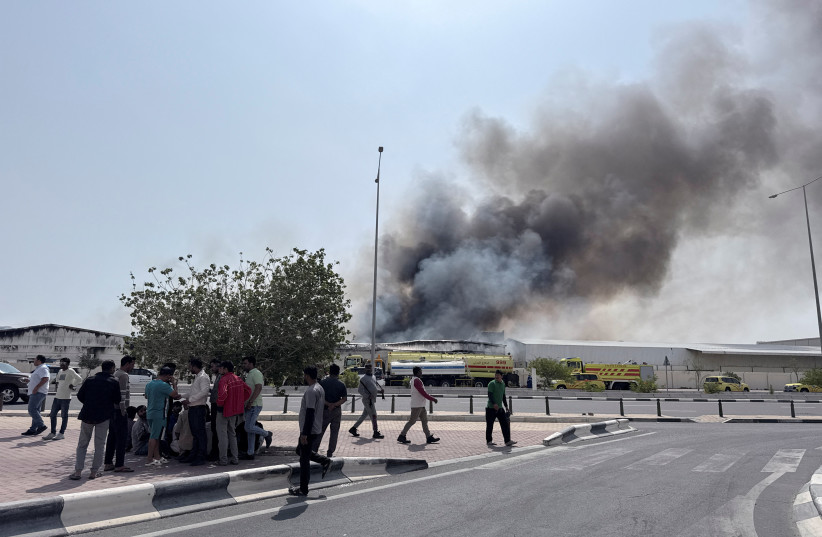
Another drone strike was reported in Iraq's giant Rumaila oilfield, operated by British oil major BP, after two unidentified drones landed inside the field, three Iraqi oil industry sources told Reuters. BP's foreign staff were evacuated after the incident.
Gulf countries concerned about risk of Iran civil war, says EU's foreign chief
Countries in the Middle East have told European officials they are concerned about the risk of civil war in Iran as a result of the conflict between Tehran and the United States and Israel, EU foreign chief Kaja Kallas said on Thursday.
"When we talk to the countries in the region, they are also worried about civil wars inside ... the regime's leadership and what is going on there," she said ahead of a video conference with EU foreign ministers and representatives of the Gulf Cooperation Council on the situation in Iran and the broader Middle East.
She also said the EU is "extremely worried" about maritime security in the region and that it is trying to keep routes such as the Strait of Hormuz open.
This is a developing story.