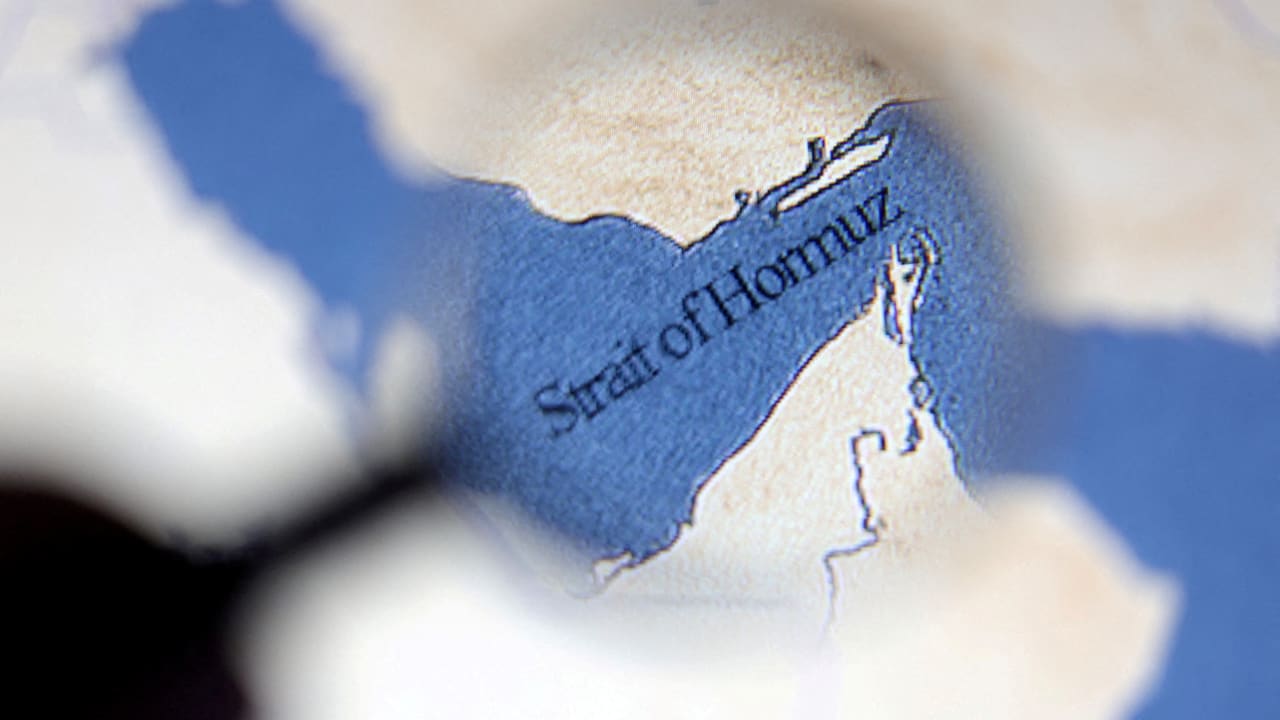
The strain on supply chains caused by the blocking of the Strait of Hormuz by both Iran and the United States puts the international community at risk of a global food crisis, the chief economist of the Food and Agriculture Organization of the United Nations warned on Monday.
The closure of the narrow waterway, which normally carries around a fifth of global liquefied natural gas supplies, will have a ripple effect beyond the Middle East, Maximo Torero warned.
“We have 30-35% of the crude oil, which is not moving, 20% of natural gas... and between 20-30% of other fertilizers that are not moving out,” said Torero. “That’s the magnitude of the potential impact.”
David Laborde, director of the Agrifood Economics Division at FAO, warned that numerous vessels were stranded in the Gulf, with shipowners and insurers unwilling to risk their crews and cargo by crossing the strait. Even with a ceasefire, he said, traffic could take weeks to normalize.
“We are going to see the real stop in supply” in the days ahead, Laborde warned.

France and Britain are leading talks later this week to discuss establishing a multinational mission that could involve cooperation to ensure maritime transit, a person familiar with the issue told Reuters.
Global food prices have yet to surge, the economists stressed, though input costs have risen dramatically. The March Food Price Index showed only modest increases, but a prolonged closure of the strait could make prices soar.
“We have enough supplies… and good stocks which allow the agri-food system...to be resilient to this shock,” Torero said, warning that such relief may not last.
Farmers, now facing higher costs and limited access to fertilizers, may shift crop types or reduce inputs, resulting in lower yields in the upcoming harvest season.
“If we don’t have the inputs in the time that is needed… that implies that producers will have to produce with less inputs,” Torero said. “And therefore, they could have lower yields.”
Lower yields will affect the supply-and-demand balance, forcing prices to rise.
Higher oil prices are also incentivizing farmers to divert maize, sugar, and oilseeds toward biofuel production, tightening the balance between food and fuel, the experts said.
“If we have rising demand because biofuels start to consume more… and lower supply because we have less input… food prices will go up,” Laborde warned.
“The clock is the key… Let’s avoid a perfect storm – be aware of the risks, put the right policies in place, and pursue the diplomatic solutions needed to avert a food crisis we do not need,” Torero added.
Netanyahu proposes rerouting oil to bypass Strait of Hormuz
In late March, Prime Minister Benjamin Netanyahu floated the idea of rerouting oil pipelines through the Mediterranean and the Red Sea. “Long-term solutions include rerouting energy pipelines westward, across Saudi Arabia to the Red Sea and Mediterranean, bypassing Iran’s geographic chokepoint,” Netanyahu explained in an interview with conservative US media outlet Newsmax.
Shahar Golomb, a lecturer in economics and finance from the Afeka Academic College of Engineering, told The Jerusalem Post that such a move could offer an “immediate partial solution to a fast-growing European energy problem.”
Gulf states already anticipated the possibility of Iran closing the strait, Golomb explained, which is why the UAE built a pipeline to the port of Fujairah on the Gulf of Oman, and Saudi Arabia developed a 1,200-kilometer pipeline linking its oil fields to the Red Sea, with a capacity of up to seven million barrels per day.
“This is exactly where Israel becomes strategically relevant. Israel already possesses an operational energy corridor through the Eilat-Ashkelon Pipeline Company (EAPC), enabling crude oil to be transported from Eilat on the Red Sea to Ashkelon on the Mediterranean,” he stated. “Even without further upgrades, the system can currently move around 1.2 million barrels per day – roughly 6% of the volume that previously passed through the Strait of Hormuz each day. The sea route from the Saudi Red Sea port to Eilat is approximately 320 nautical miles, or about 580 kilometers, a distance an oil tanker can cover in roughly 24 hours.”
Such a project would be advantageous for Israel, he assessed. It would allow Jerusalem to deepen its regional integration with Gulf states, potentially creating new momentum for Saudi Arabia to join the Abraham Accords and strengthening the country’s energy resilience by reducing reliance on third-party imports.
Israel’s economic ties with Europe would tighten as the country would become the most dependable, efficient, and effective alternative to the current options, and it could help generate new revenues in Israel’s South, which is still recovering from Hamas’s October 7 attacks, he concluded.