It might be that there is no solution to the Israeli-Palestinian conflict. This is what some people tell me. I do not accept that. Since conflicts are man-made, I refuse to believe that there are no man- (or woman-) made solutions to them.
Those who say that there is no solution to this conflict and are in positions of leadership are promising us that we will forever live by the sword. In my view, these are not leaders, and they are not worthy of the support of anyone who values life and believes that this country is worth living and investing in. A country without hope of living a life of peace is a country that will not survive.
For almost 80 years, Israel has been living by the sword, and so have the Palestinians. The leaders on both sides have failed us, their people. These kinds of leaders, especially after the last two years, must be thrown into the waste bin of history. We have had more than enough of leaders who promise us security and deliver to us death and destruction.
We do not live in order to send our children to die on the battlefield. That is what our current leaders, in Israel and in Palestine, promise us. If we remain on the same course that we have been on for decades, I can assure you that we will continue to live without hope and continue to bury our children.
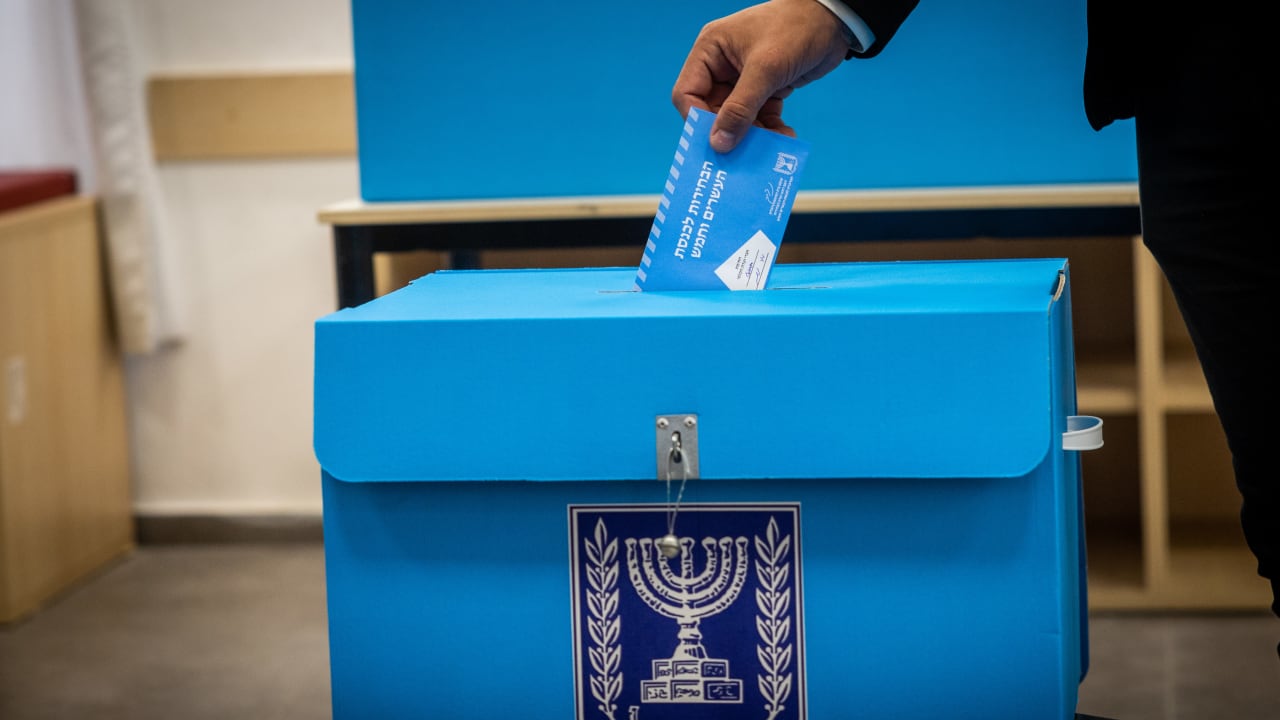
Listen to this: We may be one election away from peace! That’s right – think about that for a moment. In 2026, the State of Israel will go to elections to elect a new government. In 2026, the Palestinians will also go to elections to elect a new government. For them it will be the first elections since 2006. The elections in Israel and in Palestine will determine the future of both peoples on this land. The duty and responsibility for us all is to elect leaders who will put the challenge of peace in front of us, not the promise of war. This is not a naïve statement.

Our (Israelis’ and Palestinians’) collective problem is that we are convinced that while we (Israelis and Palestinians) want peace, the other side (Israel and Palestine) does not want peace. Our (both sides’) behaviors over the last decades have clearly demonstrated that we (both sides) do not want peace. We all have more than sufficient evidence to prove that the other side is guilty of not wanting to live in peace. We all have enough evidence to believe that the other side wants to take all of the land between the river and the sea and get rid of the other people living on the land.
Many of our young people walk around with almost identical necklaces of the entire map of the Land of Israel/Palestine around their necks (the only difference is that the Israeli map includes the Golan Heights). This is just one more symbol of the lack of recognition that, in reality, this land is the common homeland of two peoples, not just one. One people here will never be rid of the other. No one side can believe that they are the only people connected to this land with a historic and religious right to be here.
How can we continue to live with the belief that peace is impossible?
Israelis are not willing to give up their sovereignty and their right to self-determination. All the money in the world would not replace the Israeli demand for statehood for the Jewish people in the Land of Israel.
The same is true for the Palestinians – all the money in the world will not replace the Palestinian aspiration for statehood, independence, and the right to self-determination. There is no so-called economic peace that can replace Palestinian statehood. Giving up self-determination cannot be bought with money nor can it be crushed by military force.
Neither side is willing to surrender to the other. That is why the two-state solution remains the only possible solution to this conflict. And that is why politicians who are not willing to even consider the two-state solution should be thrown off the stage of elections and not be seen as worthy of our vote – in Israel and in Palestine.
I can accept a politician who says: As long as the other side demonstrates that they are not prepared to live in peace in a two-state solution, I will do everything to protect the security of my people. But I also expect our Israeli political leaders, or those who want to be political leaders, to say: I understand that Israel will not have security until the Palestinians have freedom. I expect Palestinian political leaders and those who want to be leaders to say: I understand that we Palestinians will not have freedom if Israel does not have security.
The challenge of peace for Israeli and Palestinian would-be leaders is to rise to the occasion and say: I am ready for peace with the other people on this land if they demonstrate that they too are ready for peace with us. This is the peace challenge, and it needs to be at the core of the upcoming elections. Would-be leaders who cannot and will not say this should be rejected by the publics of both sides.
The primary lesson of the past two years should be that the war in Gaza must be the last Israeli-Palestinian war. We cannot continue to do what we have been doing for the past century. While Israelis and Palestinians alike truly believe that there is no partner for peace on the other side, the existence of a genuine partner for peace would dramatically change public opinion on both sides.
I know Israelis, and I know Palestinians. An overwhelming majority of both peoples want to live in peace and would be willing to make very significant compromises and concessions if they believed that the other side was sincere and genuine in its readiness to accept the collective national legitimacy of the other side.
I have never conducted an argument with Palestinians on my right to exist. I have held tens of thousands of conversations with Palestinians that begin with my recognition of their right to national legitimacy and self-determination. Those discussions have almost always moved in the direction of constructive problem-solving on how to create a reality where we can both live in peace, security, and with national dignity.
There are solutions to every issue in conflict between these two peoples, if they genuinely want to arrive at a resolution and to end the conflict. It is possible. In our reality of 2026, it will only happen as a top-down process. There will not be a sudden upswell of public opinion at the grassroots level in Israel and Palestine calling for peace. A genuine peace process will occur and will succeed when we have leaders on both sides who accept the legitimacy of the national rights of the other side and reach out seeking a hand to match their own.
Therefore, the real challenge is to us – the people of Israel and Palestine. Will we elect leaders who promise us more of the same – more conflict, more wars, more death and destruction – or will we finally elect leaders who will open the doors to the possibility of peace? The decision is in our hands.
The writer is the Middle East director of the International Communities Organization and co-head of the Alliance for Two States.