On the night of the full moon of the Hebrew month of Shevat, we mark Tu Bishvat, a minor festival on the Jewish calendar yet one that carries a Jewish story no less profound than that of far greater holidays.
Tu Bishvat expresses the deep bond between human beings and the land, between spirit and matter, between past and future. It reminds us that Jewish identity has never been detached from the earth, from the landscape, or from our responsibility for the world in which we live.
The origins of Tu Bishvat are modest and practical: a tax day for trees, a technical and economic marker in the agricultural calendar designed to regulate the tithes taken from fruit-bearing trees.
Yet even here, a larger idea is already present: The human being is not the owner of nature but rather a partner – responsible, accountable, and committed to community, peoplehood, and land.
The development of the day
Over the generations, and especially during the long centuries of exile, the holiday took on an additional layer of meaning: a day of longing and yearning for the Land of Israel. Jews across the world composed prayers and liturgical poems, binding their souls to the Promised Land, to the soil of Israel, and to the hope of redemption.
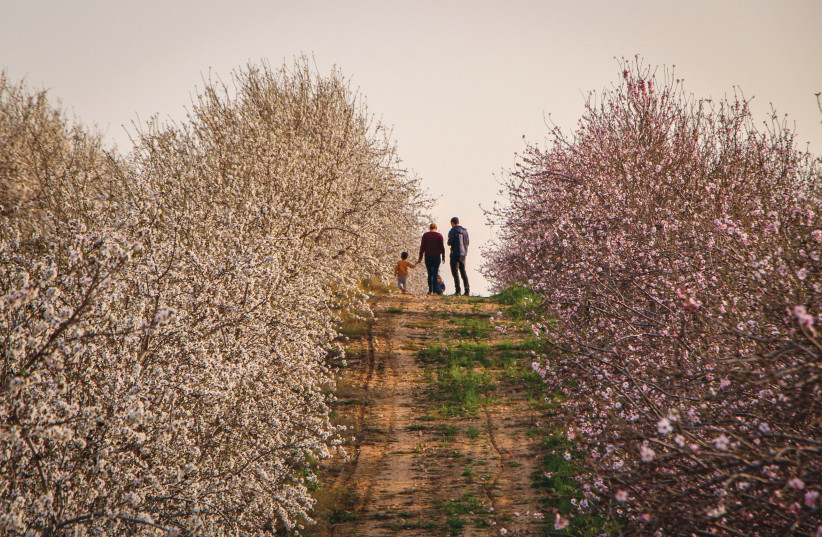
In sixteenth-century Safed, the city’s kabbalists created the Tu Bishvat seder, a remarkable synthesis of the fruits of the Land of Israel and spiritual realms – of the physical and the divine. The tree became an existential metaphor: roots, trunk, branches, and fruit, mirroring the human being.
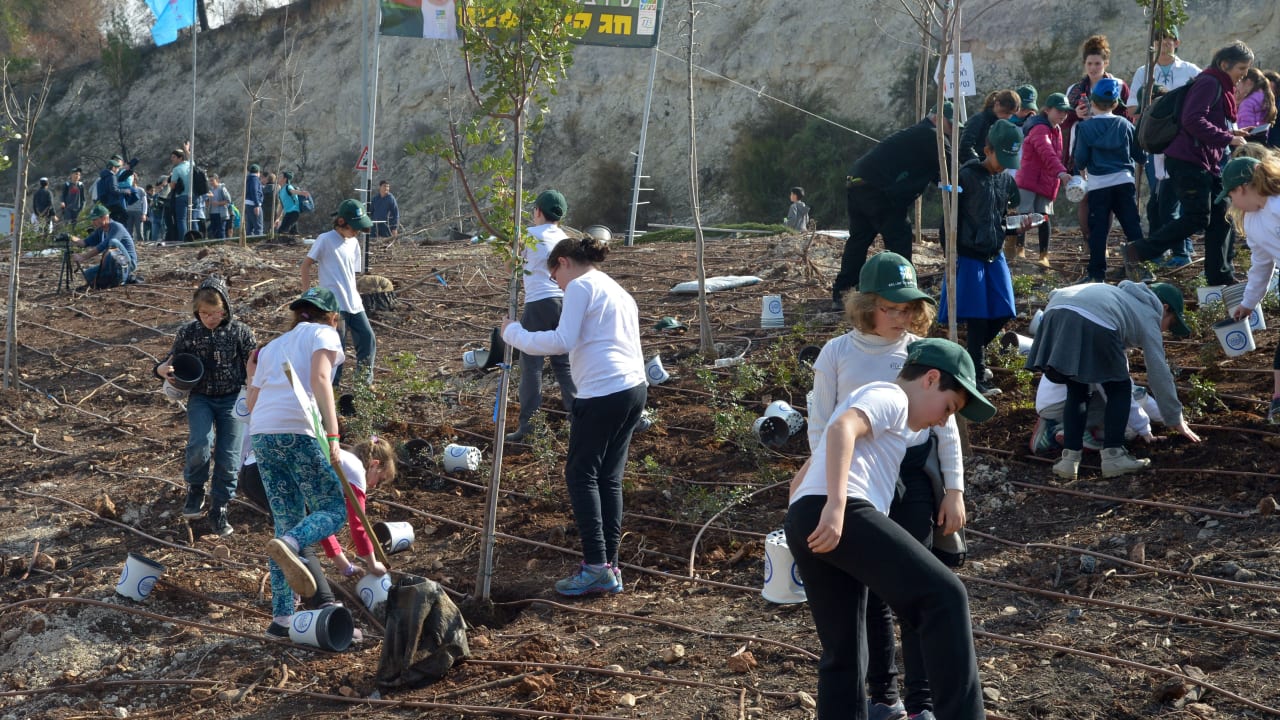
In the modern era, Tu Bishvat acquired a distinctly Zionist meaning. The teachers’ unions and the Zionist movement shaped it into the Festival of Planting, a celebration of national renewal in the ancestral land. Planting a tree was a declaration: We are here to stay, to make the desert bloom, to build a future.
The biblical verse “For the human being is a tree of the field” (Deuteronomy 20:19), together with the commandment “When you come into the land, you shall plant every fruit tree” (Leviticus 19:23), took on a renewed and ancient resonance, much like the old-new land to which we returned after 2,000 years of exile.
A new approach
In recent decades, yet another layer has been added: Tu Bishvat as a festival of environmental responsibility and tikkun olam (repairing the world) in its most tangible sense – the protection of our planet. Not as an abstract idea but as a daily commitment: to the air we breathe, the water we drink, and the soil on which we live.
Here, perhaps, we return to the Torah’s first act of planting, not as nostalgic memory but as a moral challenge: “The Lord God planted a garden in Eden, in the east, and placed there the human being whom He had formed” (Genesis 2:8).
We recall the haunting words of the late Ilan Ramon, spoken during the month of Shevat 22 years ago, just days before the Space Shuttle Columbia disaster, in a conversation with then-prime minister Ariel Sharon, as he described his view of Earth from space:
Sharon asked, “What do you see from there that we cannot see from here?”
Ramon replied, “What you see from here is truly astonishing. Our planet is beautiful, but what is even more striking is how thin the atmosphere is. I think we must protect it as the apple of our eye. That is how it appears.”
That view from space became a profound educational legacy: Responsibility for this world rests in our hands. Tu Bishvat thus becomes a festival of reflection – on the relationship between human life and the land, between the fruits of the earth and higher spiritual realms, and on long-term responsibility across time and space, from the vastness of space back to the soil beneath our feet.
The world has been entrusted to us
It is no coincidence that the Knesset was inaugurated on Tu Bishvat in 1949, a symbol that building national sovereignty, like planting a tree, requires long-term vision and responsibility toward future generations. In this sense, Tu Bishvat is a festival of hope and renewal.
In days of local and global upheaval, Tu Bishvat invites us to pause, to look closely, and to remember: the world has been entrusted to us.
And if we learn to cultivate it wisely, perhaps we may once again touch the Garden of Eden imagined by the builders of this land.
The writer is headmaster and managing director of the Leo Baeck Education Center.