
Eitan Mor, who endured captivity in Gaza, described the worldview he encountered there in blunt, unsettling terms.
When asked whether his captors spoke about repeating their actions, he replied: “Of course. The whole Gazan mentality – Gaza is basically programmed to liberate al-Aqsa – their name for the Temple Mount. That’s why they give birth to children; that’s all they think about in life. We may be done with the war and trying to forget it a little, but they are not. They are already working on the next stage of their eternal conflict with Israel: producing more explosives, recruiting more people, scheming all the time.”
Those words are not just testimony; they are a firsthand description of an ideology – one in which a holy site is not a place of prayer but a lifelong mission, a reason for existence, something that must be pursued endlessly, even when wars end. Parshat Yitro offers a powerful Torah framework for understanding why this way of thinking leads to perpetual conflict, and why the Jewish relationship to the Temple Mount is fundamentally different.
Judaism absolutely believes in the sanctity of the Temple Mount. It is God’s eternal house, the place where the Divine Presence rests, the focal point of Jewish prayer for thousands of years. But the Torah is very careful about how that holiness is introduced into the world and how central it is to our faith. Before there is a Temple, before there is Jerusalem, before there is any permanent sacred site at all, there is Mount Sinai.
Sinai is where Parashat Yitro takes place, and Sinai is deliberately unimpressive. It is not a strategic location, not a capital city, not a mountain people fight over. It is temporary and, once the Torah is given, it disappears from Jewish history altogether. That is not a coincidence. The Torah teaches that holiness does not begin with territory or power, but with values. Sinai teaches us how to live; the Temple Mount is where those values ultimately find their home.
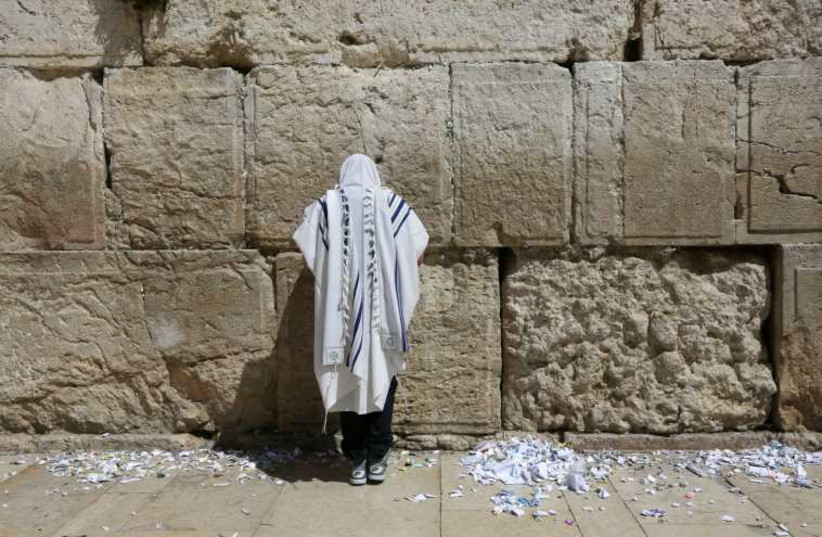
Temple Mount is God's eternal home
In Judaism, the Temple does not create holiness. It reflects it. A people must first accept limits on power – “Do not murder,” “Do not steal,” “Do not covet” – before they can be entrusted with God’s house. That is why the Jewish people can survive without the Temple for millennia, but cannot survive without Torah. The Temple Mount is God’s eternal house; Sinai teaches us how to merit it.
That distinction matters enormously. When an entire society is “programmed,” in Eitan Mor’s words, around liberating a holy site, the site itself becomes the meaning of life. Children are raised not toward moral growth, education, or building a future, but toward a single sacred objective that can never truly be achieved. A holiness that depends on perpetual struggle can never rest, because it is not anchored in values that restrain violence; it is fueled by it.
Judaism rejects that model entirely. Our holiest place is sacred precisely because it is conditional. The prophets say openly that God rejected the Temple service when it was severed from justice and compassion. Murder does not advance holiness; it destroys it. Bloodshed does not bring God closer; it drives Him away. A sacred place that demands endless killing ceases to be a house of God and becomes a bloodthirsty idol.
This is what made Judaism recognizable even to an outsider. Moses’ father-in-law, Yitro, was a pagan priest who, according to the tradition, had studied every form of idolatry before coming to Judaism. He understood power-based religion. He recognized conquest-based faith. And when he encountered the Israelites after their revelation at Sinai, he saw something entirely different: a faith built not on domination, but on law; not on rage, but on restraint; not on seizing heaven by force, but on aligning human behavior with Divine values. Ours is not a religion of sacred violence, but of sacred responsibility.
Eitan Mor’s testimony reminds us that wars never truly end when one side treats the conflict itself as a holy mission.
Parashat Yitro reminds us why Judaism insists on the opposite order: first Sinai, then Jerusalem; first values, then a house for God. One mountain is God’s eternal home; the other teaches us how to deserve it.
The writer is an educator living in Efrat. His second book, The Seven Facets of Healing, is dedicated in memory of his wife Lucy, who, together with his daughters Maia and Rina, was murdered by terrorists in April 2023.