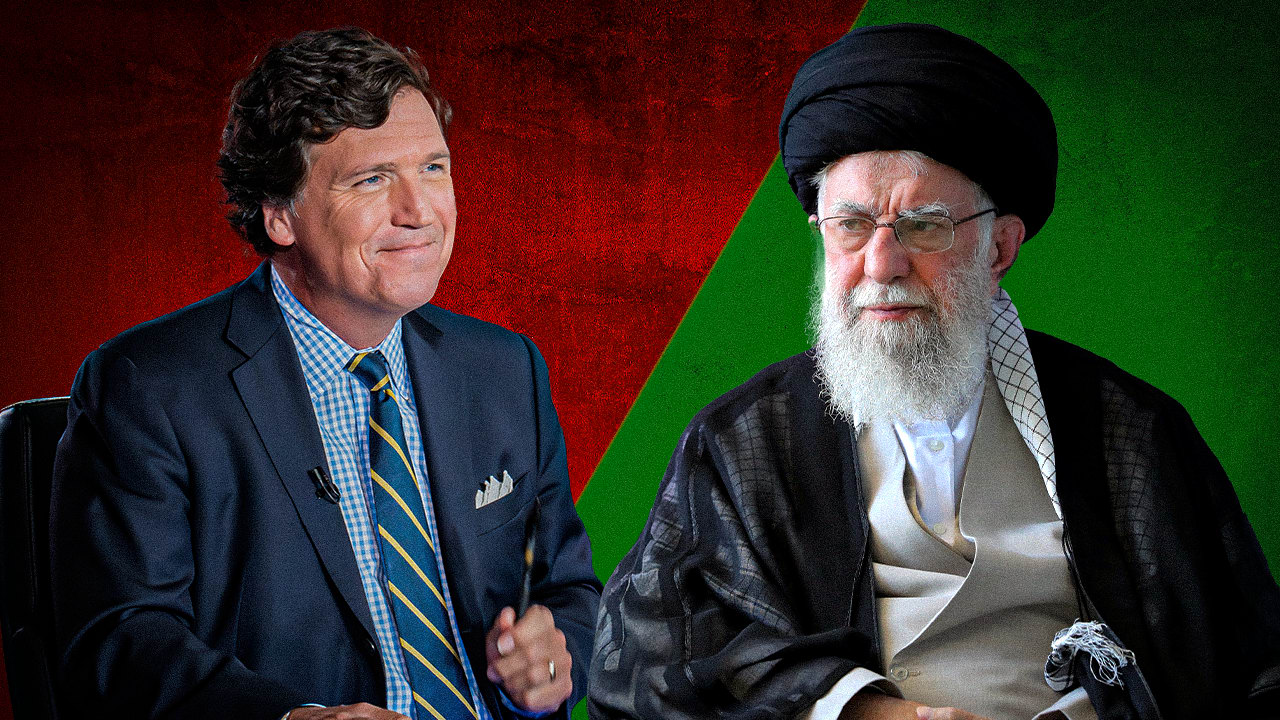
Iranian state propaganda recently featured Tucker Carlson, lending the regime a powerful Western voice at a critical moment. Carlson has publicly suggested that a nuclear-armed Iran could bring “stability” to the region – an argument that closely mirrors Tehran’s own narrative. Yet the Pentagon’s National Defense Strategy argues the opposite: that a weakened Iran would allow the United States to reduce its direct military footprint in the Middle East.
With Iran enriching uranium to 60%, just weeks from weapons-grade capability, Carlson has opposed decisive action, warning instead of global war. This stands in stark contrast to Donald Trump’s familiar pattern of public restraint and talk of negotiations immediately preceding force, language he used again before US strikes on Iranian nuclear sites in June 2025. At a moment when deterrence matters most, Carlson’s platform is helping normalize a regime racing toward the nuclear threshold.
Trump’s Strategic Pressure on Iran
While critics mistake delay for indecision, Trump’s approach has relied on tactical restraint while allies prepare strategically. During periods of apparent calm, Israel and regional partners quietly strengthened missile defenses and operational readiness.
Unlike Joe Biden, Trump has rejected gradualism, favoring overwhelming force designed to shorten conflicts, minimize US casualties, and deny adversaries the chance to regroup. He has little patience for quagmires or doctrines that assume America must manage the aftermath indefinitely. As Colin Powell once put it, “If you break it, you own it.” Trump’s counterpoint has been blunter: break it decisively, and ownership is optional. The end state may be opaque – but the method is not.
That strategic ambiguity has created openings others seek to exploit. As Washington positioned itself for maximum leverage, Carlson – championing an “Iran First” perspective – appeared in Riyadh, tapping into Saudi ambivalence. While Crown Prince MBS has signaled openness to normalization with Israel, Riyadh remains wary of any regional realignment that could marginalize Saudi influence. Carlson’s messaging feeds that uncertainty, weakening regional cohesion precisely when coordinated pressure matters most. He then went to Qatar, and this week he’s in the UAE, as he continues to subvert US policy in the Middle East.
Trump’s coordination with Israel has followed the same sequencing. He urged Jerusalem to delay destroying Iran’s missile capabilities and to halt short of finishing Hamas in Gaza – postponements, not vetoes. Prime Minister Benjamin Netanyahu acquiesced, with the understanding that if Hamas refused to disarm, Israel would be free to “finish the job.” More recently, Trump committed to eliminating Iran’s missile threat altogether. In each case, restraint was paired with an explicit promise of decisive follow-through.
Iran Has Crossed the Line and Exposed its Weakness
The Iranian regime’s hostility toward the United States is neither theoretical nor restrained. It has previously attempted to assassinate Trump and recently issued renewed public threats against his life, warning that “the bullet won’t miss.” Tehran has also announced tests of intercontinental missiles capable of reaching US cities – an escalation that strengthens the case for destroying Iran’s missile and launch capabilities before they become operational.
At home, the regime’s violent repression has crossed clear red lines. Trump understands that failure to act would invite comparisons to Barack Obama’s abandoned red line in Syria or Joe Biden’s widely ridiculed warnings to adversaries. Credibility matters – not only to allies – but to adversaries watching closely. Were the Iranian regime to fall, the impact would be seismic, potentially rivaling the Six-Day War in reshaping the Middle East.
Any effective strategy must distinguish clearly between the Iranian people and the regime that oppresses them. The ideological hard core of the IRGC remains loyal, but it is not immune to shock. Targeted strikes against IRGC leadership and command centers would demoralize regime loyalists while signaling vulnerability to the population. Iran’s own brutality has exposed deep internal fractures. Combined with cyber operations, calibrated pressure could accelerate the instability that the regime itself has created.
A coordinated strategy is already taking shape. The United States must confront the Houthis, Israel must finish dismantling Hezbollah, and Washington must act decisively against Iran’s missile capabilities. Despite public disputes, NATO allies and key Arab states understand the stakes. This moment requires unity. That is precisely why Tucker Carlson’s normalization of the Iranian regime is so dangerous, offering Tehran something it cannot achieve on its own: legitimacy.
Arnold Steinberg is an author and political strategist who has been involved in US policy.
This op-ed is published in partnership with a coalition of organizations that fight antisemitism across the world. Read the previous article by Winfield Myers.