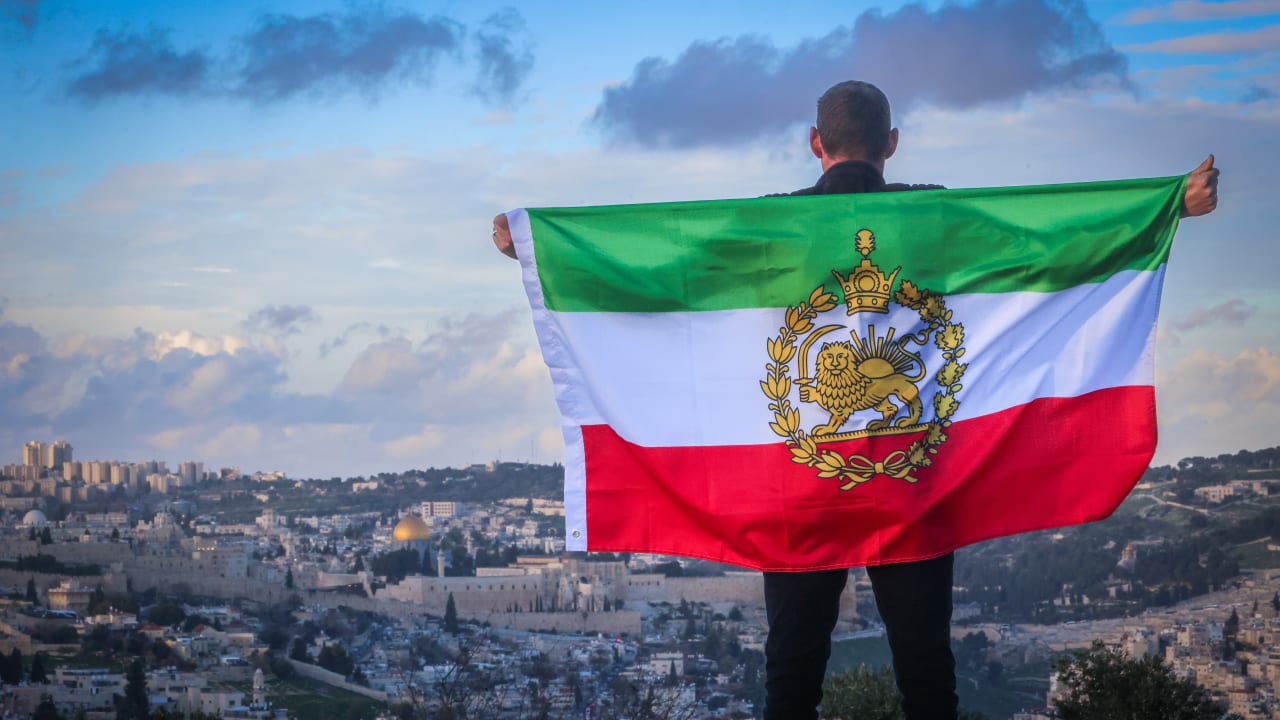
How history judges the Iran war may depend on the goals accomplished and the outcome of the ceasefire. What remains are the deep scars of those who were killed and those still in grave danger at the hands of Iran’s rabid regime.
For more stories from The Media Line go to themedialine.org
Whether a country initiates a just war or prolongs one, the safety and well-being of its citizens must remain a focal point.
As details emerge about a signed agreement between the United States and Iran, there still may be room to protect the Persian people from Tehran’s despots, the Lebanese from Hezbollah, Yemenis from the Houthis, and Gazans from Hamas. After all, Iran still holds the keys to the terrorist groups it supports, or “proxies,” as they are known in the region.
Strategically, the Iran war was years in the making. Tehran believed it could exert power through nuclear weapons, while ambitious American plans to weaken the regime and strip it of its uranium and nuclear ambitions were also taking shape.
The October 7 attacks accelerated the Middle East agenda on every Iranian proxy front.

At the center are the people: the grandparents, parents, and siblings of those murdered on October 7; the soldiers who courageously fought for a reason; and even the families of the villains in this story.
There is no happy ending when the Iranian people are promised freedom by the one country that presents itself as an arbiter of freedom. Those who oppose the regime are in grave danger because they may pay with imprisonment, hardship, or death.
Locals and foreigners are being held unjustly in prisons. Who will defend them?
History is often decided in a cold, calculated manner. In 2015, the Joint Comprehensive Plan of Action was signed, creating a short-term pause in certain nuclear advancements in exchange for temporary sanctions relief.
Earlier diplomatic agreements offer another example. The Sinai interim agreements were phased in between 1974 and 1975. After the Yom Kippur War, Sinai I and Sinai II served as step-by-step agreements under which Israel withdrew its military from parts of the Sinai Peninsula, while Egypt agreed to ease restrictions related to the Suez Canal and the Straits of Tiran.
If a war is fought by people, then the goals and outcomes of ceasefire negotiations should include the safety of those people.
When I wrote the opinion piece “Did Mahsa Amini Die in Vain?” I did not want to find myself in the same place, asking the same question a short time – or even a long time –later. Her parents and her nation deserve better. When young men and women who have just entered college, full of expectations for their lives, go off and fight a war without an endgame, there is no justice.
What are the terms of the memorandum of understanding (MoU)?
Those terms should benefit nations, not politicians. The politicians, one hopes, were elected by the people.
What is driving the MoU? If it is based on the economy, elections, polls, or out-maneuverability, then countries risk losing their citizens’ hope.
The Iranian regime did not wipe out Israel or destroy major US assets. The US did deplete some of Iran’s power. The MoU may deliver some nuclear leverage, sanctions relief, and open waterways through the Strait of Hormuz.
Gulf countries split more deeply over the war and realized they would not be spared. In the end, every country will do what it sees as best for its economy and its citizens.
Tehran never did what was best for its economy or its citizens. It held the world’s economy hostage as a bargaining chip.
High-stakes military diplomacy drives strategic agreements, but when the average citizen loses, civilization loses as well.
US President Donald Trump must bring the people back into the equation. As America celebrates its 250th year, it should recognize that democratic values hold society together.
Don’t forget the people.
The writer is president and CEO of The Media Line news agency and founder of the Press and Policy Student Program, the Mideast Press Club, and the Women’s Empowerment Program. She can be reached at ffriedson@themedialine.org.