The IDF also believes Hezbollah has obtained SA-8 Russian-made advanced surface-to-air missile systems from Syria.
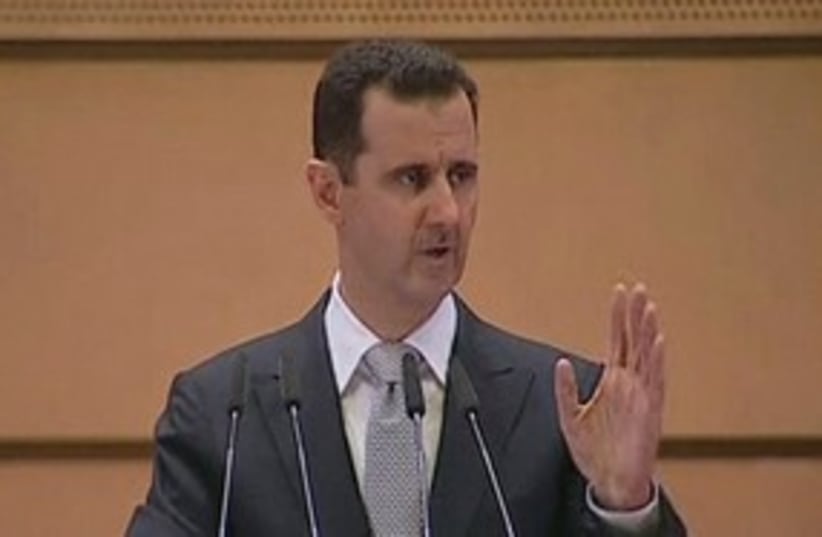
By YAAKOV KATZAssad making speech 311 (r)(photo credit: REUTERS/Syrian TV)
Hezbollah and Iran are preparing for the “day after” Syria’s downfall with plans for how to continue supporting the Lebanon-based guerrilla group in the event that President Bashar Assad’s regime is toppled.In recent years, a significant portion of Hezbollah’s weaponry has come directly from Syria.RELATED:'Hezbollah acting in Syria against protesters' Last week, for example, The Jerusalem Post revealed that Syria had recently transferred dozens of additional M600 long-range missiles to Hezbollah as well as additional 302 mm rockets.The IDF also believes Hezbollah has obtained SA-8 Russian-made advanced surface-to-air missile systems from Syria.“The assessment that Hezbollah will be severely impacted by Syria’s downfall is unlikely since it will be able to fill the vacuum with assistance directly from Iran,” a senior Israeli defense official explained.According to Military Intelligence, Hezbollah is currently providing assistance to Assad in the form of weapons, instructors and actual fighters who are assisting the Syrian military in its efforts to quell the resistance.Iran is already believed to be working on establishing new routes to smuggle weapons to Lebanon. In recent years, for example, Iran has tried transporting weaponry to Lebanon via aircraft that lands in Beirut International Airport, ships that dock in Syria and then transfer their cargo by land to Lebanon and even by train via Turkey.
The IDF believes Assad will fall within the coming year. In recent weeks, the number of defections in the military has risen to approximately 1,300 soldiers and officers and draft numbers are down. As a result, the Syrian military is refusing to discharge soldiers who have completed their compulsory military service.The prediction that Assad will fall is based on a combination of three factors – Syria’s failing economy, its refusal to insert fresh blood into the ranks of the leadership and the military’s failure to stop the opposition.On Sunday, Al-Arabiya reported Hezbollah forces were deployed in Syria to protect a military base where Iranian soldiers were deployed after it was attacked by anti-government protesters.Rebel groups have had some success fighting against Assad-loyalist troops and are reported to have taken control of several towns near Damascus. Assad’s crackdown on protesters has resulted in the deaths of more than 5,000 people, according to UN estimates.
if(catID != 151){
var cont = `Take Israel home with the new Jerusalem Post Store