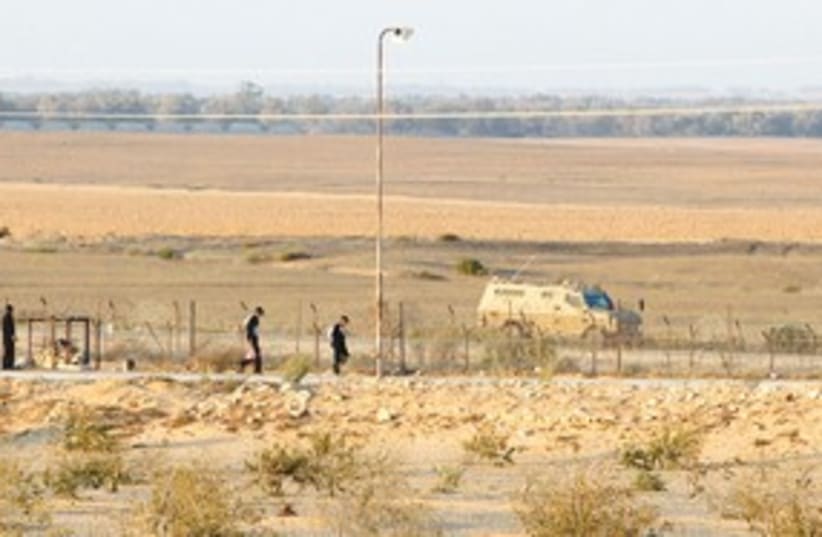
A virtual electronic fence in the Red Sea as well as new fortified military
positions and a significant increase in the number of IDF units along the border
with Egypt are some of the changes that have taken place in recent months amid
concern over the growing terrorist presence in Sinai.
On Thursday,
The
Jerusalem Post toured the border with officers from the IDF’s 80th Division and
received an insider’s look at how the military plans to thwart terrorist
attacks. In August, eight Israelis were killed in a
coordinated terrorist
assault along the border.
Since then, the navy has boosted the number of
electronic sensors along the coast. It can now detect and track targets
the size of soda cans floating in the sea, said Lt.-Cmdr. Ronen,
commander of the patrol ships in the Red Sea.
“The border between Israel
and Sinai continues into the sea, and when one part is closed there might be
someone on the other side who thinks that they can try to come into Israel a
different way, maybe via the sea,” he told the
Post. “We understand that
our operations have significant and strategic consequences.”
RELATED:IDF to investigate Egypt border incidentsDecember sees significant rise in terror incidentsOne of the
noticeable changes on land is the rapid pace of construction along the
240-kilometer border, 100 kilometers of which are now closed by a newly built
barrier.
In August, for example, there was barely any barbed wire along
the section of the border used by the terrorists to cross into
Israel.
Last week, the Defense Ministry completed the construction of a
6-meter-high fence wrapped with barbed wire along the entire section.
In
addition, the IDF plans to erect new fortified positions along the border to
protect key strategic locations, such as the Netafim crossing, 12 km. north of
Eilat. It is also investing large resources in intelligence gathering, to create
a clearer understanding of terrorist groups that operate in Sinai.
Road
12, where the attack took place last summer and which runs just meters away from
Egypt, remains closed due to the threat, although the IDF is confident that it will be able to open to the
public soon.
“There are a number of challenges within this area, proven
by the terror attack in August,” Lt.-Col. Tal Carmel, the 80th Division’s chief
operations officer, told the
Post during a tour on Thursday of the scene of the
attack. “We are working to secure the border and are doing everything possible
to protect Israel and Israelis.”
Another change along the border is the
placement of small concrete blocks every few kilometers on Road 12.
The
idea, Carmel explained, is that if cars came under fire from within Egypt, they
would be able to find cover behind them.
The IDF has also established a
new brigade along the border, currently under the command of OC Nahal Brigade
Col. Amir Abulafia. The new unit will receive its own brigade commander when it
receives all of the necessary manpower and units, something expected to happen
in 2012. The army has also established a new Combat Collection Unit, which is
responsible for operating the electronic sensors – cameras and radars – along
the border.
At sea, the situation is not that much different and the IDF
is working hard to improve its defenses. After the tour of the border, the
Post
joined the navy on a patrol mission in the Red Sea, off the coast of Eilat,
Aqaba and Taba.
The sea was calm but the sailors aboard the Dvora-class
fast patrol boat were on high alert, a direct result of the attack in August and
the development of the new terrorist threat in the Sinai Peninsula.
The
threats on the Navy’s mind include a potential terrorist infiltration by sea
into Eilat, an attempt to detonate an explosives-laden boat next to an Israel
Navy vessel and an attack against a vessel by an anti-ship
missile.
“Before the revolution in Egypt, the threats that we prepared
for were for the most part theoretical,” explained Ronen. “Now, we know that
they are real, and that is why even if we lack intelligence about a specific
attack we prepare ourselves according to the capabilities we know are on the
other side.”