Kadima: Netanyahu is taking a step in right direction; eventual bill expected to add Arab service, sanctions for all.
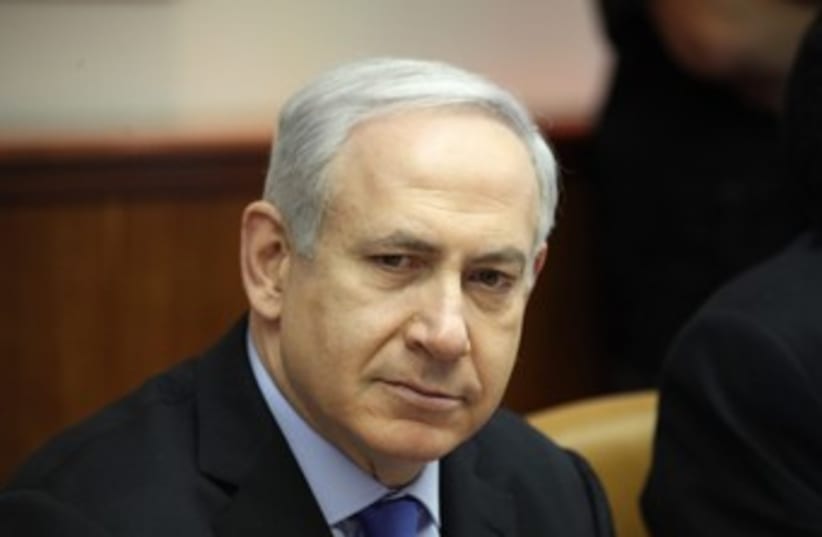
By LAHAV HARKOVPrime Minister Binyamin Netanyahu 370(photo credit: Marc Israel Sellem)
Prime Minister Binyamin Netanyahu indicated on Saturday that he is willing to accommodate Kadima leader Shaul Mofaz’s demands to implement the findings of the Keshev Committee in order to keep him in the coalition.Netanyahu called a Likud faction meeting for Sunday morning to discuss the committee’s recommendations, with a few additions. If Likud MKs agree to the central points made by the Keshev Committee – created to recommend a replacement for the “Tal Law” – Netanyahu will meet with Mofaz to discuss the team that will draft the new bill to increase equality in the burden of service.The prime minister’s announcement came despite the fact that he tried to dissolve the Keshev Committee, led by MK Yohanan Plesner (Kadima), last week. The Kadima lawmaker presented his findings on Wednesday, and Mofaz insisted that the bill to replace the Tal Law be based on Plesner’s report.Likud’s discussion of the report is “a step in the right direction,” a source close to Mofaz told The Jerusalem Post.“Adopting the principles of the Plesner report is a condition for progress [in cooperation with Kadima],” the source explained. “Once they accept that, we can draft the bill.”Defense Minister Ehud Barak said Mofaz and Netanyahu behaved responsibly and made significant progress toward “a historic change in Israeli society, strengthening the nation’s unity and equality.”Plesner said he expects and hopes his report will be accepted by the Likud, so its proposals can become law, but added that “this is not the end of the battle, which will continue until we see historic change.”Netanyahu discussed his expectations for Sunday’s meeting with several Likud faction members.A Likud lawmaker said the faction will discuss the principles of the Plesner Report, but not all of its details, so that both the Likud and Kadima accept the general recommendations and Netanyahu will have leeway to negotiate with Shas and United Torah Judaism.Personal sanctions on those who do not serve, the biggest point of contention for the two haredi parties, will be discussed. However, the specifics of such sanctions will not be brought up in the Likud faction session.In addition, the age of enlistment is not expected to be brought up in Sunday’s meeting.Plesner recommended it be 23, while the haredi leadership prefers 28.Netanyahu also plans to add two points that were not included in the Plesner Report.First, that all Israeli citizens will be required to either enlist in the military or perform national service, including Arabs.Second, sanctions will not only apply to the ultra-Orthodox, but also to Arabs and secular Israelis who evade service.After the meeting, in which the Likud is expected to approve the principles of the Plesner Report, Netanyahu and Mofaz are expected to meet to discuss the staff that will draft the final bill, which the Kadima leader said must be completed by Wednesday.Netanyahu favors a team made up of Vice Premier Moshe Ya’alon, Minister-without- Portfolio Yossi Peled and National Security Adviser Yaakov Amidror.On Friday, Mofaz said, “there will be no further committees” on equal service for all, and that only the Keshev Committee’s recommendations can form the basis for the legislation.However, on Saturday, a source close to the Kadima chairman said he would wait until after the Likud faction meeting before determining whether there has been a breakthrough and if he would cooperate with Netanyahu.
if(catID != 151){
var cont = `Take Israel home with the new Jerusalem Post Store