PM scrambling to stop hawks from over-taking Likud
Judea and Samaria residents register party members in effort to shift Likud to the Right in committee elections.
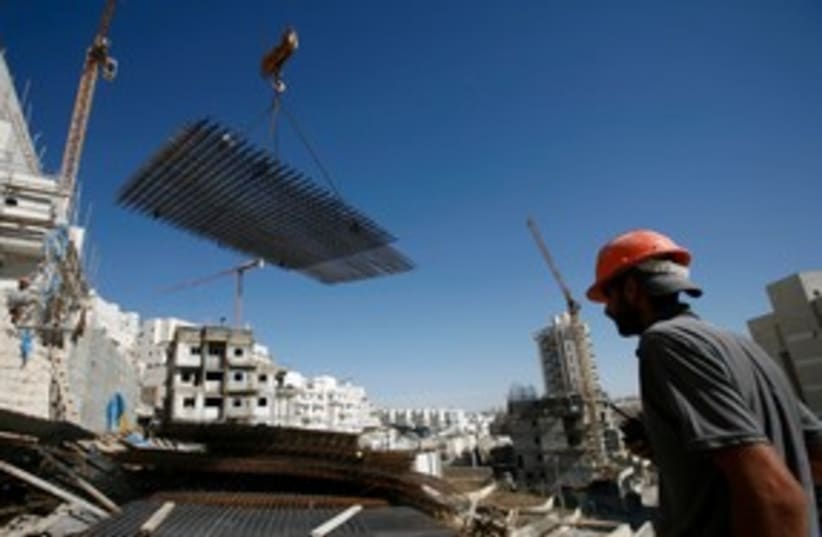
By GIL STERN STERN HOFFMANSettlement Construction 311(photo credit: REUTERS)
Prime Minister Binyamin Netanyahu will convene top Likud officials and advisers on Sunday to strategize how to prevent residents of Judea and Samaria and other hawks from obtaining too much power in the party.More than 100,000 Likud members will be eligible to vote on January 31 to elect members of the party’s influential central committee. In the first three months after that race, the committee is permitted to change the party’s constitution with a simple majority, rather than the two-thirds majority required most of the time.RELATED:Likud's right gears up to fight 'Bar Ilan 2' speechRightists quietly taking over LikudNetanyahu has done everything possible to delay the vote, which was supposed to take place shortly after the 2009 general election. He went to several courts, including the Supreme Court, to get the vote postponed.Hawks in the party used the time to register as many Likud members as possible in Judea and Samaria in an effort to shift the party to the Right. Meanwhile, Netanyahu barely signed up any new members who would be loyal to him.
Only three weeks ago did Likud MKs warn Netanyahu that he could lose control over the party if he did not take immediate action. He began legal proceedings to change the method of selecting central committee members, which would require a court order to delay the January 31 vote again.Netanyahu wants to change a party rule that sets the number of central committee members from Judea and Samaria based on how many people in the region voted for Likud in the last election. The rule was set when most of the settlers voted for parties further to the Right, but in the last election, they voted overwhelmingly for the Likud.The result of the rule is that the Likud branch in Samaria could end up having several times as many members as the branch in nearby Afula, for instance. Between the members from Judea and Samaria and other hawks among the Likud’s founders and from the Jerusalem branch, the party’s institutions could become much more right-wing from January 31 onward.“Bibi has a real problem here,” a Likud activist said. “Because he fell asleep and didn’t deal with the situation, the central committee could make things very hard on him. He is losing control over the party.”Were Netanyahu more successful in getting loyalists into the central committee, he might have used the key three months after the January 31 election to try to pass a proposal enabling him to reserve slots for candidates he would choose for the next election.He might have used that right to reserve slots for Defense Minister Ehud Barak and members of his Independence Party.In what could make things even harder for Netanyahu, hawkish MK Danny Danon is expected to run for the chairmanship of the Likud convention, which is what the central committee is called for its key three months following its election. Danon has vowed to prevent from Barak and his allies from joining Likud.But Barak has repeatedly denied any intention of joining Likud. The defense minister, who turns 70 on February 12, may end up deciding to quit politics ahead of the next general election rather than try to lead his Independence Party over the electoral threshold or enter the fray in the Likud.
if(catID != 151){
var cont = `Take Israel home with the new Jerusalem Post Store