Rivlin: Calls for Arab service politically motivated
Knesset speaker calls on Netanyahu to “prefer the good of the people and not tear apart the nation.”
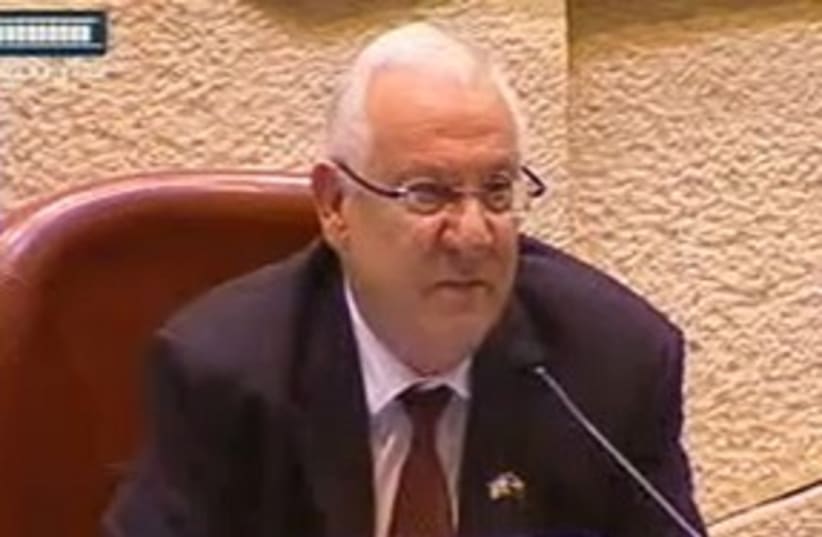
By LAHAV HARKOVKnesset Speaker Reuven Rivlin 311(photo credit: Courtesy: Knesset Channel)
Many of those calling for Israeli Arabs to do national service have political, not topical motivations, Knesset Speaker Reuven Rivlin said on Thursday.Rivlin pointed out that the “Tal Law,” which allowed yeshiva students to indefinitely postpone IDF service, did not include Israeli Arabs.Though the Knesset speaker told Israel Radio he thinks Arabs should be included in the new service bill, he explained that “this is not just about the political need to say if they’re doing something for one minority we’ll do the other.”“These groups are different at their core,” Rivlin said, referring to haredim and Israeli Arabs.Regarding haredim, he said thousands of them cannot “squeeze into yeshiva to dodge the draft.”“We need to respect everyone and their desires, but we should not have a comprehensive exemption” for all yeshiva students, he stated.At the same time, the Knesset speaker said the state should support those with potential to be their generation’s greatest Torah scholars.Although some in the ultra- Orthodox world think 18 is too young, there are tools to determine who are the brightest yeshiva students at that age, and everyone else should enlist in the IDF or do national service, Rivlin added.“We need to make sure the state is Jewish and democratic, and ensure the depth of Torah in Israel,” he stated, “but not allow people to shirk their service.”In reference to the proper age of service, Rivlin said he thinks 18 is appropriate, but if someone is in yeshiva and then he or his teachers realize he will not end up a great rabbi, he should enlist at age 20 or 21.The Knesset speaker also spoke out against personal sanctions against those who do not enlist, saying that “sanctions are for when you want to start a war.”“We don’t want a war with our brothers,” he explained.Rivlin called for Prime Minister Binyamin Netanyahu to “prefer the good of the people and not tear apart the nation,” by saying all citizens should share the burden of service equally.The speaker also defended Kadima leader Shaul Mofaz’s motives, saying that, in his opinion, Mofaz “is being real about the issue of national service,” but also wants to “hold the coalition together and succeed politically.” At the same time, Rivlin said that in the past, politicians sought power in order to promote their ideologies, whereas today, Zionism and other ideologies are “a ladder to personal success.”“It’s a problem,” he added, saying he is not specifically referring to Mofaz. “We need to know why we want to be public servants.”
if(catID != 151){
var cont = `Take Israel home with the new Jerusalem Post Store