For the past year or two, missiles have come raining down on southern Israel every few months.
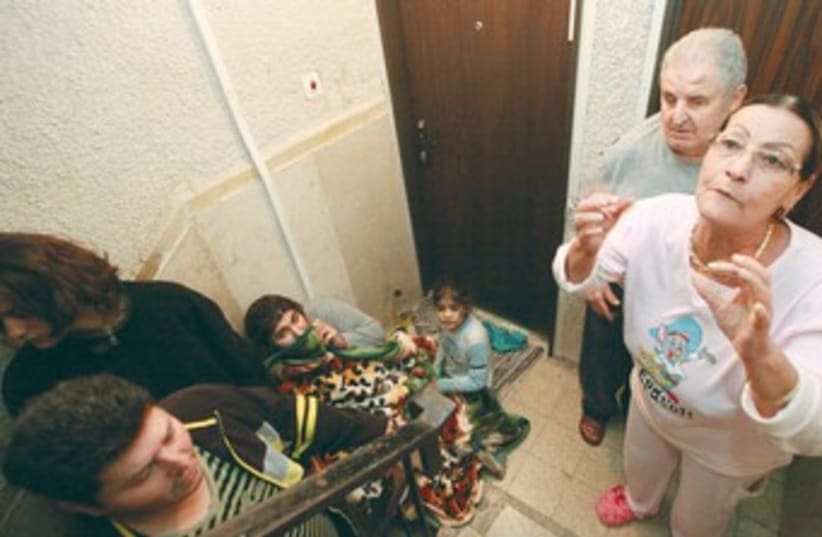
By FAYE BITTKERCIVILIANS TAKE COVER in Beersheba 370(photo credit: Marc Israel Sellem/The Jerusalem Post)
For the past year or two, missiles have come raining down on southern Israel every few months. Somehow, as the pundits endlessly talked it out on different evening news programs, this became an acceptable situation, as unavoidable as bad weather. The Israeli government was trying to avoid “escalation” in Gaza and confrontation with Egypt and the “oref” — the citizens at the front line — would have to tough it out — or not.Resilience was the key to maintaining the status quo.We, the residents of southern Israel who live within a 40 kilometer radius of Gaza, were encouraged to build safe rooms in our house, seek support if we were feeling nervous and otherwise learn to adjust to a situation where we were in ultimate waiting mode — waiting for the next alarm, the next school closure, the next “episode” when an occasional missile or two might fall nearby.And oddly enough, like good lab rats, we did just that. We learned to drive with our car windows open so that we could hear sirens while on the open road. We taught our children how to fall asleep again once they were moved into the safe room in the middle of the night. We developed a whole slew of coping mechanisms that range from “dressing for missiles” – no heels or straight skirts allowed – to black humor, acknowledging the absurdity of living in this kind of situation. A child wakes up from a crash of thunder last winter screaming, “missiles,” and we get to make jokes about how children of the Negev are more familiar with the sound of falling Grad missiles than actual rain. We became old war heroes, exchanging stories of close calls from the missiles of 2009 versus those of 2010 and 11.But as time has gone on, our resistance has worn away.Our kids are showing signs of severe stress. Our spouses have stopped eating when there is news about an attack in Gaza. Our blood pressure goes up as we count off the locations where missiles have fallen – sometimes when we were only a few hundred meters away. The sound of a distant car alarm sets off a crying jag that simply has no real justification other than that burning feeling of not being able to take it anymore.Click for full JPost coverageThe unified, resilient front is still there, but it is being propped up by a million people living under threat of missile fire, each of us forced to confront our own individual fears. My own response has already become physical – clearly a manifestation of PTSD. And I am not alone. All my rational understanding of the futility of war has simply become raw, unpolished fear that comes over me when I hear that piercing sound of the siren.Forget politics. This is Chinese torture. Adrenalin in overdrive. Kids crying. Powerlessness to the logical extreme. All I want is for someone to make it stop, but for that to happen there would have to be an acknowledgement that something was wrong. There would have to be international pressure on the Palestinians to stop these missile attacks.But when I look at the international press coverage, beyond the scope of my circle of friends and family on Facebook, I find the world is indifferent, or even hostile to my situation. Israel is blamed no matter what it does. And this only strengthens the resolve of the extremists in Gaza to keep the missiles coming.So as I sit here at home, listening to the booms of the endless barrage of missiles falling over Beersheba, I want to make myself heard. This is an unacceptable situation! War is not like the weather.Missiles are not something that we have to learn to live with like the seasons of the year. This is not the blizzard of 2012. And telling me and my neighbors otherwise is only turning this forecast into one of despair.Faye Bittker lives outside Beersheba.
Related TagsPTSD
if(catID != 151){
var cont = `Take Israel home with the new Jerusalem Post Store