Barak asserts that despite increased urgency in Washington, decisions about Israel's security will be made in Jerusalem.
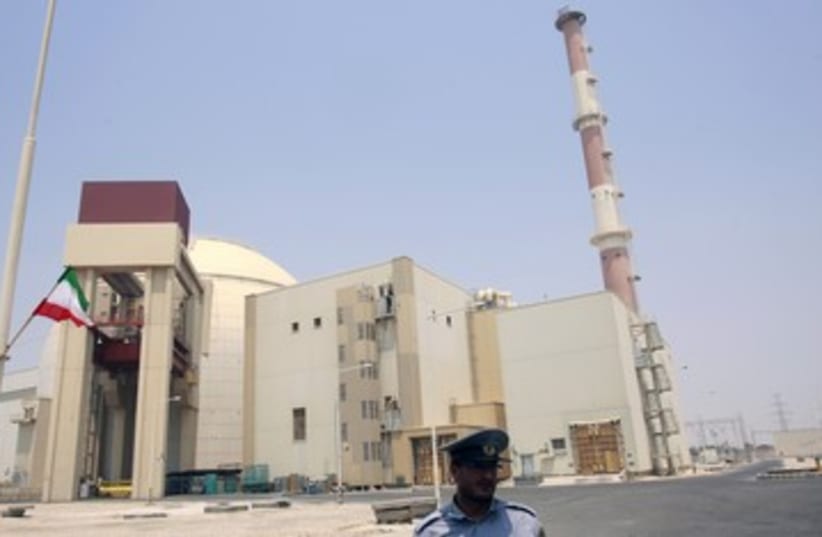
By JPOST.COM STAFFIran's Bushehr nuclear reactor_150(photo credit: Reuters)
Defense Minister Ehud Barak on Thursday said that a recently disseminated US intelligence report is closer than ever to Israel’s own intelligence estimates on Iran.The latest US estimate, he told Israel Radio, gives much more urgency to stopping Iranian nuclear proliferation.“As far as we know it [the intelligence assessment] brings the American assessment much closer to ours... it makes the Iranian issue even more urgent and [shows it is] less clear and certain that we will know everything in time about their steady progress toward military nuclear capability,” the defense minister told Israel Radio.“We and the Americans agreed not to allow Iran to develop nuclear weapons and all options are on the table,” Barak said.Ultimately, however, it is the Israeli government that will make decisions regarding its security and future, he added.The defense minister also addressed criticism of the government’s perceived decision-making process, saying that the cabinet would need to approve any military strike on Iran.Click here for full Jpost coverage of the Iranian threat“The description in the media as if two people are sitting around and hatching attack plans is utterly ridiculous,” he proclaimed.Earlier in the week, Prime Minister Binyamin Netanyahu once again shot down the idea that a nuclear-armed Iran could be contained. If Iran gets a nuclear bomb, it may actually use it, he said in a meeting with Australian Foreign Minister Bob Carr on Monday.That the Iranians might actually use the bomb is a reality that cannot be denied, Netanyahu said.“This is a regime that has broken every rule in the book,” he added. “They very likely could use weapons of mass death.”Netanyahu said there was an illusion among many in the world that if Iran acquired nuclear weapons, it would behave responsibly like the world’s other nuclear states.The prime minister, during the discussion dominated by the Iranian issue, said Iran is governed by a “fanatical regime” that sees itself on a sacred mission of global Islamic domination, and destroying Israel was just one step toward its larger vision.Everyone talks about the cost of stopping Iran, “but they shouldn’t ignore the cost of not stopping Iran,” he said.Netanyahu’s comments came a week after he said the country’s elected political leadership, and not the defense and security establishment, would make the decision to attack Iran.Those remarks followed media reports of Israel’s top security officials opposing an Israeli attack without US backing.Herb Keinon and Reuters contributed to this report.
if(catID != 151){
var cont = `Take Israel home with the new Jerusalem Post Store