Ashkenazi: Hamas will pay if it fires rockets on Eilat
IDF chief says sale of Russian missile to Syria disturbing but can be dealt with; hints at possibility of Iron Dome presence in North.
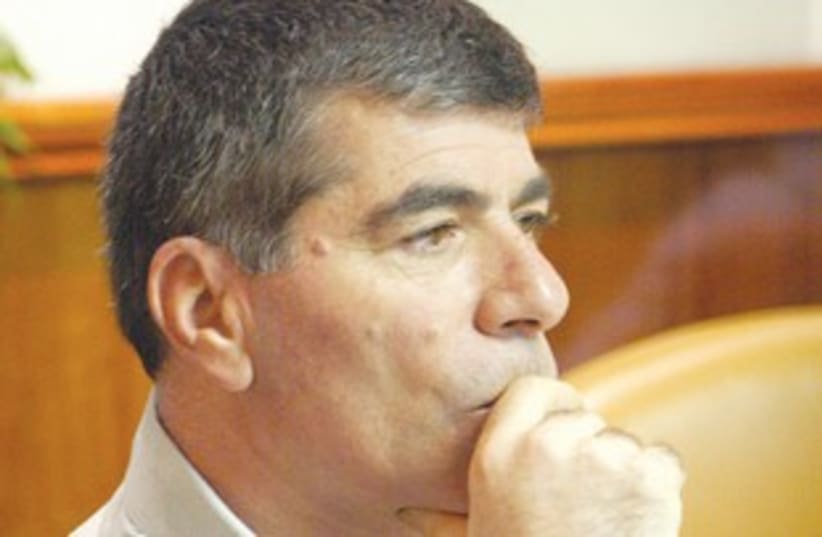
By YAAKOV KATZAshkenazi 311(photo credit: Ariel Jerozolimski)
Hamas will pay a price if it fires rockets into Eilat from the Sinai Peninsula, IDF Chief of General Staff Lt.-Gen. Gabi Ashkenazi said on Tuesday, in a rare warning to the Palestinian terror organization.Speaking to The Jerusalem Post on the sidelines of a Paratrooper’s Brigade exercise in southern Israel, Ashkenazi said that Israel and the Egyptians were both closely tracking developments in the Sinai in an effort to prevent the firing of rockets into Eilat. In August, Hamas fired two rockets into the city.RELATED:Ashkenazi: Resistance on flotillas could cause casualtiesAshkenazi: Expect violence, but no intifada, if talks failAnalysis: Under Ashkenazi, IDF takes itself more seriouslyThe brigade-level exercise, held at the Tze’elim Training Base in the Negev, was the Paratroopers Brigade’s third such exercise over the past year. On average, Ashkenazi said that the IDF held 20 such brigade-level exercises a year.“We are familiar with the Sinai threat and the Egyptians are also concerned with this possibility,” Ashkenazi told the Post and two other reporters who accompanied him during his visit to the exercise.“It is clear to us that Hamas does this and Hamas will be held accountable. The possibility exists and we are watching it.”He also said that Israel will not allow Hamas to return to attack Israel the way it did before Operation Cast Lead in late 2008.“When we look at the past year in general the security situation around the Gaza Strip is completely different and we will not allow Gaza to return to the reality that was there before Cast Lead,” he said. “We will take all of the necessary steps to prevent rocket attacks and an escalation in the situation.”Later in the day, Ashkenazi appeared for a lengthy briefing of the Knesset’s Foreign Affairs and Defense Committee, during which he also touched upon the threat posed by the rockets aimed at Israel’s south.One of Iron Dome batteries may be set up in NorthThe first two batteries of the Iron Dome defense system, he said, will be made operational in November, but added that he was “not certain that both of them will be set up in the South.” At least one of the two batteries, he hinted, may be placed to respond to rocket threats from Lebanon.Ashkenazi warned, however, that Israel “cannot put all of our money on active defense - we must combine it with attack potential. We cannot extend a dome of iron across the entire country upon which everything that is shot at us will explode.”Referring to the increase in training throughout the military, Ashkenazi warned of the possibility that the IDF will need to fight on several different fronts at once.“There is a connection between fronts like Hizbullah and Hamas,” Ashkenazi said.“There is also a connection between Hizbullah and Syria which exists, but might not erupt.”There could be a situation, he said, that a brigade like the paratroopers will be transferred from one front to another during a future large conflict.“This is why we build a large and strong army,” he said.Russia-Syria arms deal concerning but manageable, says AshkenaziMoving to the sale of Russian surface-to-sea cruise missiles to Syria, Ashkenazi said that Israel was concerned by the deal but said that the IDF would be able to “deal” with the challenge.Russia has reportedly already begun selling Yakhont cruise missiles to Syria in a deal valued at $300 million. Israel is concerned that Syria will transfer the missile to Hizbullah, which could use it to threaten Israeli ships that patrol the Lebanese coast.During the Knesset hearing later in the day, Ashkenazi told MKs that Israel “doesn't intend to reduce our freedom of action because of these weapons.”“We have been following the deal for a long time. There were attempts by the highest political levels to thwart the deal but they did not succeed,” he added at the paratroopers’ exercise.“This is a negative development and we will know how to deal with it.”While there is no immediate fear that Syria would transfer the advanced missile to Hizbullah, the possibility definitely exists.“We have seen a disturbing phenomenon in recent years of the Syrian military transferring a significant amount of its arsenal to Hizbullah,” he said.Rebecca Anna Stoil contributed to this report.
if(catID != 151){
var cont = `Take Israel home with the new Jerusalem Post Store