Mubarak: Failure of talks will lead to terror, violence
PM Netanyahu reportedly set to convene "septet" of cabinet meetings to discuss the impasse in peace talks; Abbas and Mubarak to meet in Cairo.
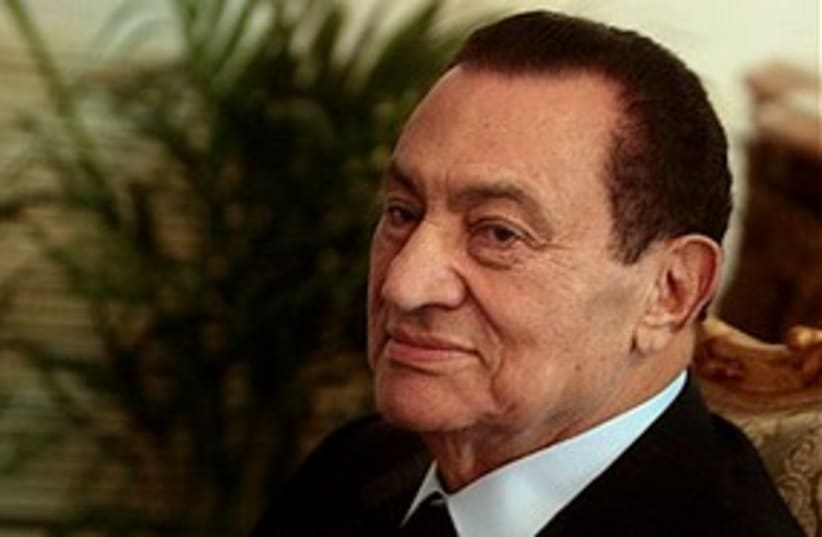
By JPOST.COM STAFFHosni Mubarak(photo credit: ASSOCIATED PRESS)
The failure of peace talks will result in widespread violence, Egyptian President Hosni Mubarak said in an interview with the journal of the Egyptian Armed Forces. The report, published Tuesday, included the remarks made by the Egyptian leader to mark the 37th anniversary of the Yom Kippur war.Palestinian Authority President Mahmoud Abbas was in Cairo on Tuesday and set to meet with Mubarak to discuss the latest developments.In Israel, Prime Minister Binyamin Netanyahu was reportedly preparing to convene his "septet" of cabinet ministers on Tuesday to discuss the crisis in the direct talks with the Palestinians.The ministers were reportedly also to discuss Israel's relations with the United States surrounding the renewed building in the West Bank.In addition to Netanyahu, the septet includes three key Likud ministers, Strategic Affairs Minister Moshe Ya’alon, Intelligence Agencies Minister Dan Meridor and Minister without Portfolio Benny Begin; and the heads of the coalition’s three largest parties – Foreign Minister Avigdor Lieberman from Israel Beiteinu, Defense Minister Ehud Barak from Labor and Interior Minister Eli Yishai from Shas.Government sources had said in recent days that Netanyahu would not convene the septet the security cabinet to discuss the issue until there was a concrete and detailed proposal on the table for how to overcome the current impasse, but reports on Tuesday indicated that plans had changed.On Monday, the Prime Minister told the weekly cabinet meeting that Israel and the US are involved in “sensitive diplomatic contacts” to find a way to continue the direct negotiations with the Palestinian Authority.In his first public comments on the crisis in the direct talks, resulting from last week’s expiration of the 10-month settlement moratorium, Netanyahu said those talks had begun after his government made a number of gestures to relaunch them, including announcing the settlement freeze last November.Jews living in Judea and Samaria “have been under an unjust attack now for nearly half a century,” Netanyahu said.“They deserve to live normal lives like every other citizen, and that is our policy – to ensure that they can live normal lives.”The prime minister said that despite all the difficulties, his government had lived up to its commitments regarding the construction moratorium.“Now we have an interest in continuing the peace negotiations,” he said. “That is a vital interest for Israel. We are currently in the midst of sensitive diplomatic contacts with the American administration in order to find a solution that will make possible a continuation of the talks.”Netanyahu did not reveal anything about those talks, or what was being discussed, and said this was not the time “to make declarations. We are not looking to cause an uproar, and I do not have the possibility of denying every baseless report published in the media.”The London-based newspaper Asharq Alawsat reported Monday that Netanyahu had agreed in principle to extend the moratorium by two months, in exchange for an incentive basket from the US including military hardware, promises of political support, and assurances that in any agreement, Israel would – as Netanyahu has demanded – be able to keep troops stationed on the eastern border of a future Palestinian state to prevent arms smuggling.Herb Keinon contributed to this report.
if(catID != 151){
var cont = `Take Israel home with the new Jerusalem Post Store