Rejoice, you are alive. The year is waiting for you. The scroll is yet unfurled. The story is yet to be told.
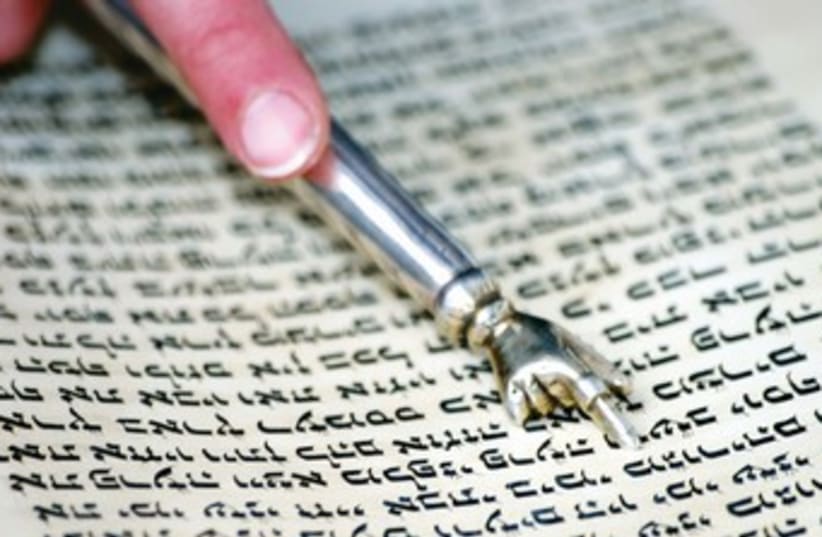
By SA’AR SHAKEDTorah reading 370(photo credit: Marc Israel Sellem /The Jerusalem Post)
Such is the emotional process of the High Holy Days: For three weeks we grieve over the destroyed Temple. It is a hope that has vanished, a dream of harmony that once existed but now gone. As we recite the ancient lamentations we look for the things that are broken within us. If one doesn’t bring himself, as a real person, to his prayers, then they are inauthentic.Then, from the ashes, comes a celebration of life. This is the 15th of Av. In ancient days it was a time to go dancing in the vineyards in white dresses, for the purpose of finding a husband or wife. A young generation will be born, as the year is about to be over, transformed into the following year.Click for more JPost High Holy Day featuresFrom that point we are ready to start the month of Elul. This is the time for introspection. We are on a journey of purification, in the simplest manner: a human being is preparing himself to stand before its Creator. The piyutim, sacred poetry of this time of the year, bring forth this notion: Human being, why are you falling asleep? Wake up, cry out in supplications.It is known that the letters of the word Elul in Hebrew form an acronym for the phrase from Song of Songs 6:3 – “I am to my beloved, and my beloved is to me” (ani ledodi vedodi li). The acronym reminds us to look for God as an intimate lover, rather than as a patriarch, lord, father and king. During this month of Slihot (Forgiveness) we have an opportunity to reflect on areas that we usually choose to ignore and meditate on them. Have we been attentive to what is truly important? Have we squandered the gift of precious time which we were granted?This is our mind-set, therefore, on Rosh Hashana. The concept of time is being reestablished. “Hayom harat olam,” sings the ancient poet. “Today had I conceived the world,” says God. Thus, today is the Day of Judgment. This is symbolized by the shofar and the mitzva of trua, the ceremonial blast.Now a quiet tension can be felt. It is nearly the Day of Atonement. Rabbi Akiva says, closing the Mishna tractate of Yoma, “Fortunate are you, O Israel! Before whom do you purify yourselves? And who purifies you? Your Father in Heaven!”Now, we are almost ready to stand before God. What is still missing? The practice of joy and humbleness. This is why the Israelites came up with the idea of Succot. No matter if you are rich or poor, during this week you will sleep and eat in temporary housing. It will help you internalize the idea that we are all wandering strangers in this land, sojourning from one point to another, thinking we have an impact on our lives.To our succot, temporary huts, we invite the heroes of the past: patriarchs, matriarchs, prophets and kings. The memories of the nation are woven into the story of every single family. Seven days of joy are ahead of us. Succot is the last chance to bring an offering from our field and farm, before the new year starts its own swift journey to its end, as they all do. But before it happens, there is special treat, just for you. It’s Simhat Torah.The ritual of reading the Torah scroll is an old one among our people. Older than the recited prayer, for example. Nothing symbolizes the everlasting repetition of Jewish time, the circle of life or the circle of time like Torah reading. Both of them are not cyclical, but linear, in the experience of the individual. But for the culture they are truly a cycle. We were graced by the Eternal to end another cycle of the Torah reading. We embody the continuity of our culture.If you travel among many synagogues, as I did, you will easily notice that Simhat Torah is a joyous celebration. In my years as a congregational rabbi I always reminded myself to dance with the scroll completely. To dance until I am forgotten in ecstasy.Tomorrow starts the post-High-Holy- Day season. Plenty of work is waiting to be done. But now, it is time for dancing. Rejoice, you are alive. The year is waiting for you. The scroll is yet unfurled. The story is yet to be told.The writer is a Reform rabbi and educator in Netanya.
if(catID != 151){
var cont = `Take Israel home with the new Jerusalem Post Store