Trump's Board of Peace's official fund receives 'zero dollars' despite billions pledged - report
The board has received donations, but they have been deposited directly via its JPMorgan account, according to the board’s spokesperson.
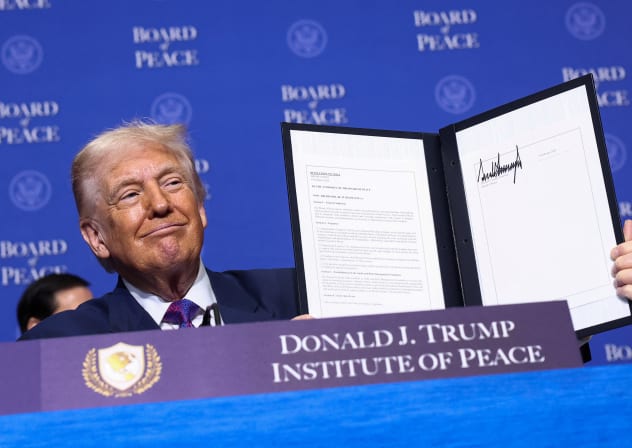
The board has received donations, but they have been deposited directly via its JPMorgan account, according to the board’s spokesperson.


Dahlan, who has been exiled in Abu Dhabi since 2011, has still been described by one source to KAN News as "the most powerful man in the Gaza Strip" because of his fundraising.

Netanyahu calls US President Trump • Board of Peace blames breakdown of ceasefire in Gaza on Hamas’s refusal to disarm • Israeli official tells 'Post' Khamenei 'difficult to reach'

“At this stage, the principal obstacle to full implementation remains Hamas’ refusal to accept verified decommissioning," Nickolay Mladenov, the High Representative for Gaza, told the UNSC.

An Israeli official told The Jerusalem Post that “Mojtaba is difficult to reach, as he is reportedly in a secure location and recovering from injuries. As a result, every response takes time.”

A year of precision strikes in 2025 didn’t destroy the group. Neither did the March 2026 offensive. The question is how to stop the enemy this time.

The new execution orders follow the state killing of Gholamreza Khani Shekarab, who was hanged on Tuesday after being accused of being “one of Mossad’s operational ringleaders abroad."

Faisal J. Abbas, the Editor-in-Chief of Arab News, noted that peace is possible with Israel but that the country “needs to embrace a two-state solution.”

"People are tired of Hamas. They’ve had enough," Khan Yunis militia leader Hussam al-Astal told the Post.
Despite the Islamic regime’s internet shutdown, reports of celebrations across Iran broke out following the assassination of the dictator on February 28.

Khamenei threatened US bases across the Middle East, claimed Israel was nearing its demise, and praised Hezbollah’s operations against Israel.
