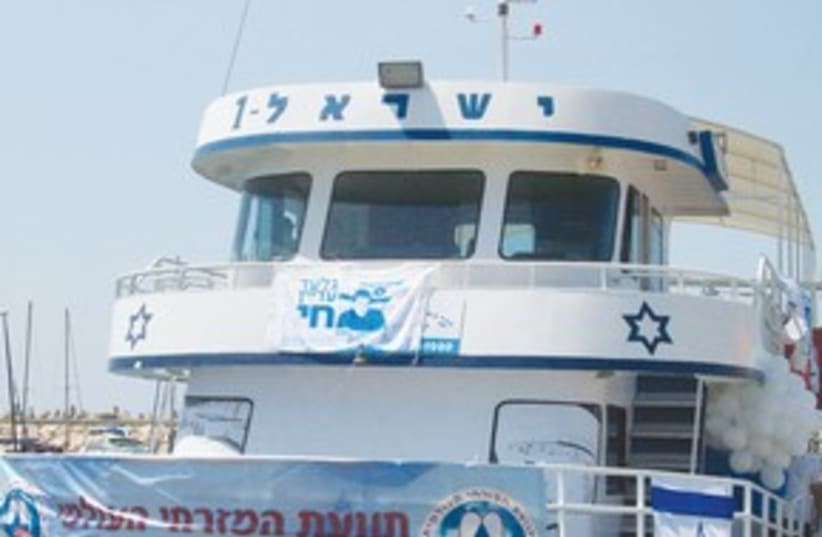
The Blue and White Flotilla calls on all participants to show support for Israel and its right to protect itself and its citizens.
By SHIRA FRAGERSchalit flotilla311(photo credit: SHIRA FRAGER)
A blue and white wave swept the Ashkelon marina on Sunday as hundreds took part in a flotilla sailing to Ashdod calling for the release of kidnapped soldier Gilad Schalit.The Blue and White Flotilla, cosponsored by the Young Leadership Division of the World Mizrachi Movement, in collaboration with the student organization Yavneh Olami, followed recent anti-Israel campaigns after Israel blocked flotillas headed to Gaza.The Blue and White Flotilla called on all participants to show support for Israel and its right to protect itself and its citizens. With the Palestinians scheduled to go to the UN in the coming weeks asking for statehood, one of the goals of the flotilla was to call on Jews around the world in support of the challenges Israel will face.About half a dozen vessels, decorated with Israeli flags and signs calling for support of Israel, sailed from Ashkelon to Ashdod on Sunday, and participants ascended the yachts wearing T-shirts that read “Kulanu kachol lavan” (We are all blue and white) and “Gilad Schalit is still alive!” According to Mizrachi’s program director, Daniel Cohen, the event was meant to express gratitude to the Israeli navy, who stopped the anti-Israel flotillas, and to gather support for Israel and missing Israeli soldiers.Following the ride, which was accompanied by the Israeli navy, a special event was held in Ashdod. It included explanations in the significance of the flotilla, a concert featuring the band Mibereishit, special prayers recited by staff and government officials asking to protect the country and its soldiers, a salute to the navy, and videos calling for the release of Schalit, Jonathan Pollard and other MIA officers.
“I really enjoyed the convention,” said participant Talya Kleinberg. “The boat was rocky, but it was an interesting concept. I hope people see we’re on Israel’s side, and we want peace.”In his speech during the event, Solly Sacks, director-general of World Mizrachi Movement, congratulated the participants and expressed the importance of realizing that “the goodness of this country is [that it’s] the only country in the world that will secure and guarantee the goodness of the Jewish people.”New Jersey participant Eli Rosen expressed enthusiasm in the cause and hoped to be able to contribute even after returning to the US.“We’re actually part of something that could help,” he said.
if(catID != 151){
var cont = `Take Israel home with the new Jerusalem Post Store